Why Going on Retreat Changes You (Even After You Come Home)

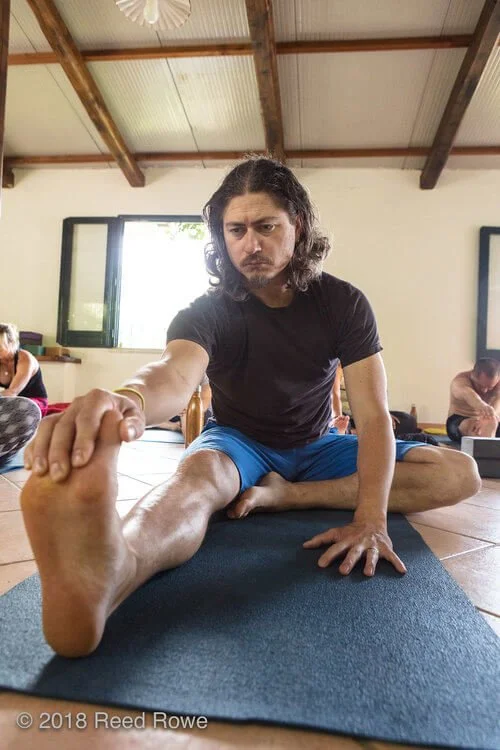
scott moore tuscany yoga retreat

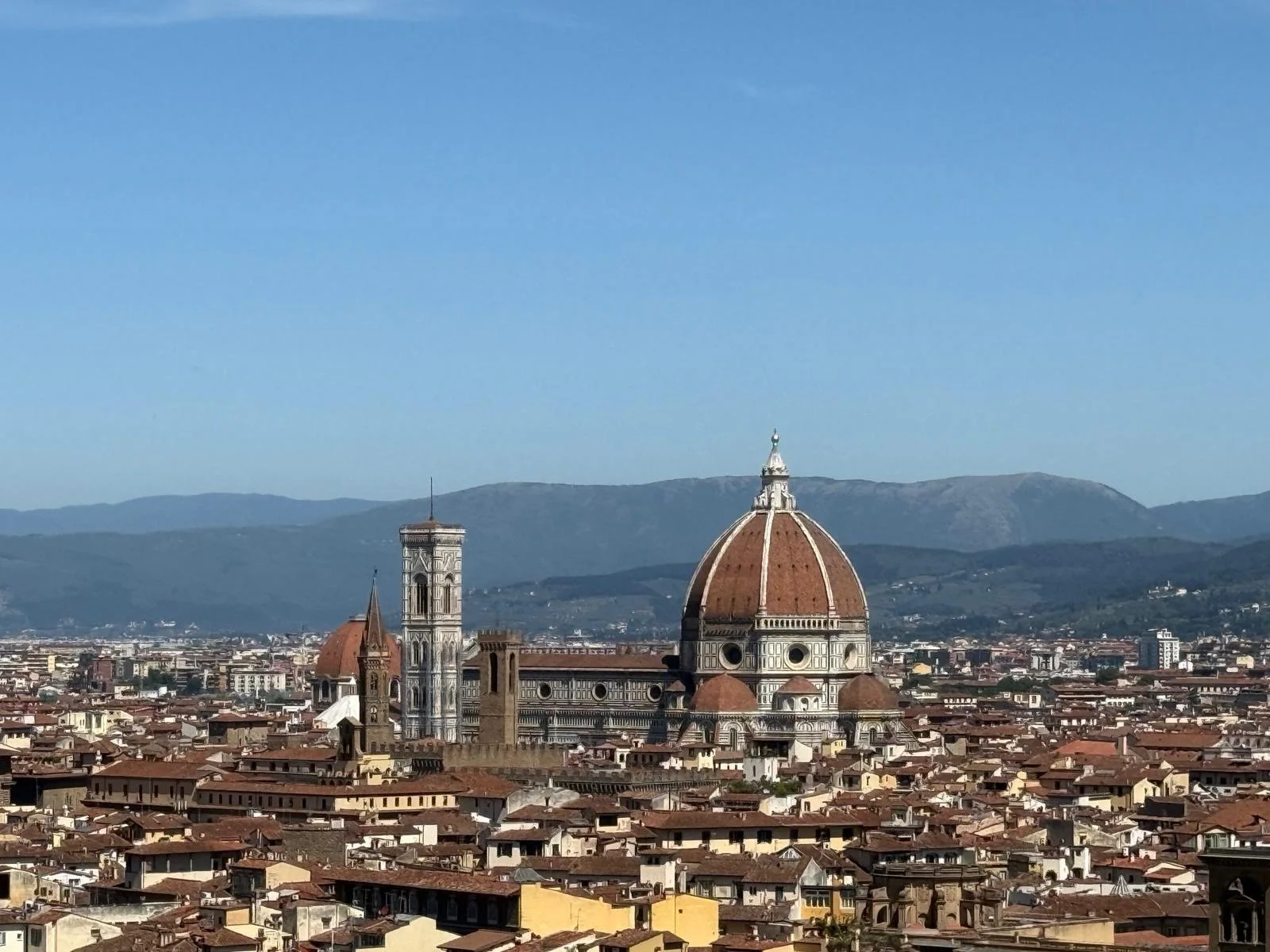
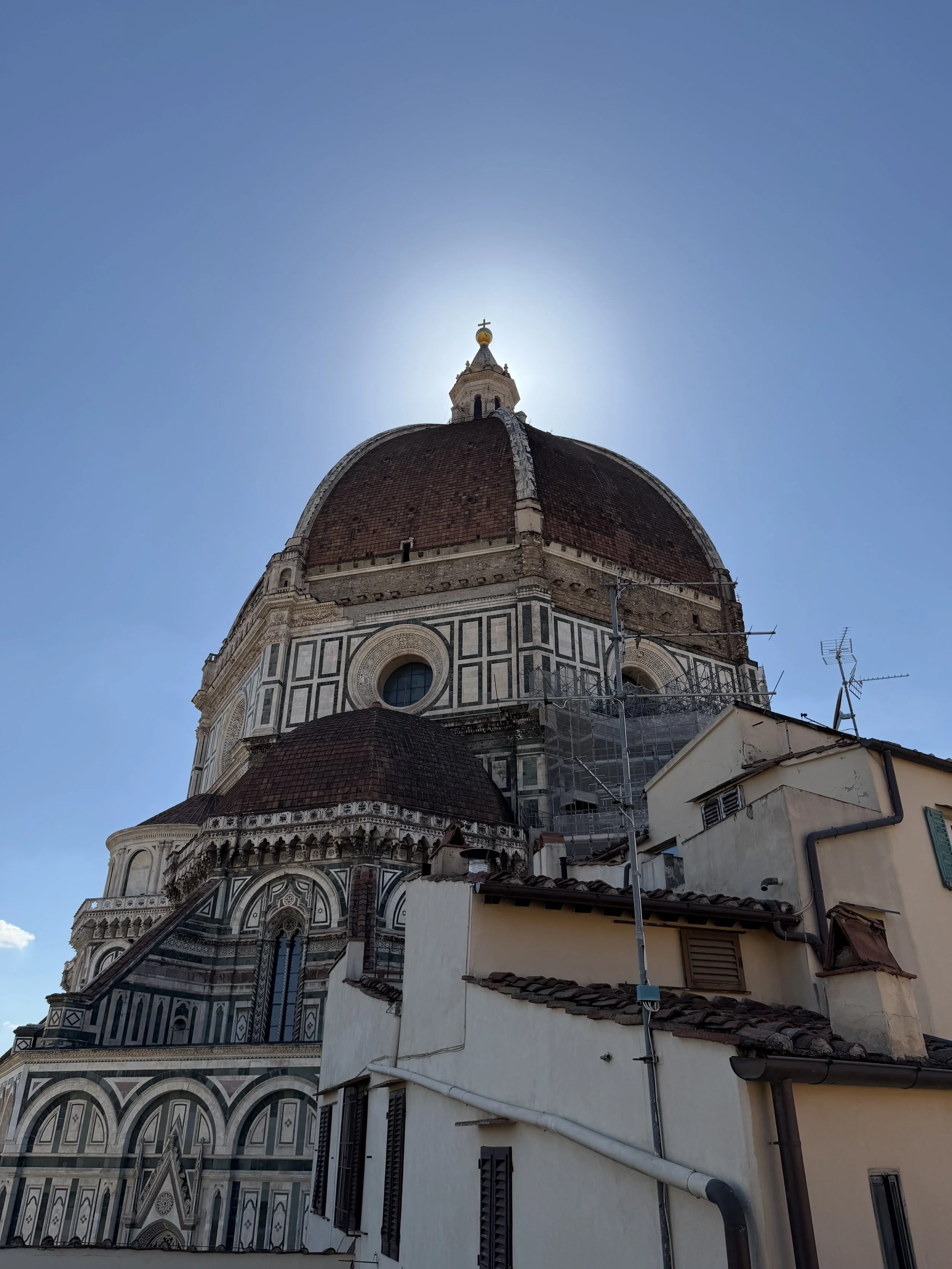
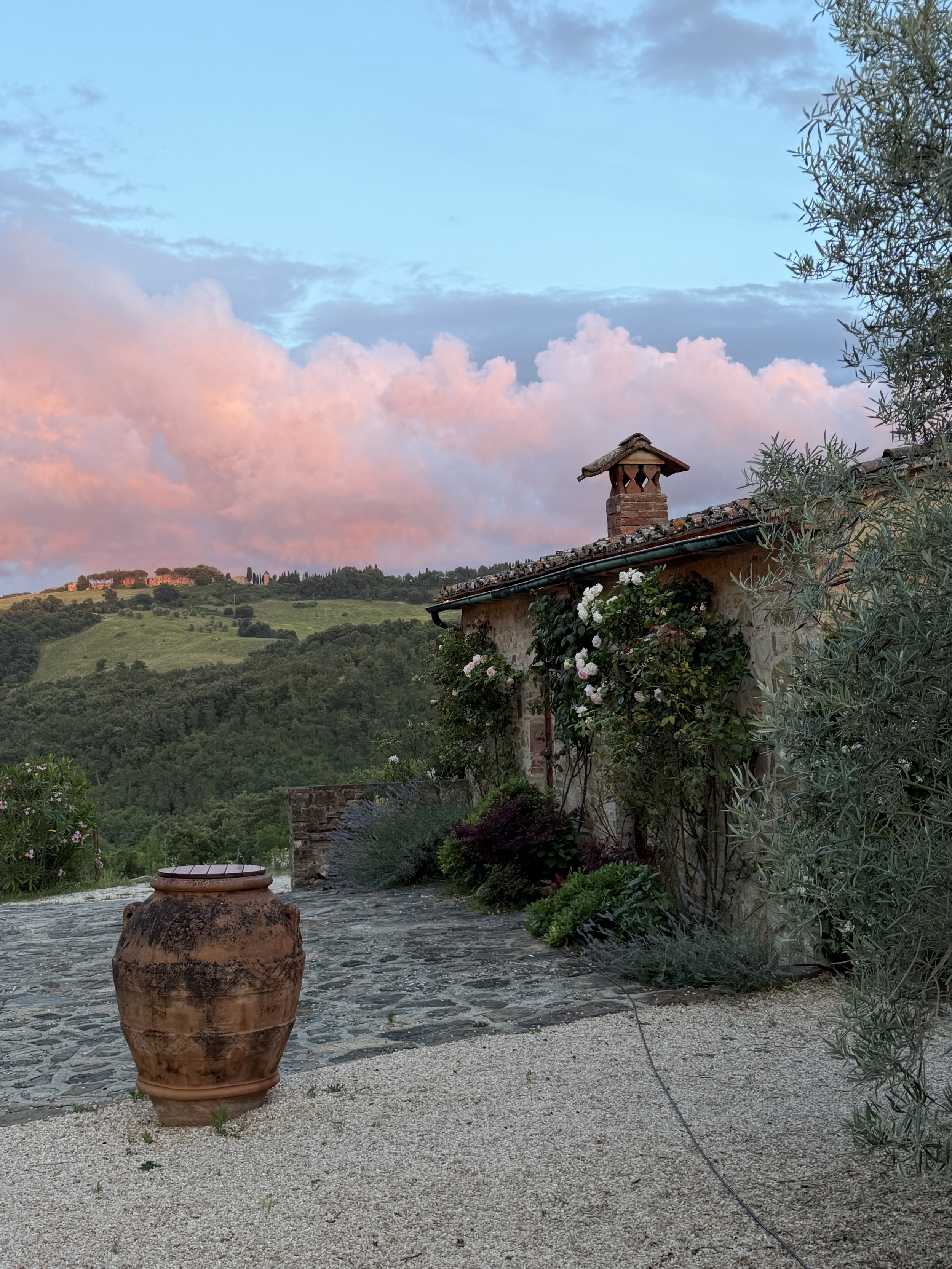
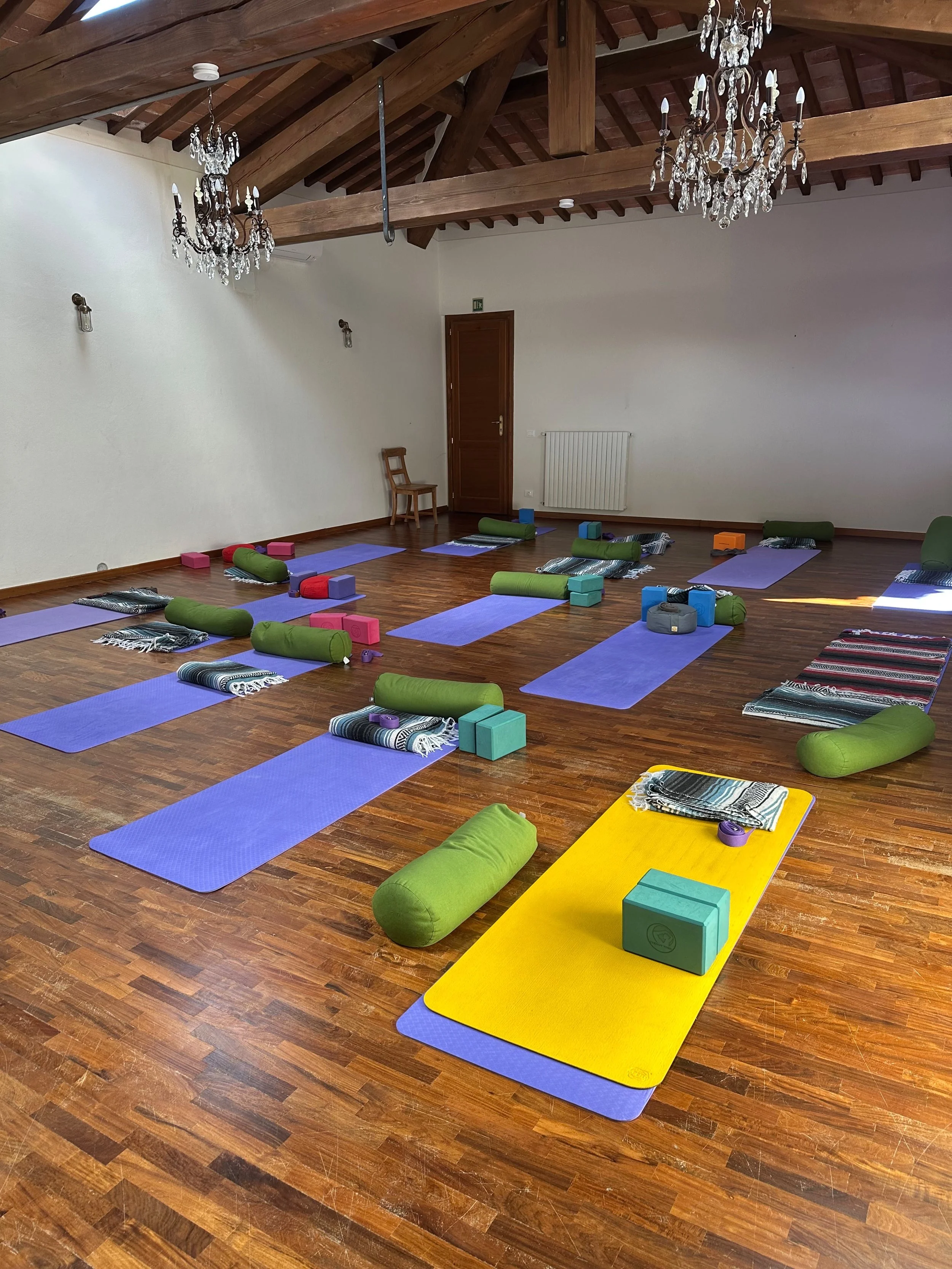
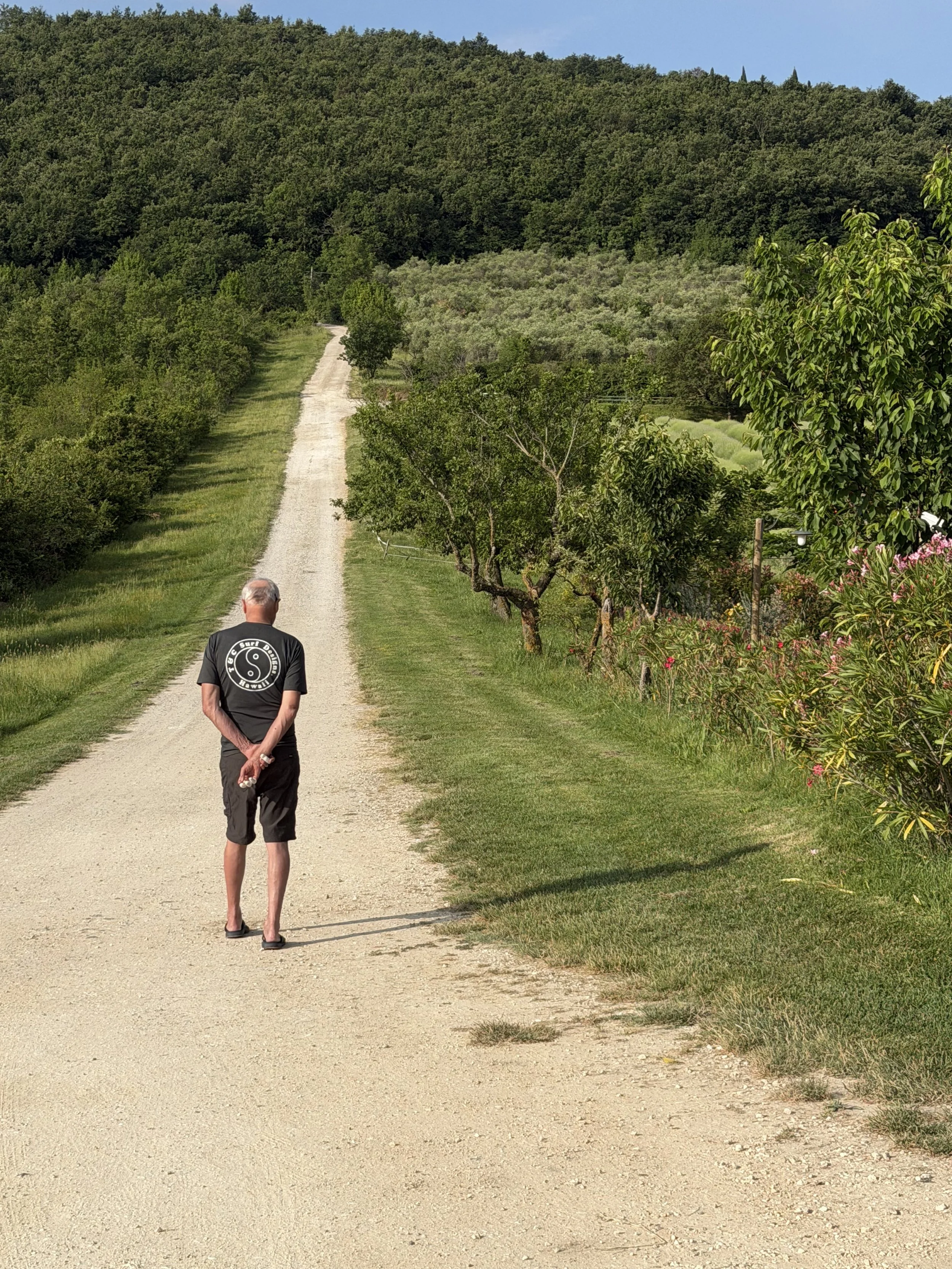
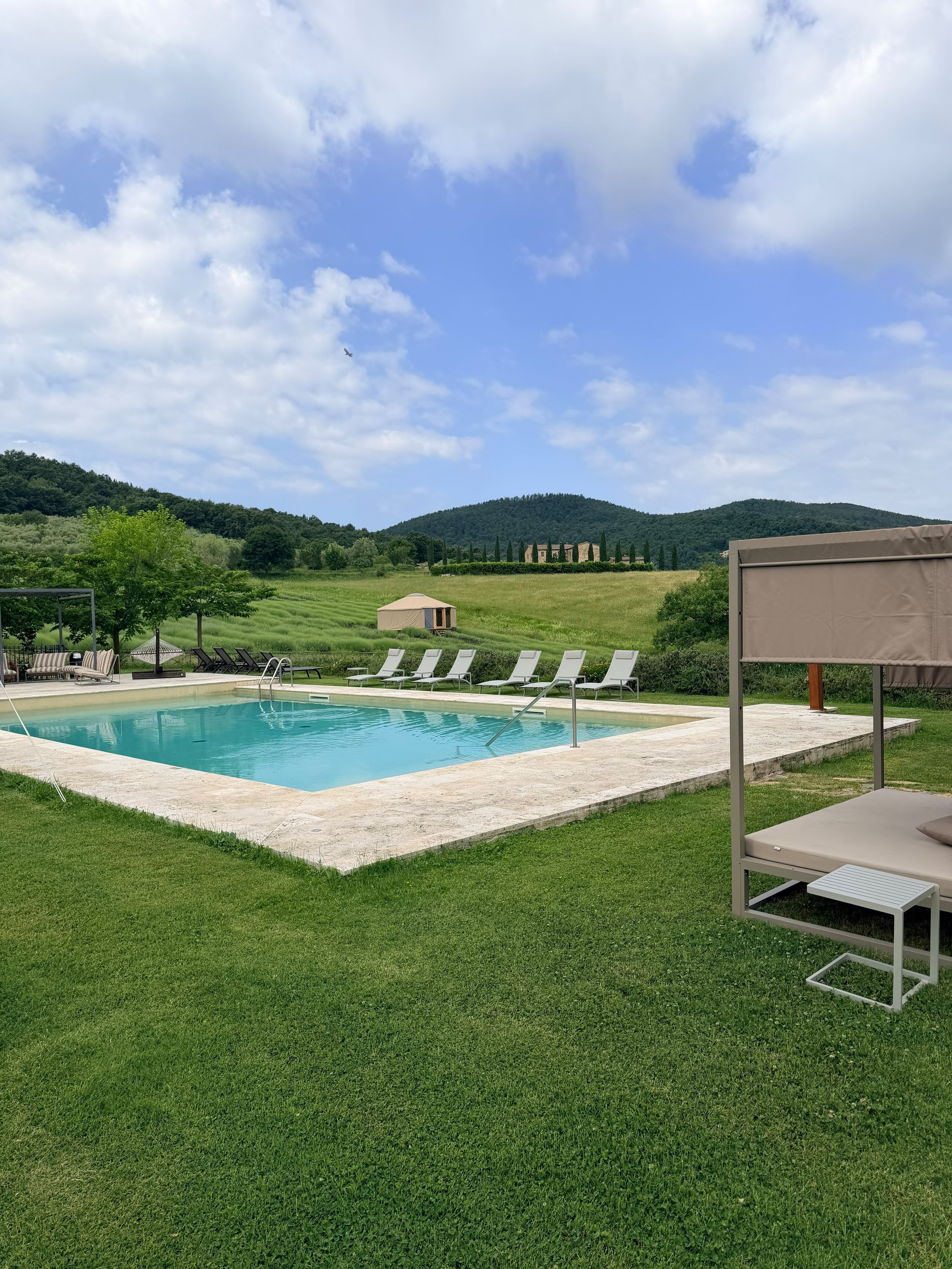
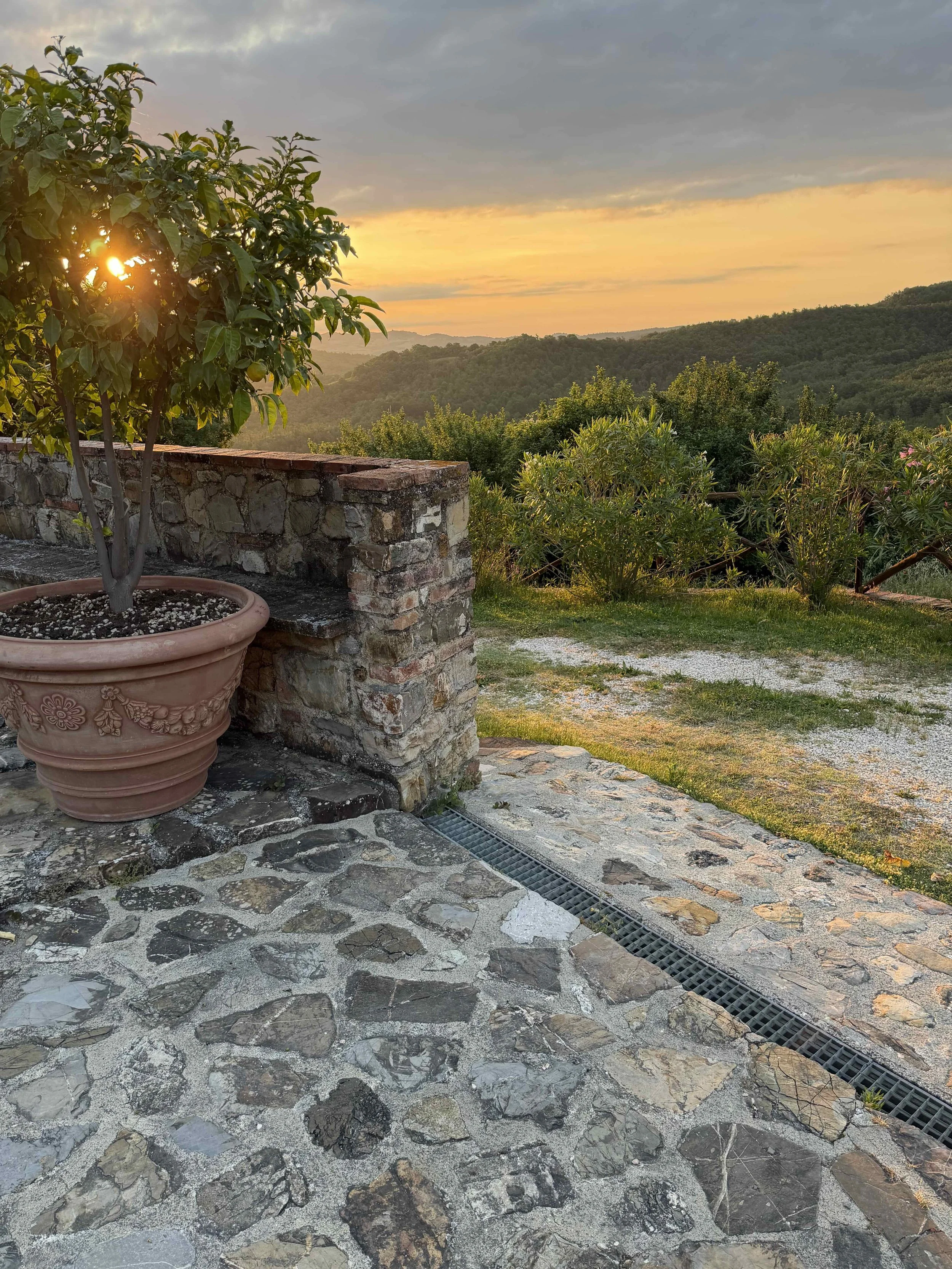
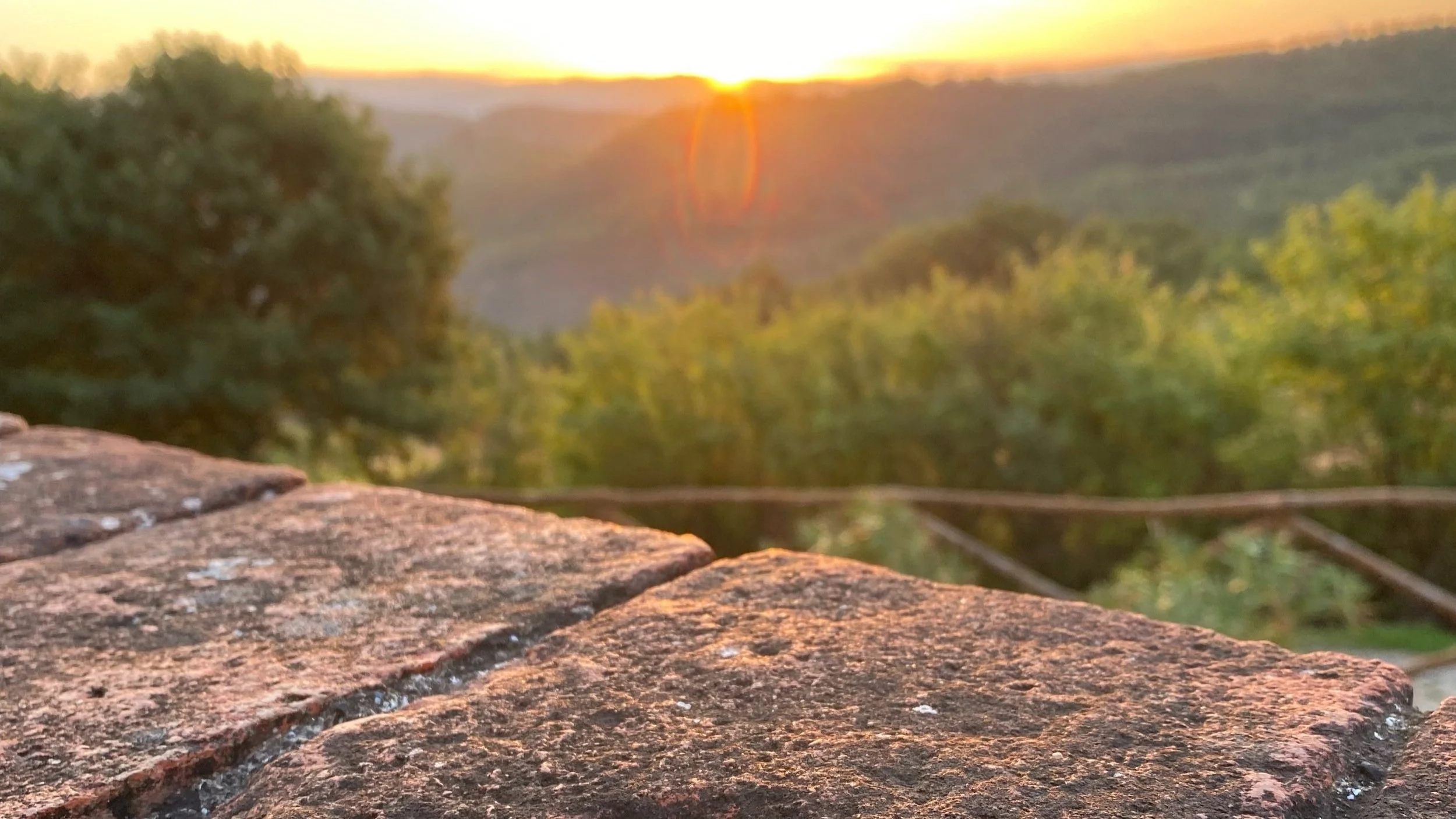
There's a villa in Tuscany where the first sunlight comes through a lemon tree each morning. I've been waking up there this week, watching it, and coming back to the same thought:

You can't see your life from inside it.

Hemingway couldn't write about Paris while he was in Paris. He had to get to Cuba, to Michigan, to Idaho, and look back across the distance before the place would give up what it meant. The same is true for most of us. We're too close to the thing to see it clearly.
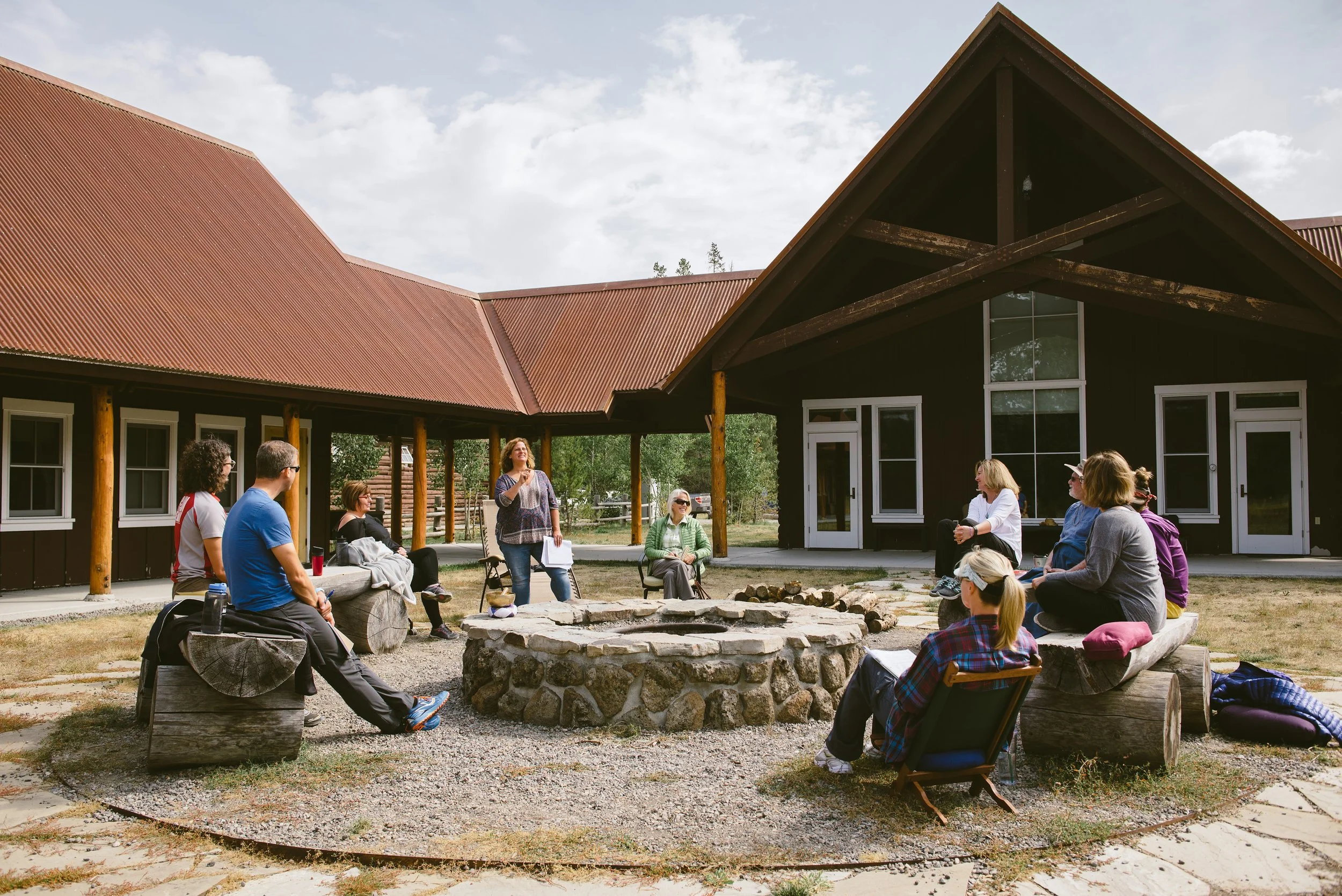
That's why the airplane ride matters as much as the destination. Somewhere over the Atlantic, between time zones, you get a rare 10,000-foot view of your own life. You're nowhere, which turns out to be the only place you can finally see everything.

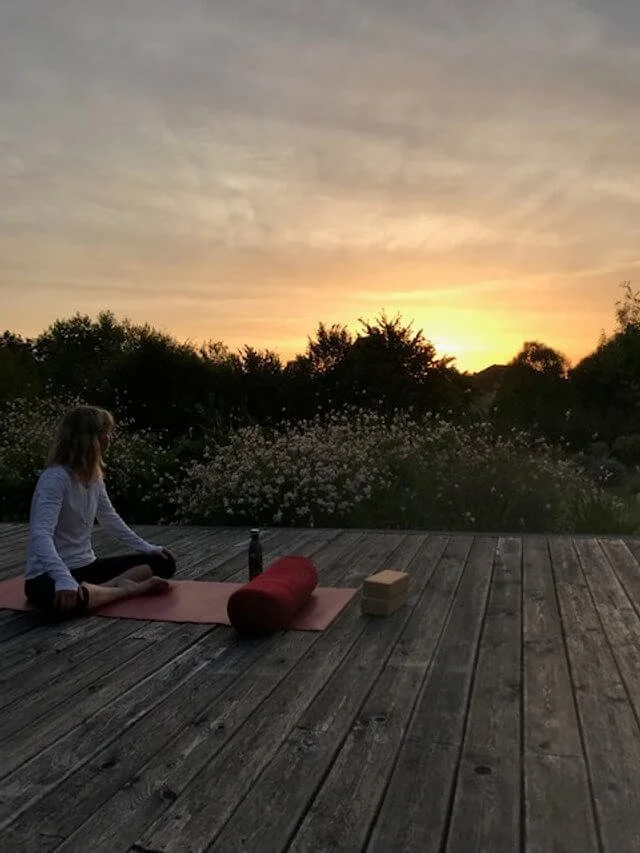
scott moore yoga retreat

The real gift of a retreat

People often talk about retreats as escape. A break from the grind. A reward for all that hard work. And sure, there's rest involved. But what a retreat actually gives you isn't a break from your life—it's a vantage point to see it more clearly.

When you set down your phone for a few days. When you eat slowly and watch the light and speak the truth of where you are—body, mind, and spirit—in circle at the end of the day. What happens is that you start making real memories. Memories of moments you were present enough to actually have.

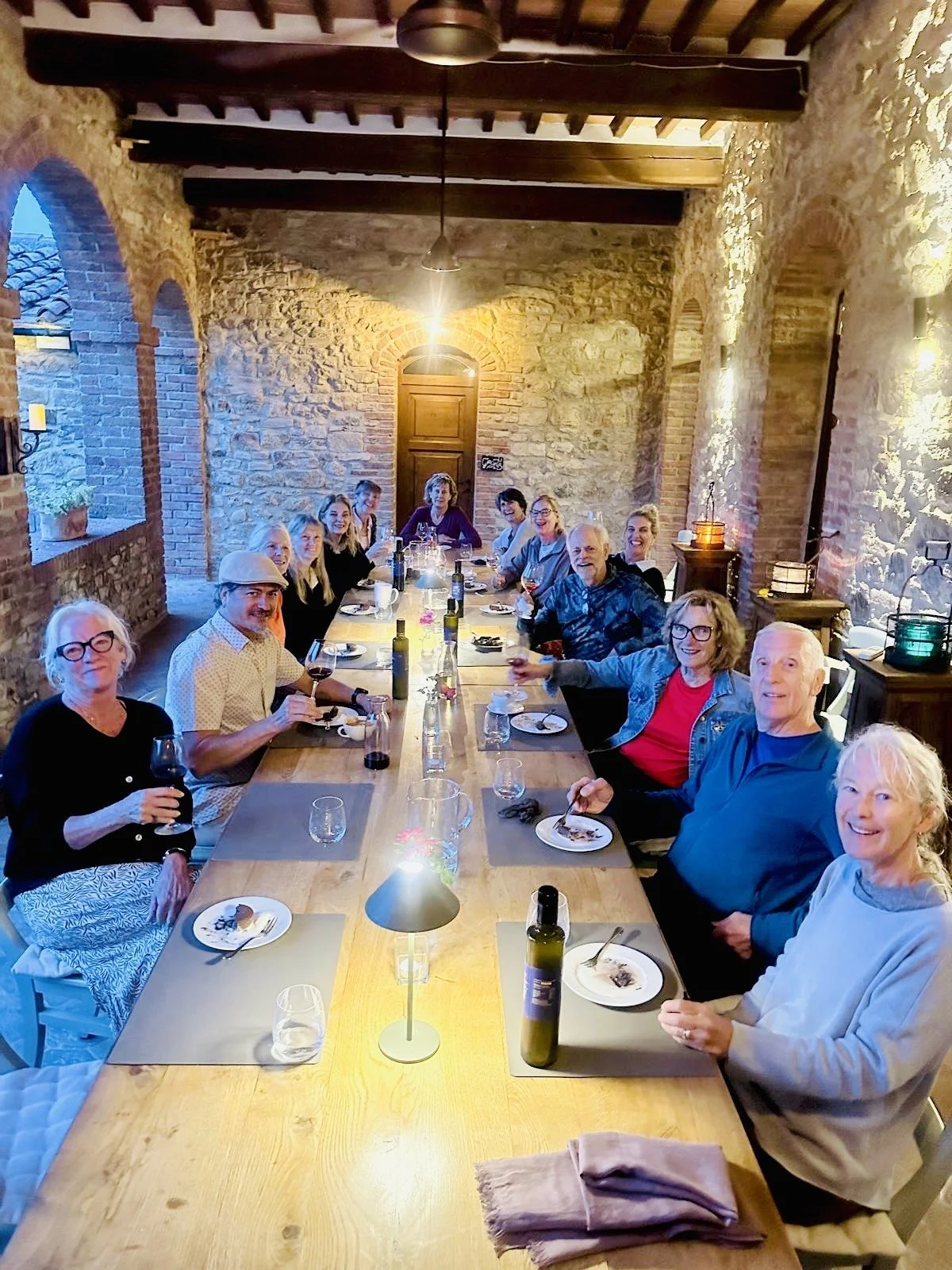
People often meet lifelong friends on weeks like this because of the container we create together. I've watched it happen on every retreat I've ever hosted.

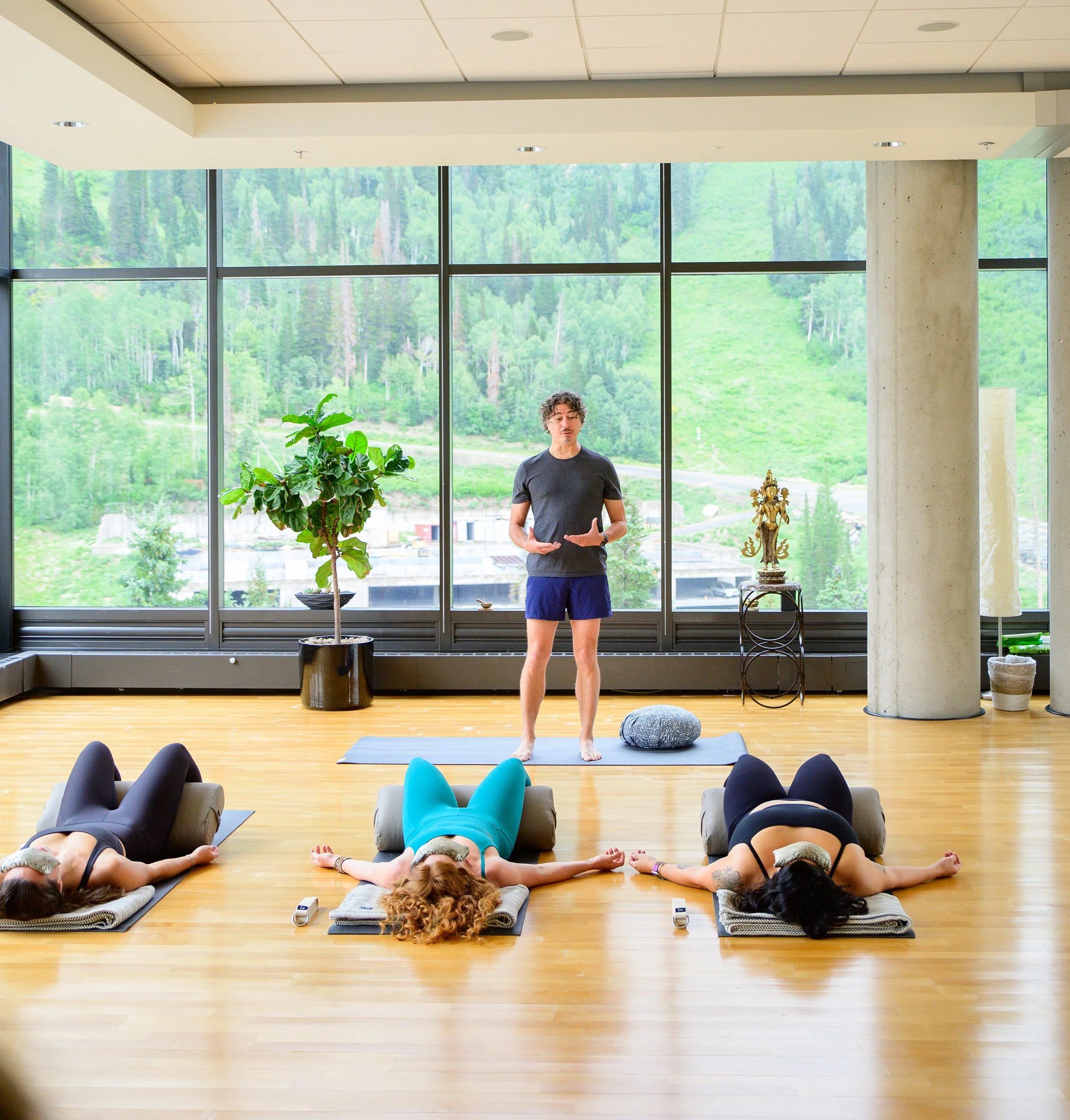
scott moore italy retreat

The retreat doesn't land at the retreat

Here's the part that surprises people: the transformation doesn't happen while you're away. It happens when you get home.

You don't step back into the same life when you walk through your own front door. You've changed, so your life meets a different person upon your return—one who savors their coffee, who notices the smell of the roses, who hears the bees. Just the daily presentations Mary Oliver was always pointing at: the untrimmable light of the world, the prayers that are made of grass.

Your family feels it before you say a word. Your coworkers notice something different. You're easier to be around. You're more here.

You're more you.

best yoga retreat

You don't actually need to leave home

And here's the kicker: none of that requires a passport.

Going somewhere can help set the conditions. The beauty helps. The distance helps. But what you're actually looking for was never at the retreat to begin with. The work—the real work—is learning to find the ground at your feet and be at home with exactly where you are.

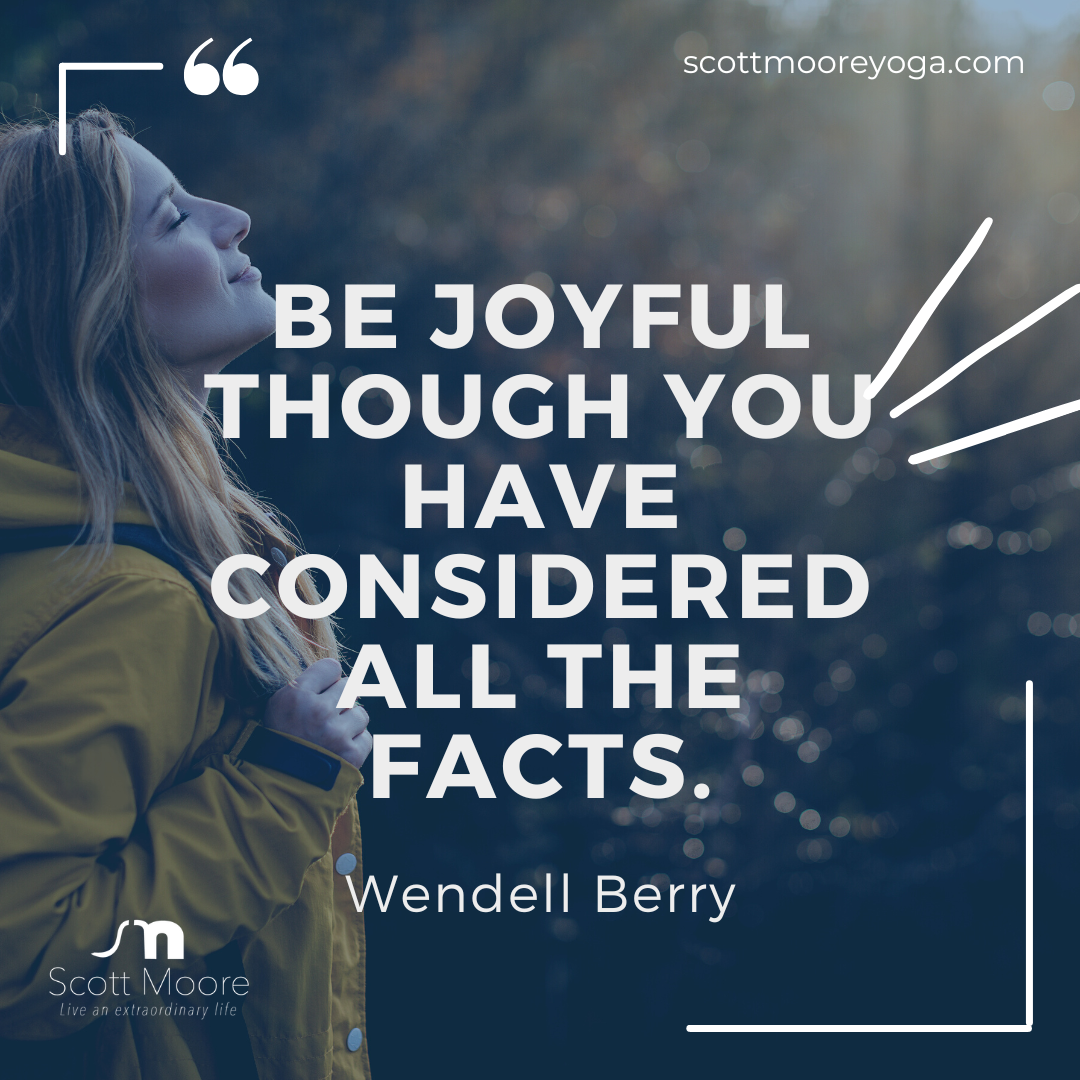
As Wendell Berry put it: what we need is here.

You can begin that this morning. Your own coffee. Your own kitchen. No airfare required.

FAQ

What is a retreat, really? A retreat is a period of intentional time away from ordinary routine, designed to support rest, reflection, and clarity. But more than the location, it's the container, the structure, the community, the slowing down that creates the conditions for change.

Do I need to travel internationally to benefit from a retreat? No. While travel can help by providing genuine physical distance from your daily environment, the core benefit of a retreat is the shift in perspective and pace. A local retreat, a weekend away, or even a structured day of silence can offer the same.

Why does a retreat feel different from a vacation? A vacation is usually about pleasure and rest. A retreat has an intentional container: meditation, reflection, community, or practice that creates conditions for deeper insight. You come home changed, not just rested.

What happens after a retreat ends? The real integration happens in the weeks that follow. People often report noticing small things more clearly, feeling more present with family, and making choices that are more aligned with what they actually value.

How do I find the right retreat for me? Look for a retreat led by someone whose teaching you already trust, with a format (silent, active, community-based) that suits how you learn and rest. Smaller groups tend to allow for more depth.

Can I get the benefits of retreat without attending one? Yes, partially. Regular meditation, time in nature, digital sabbaticals, and intentional journaling can all cultivate the perspective a retreat offers. The difference is the container: being held in community, away from ordinary demands, over consecutive days tends to create conditions that are harder to replicate at home.

Caldera Retreat 2026: A Yoga and Writing Retreat in Harriman State Park, Idaho


Caldera retreat. Yoga Nidra retreat. Writing and yoga retreat Idaho. River Writing practice. These aren't marketing terms for me. They're the actual shape of five days that I've watched change people in ways I can't fully predict or plan.

After more than 25 years teaching yoga and Yoga Nidra, I've learned something about what people need most. It's rarely what they think they need when they register. It's usually something quieter. Something they didn't know they were carrying.

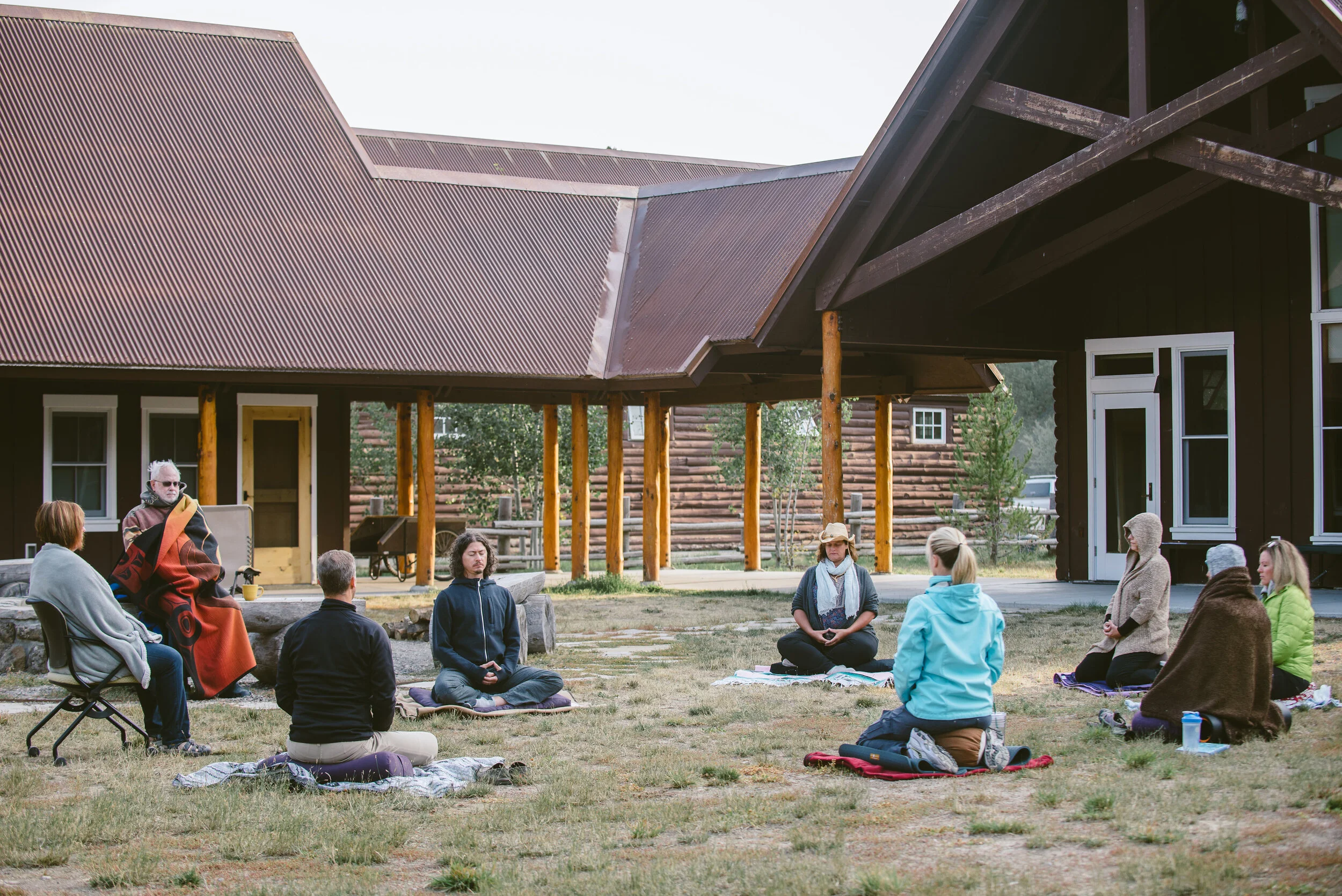
The Caldera Retreat returns August 27–31, 2026 at Harriman State Park, Idaho and this is the one I'd point you toward if you've been feeling the pull toward something more still, more honest, and more spacious than the life you've been living.

What Is River Writing and Why It Works

There's a practice we do at Caldera called River Writing.

Nan Seymour created it, and she describes it as "an opportunity to witness and be witnessed." She also calls it a courage class, which turns out to be accurate. Though the courage required isn't the kind you'd expect.

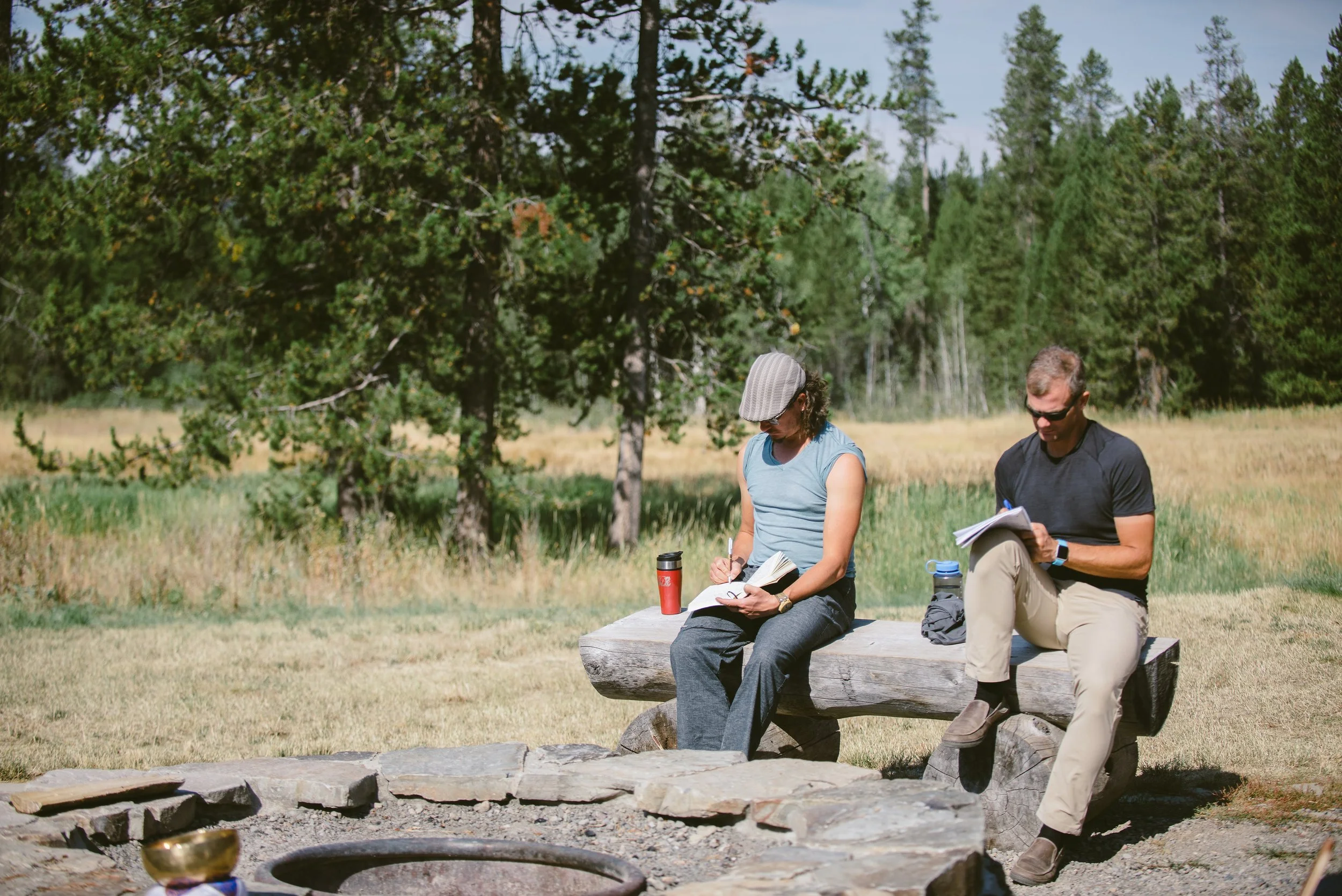
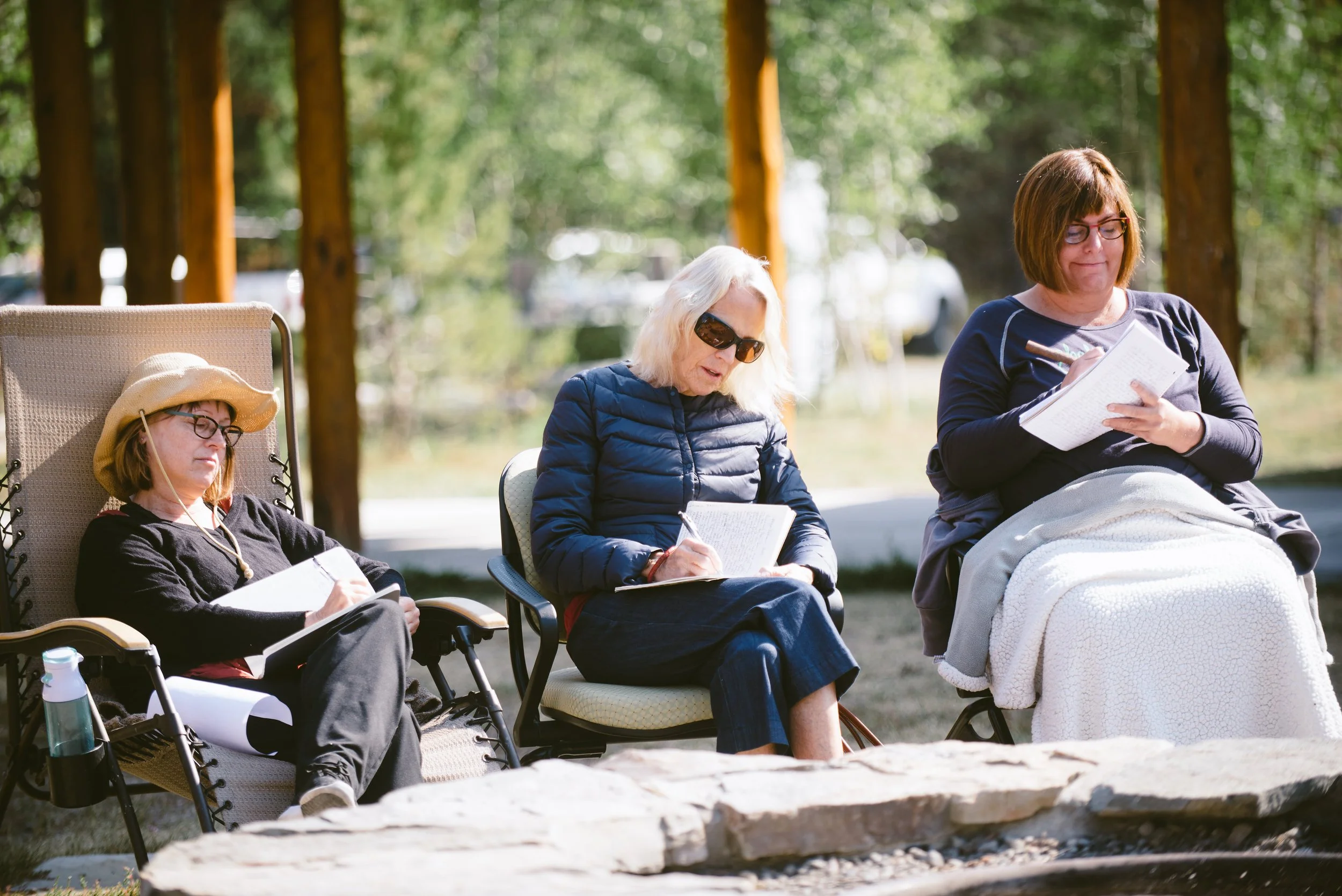
The instruction is almost embarrassing in its simplicity: keep the pen moving. Don't try to produce anything. Don't try to be good. Shamelessly shun spelling and syntax. Let the words come from whatever's already running underneath.

You write for eleven minutes. Without stopping.

What we write isn't meant to be published.

Then we read to each other. No preface, no apology, no caveats. Just the words as they came. And the group listens without praise, without criticism, without fixing anything. We hold the space, and at the end we say the only thing there is to say: thank you.

That's the whole protocol.

My entire Yoga Nidra Teacher Training program originated inside a single River Writing practice. Eleven minutes. One session. The idea arrived fully formed from somewhere I can't account for. True story.

Dream and Write: What Comes Out Below the Thinking Mind

We also do something called Dream and Write.

I lead a thirty-minute Yoga Nidra to drop everyone below the thinking mind into that threshold place between waking and sleep where the usual mental editor goes quiet. And then, directly out of that state, we write.

The pages that come out of those sessions don't sound like anyone's regular voice. They sound like the voice underneath. Slower. Less guarded. Often surprising, even to the person who wrote them.

This is one of the stranger and more beautiful things I've seen happen in a retreat setting. People emerge from Nidra, pick up a pen, and write things they didn't know they knew.

Five Days in Big Nature

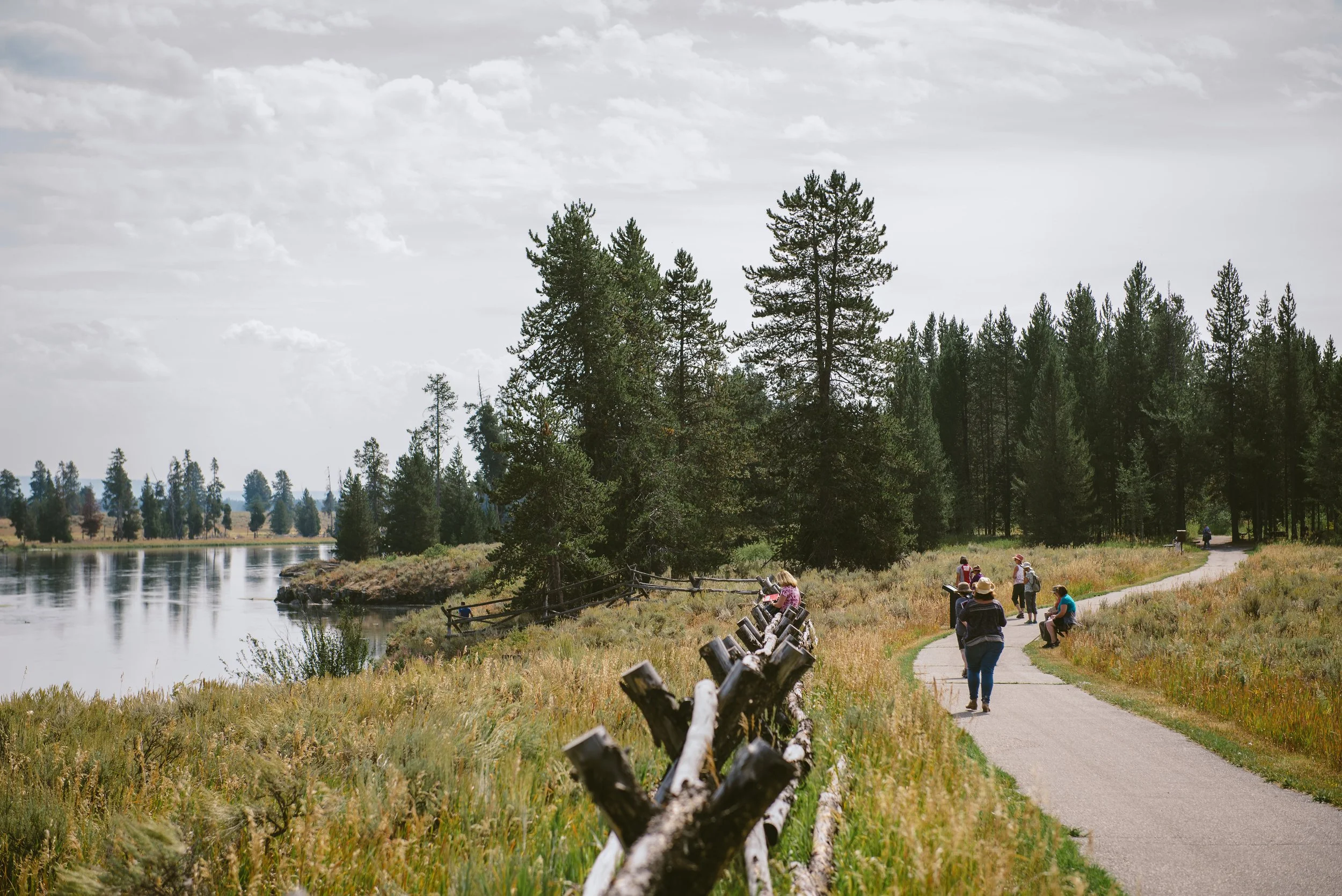
The retreat itself is five days in Harriman State Park, Idaho. Wide, unspoiled, high-desert landscape with the kind of sky that recalibrates something in you just by looking at it.

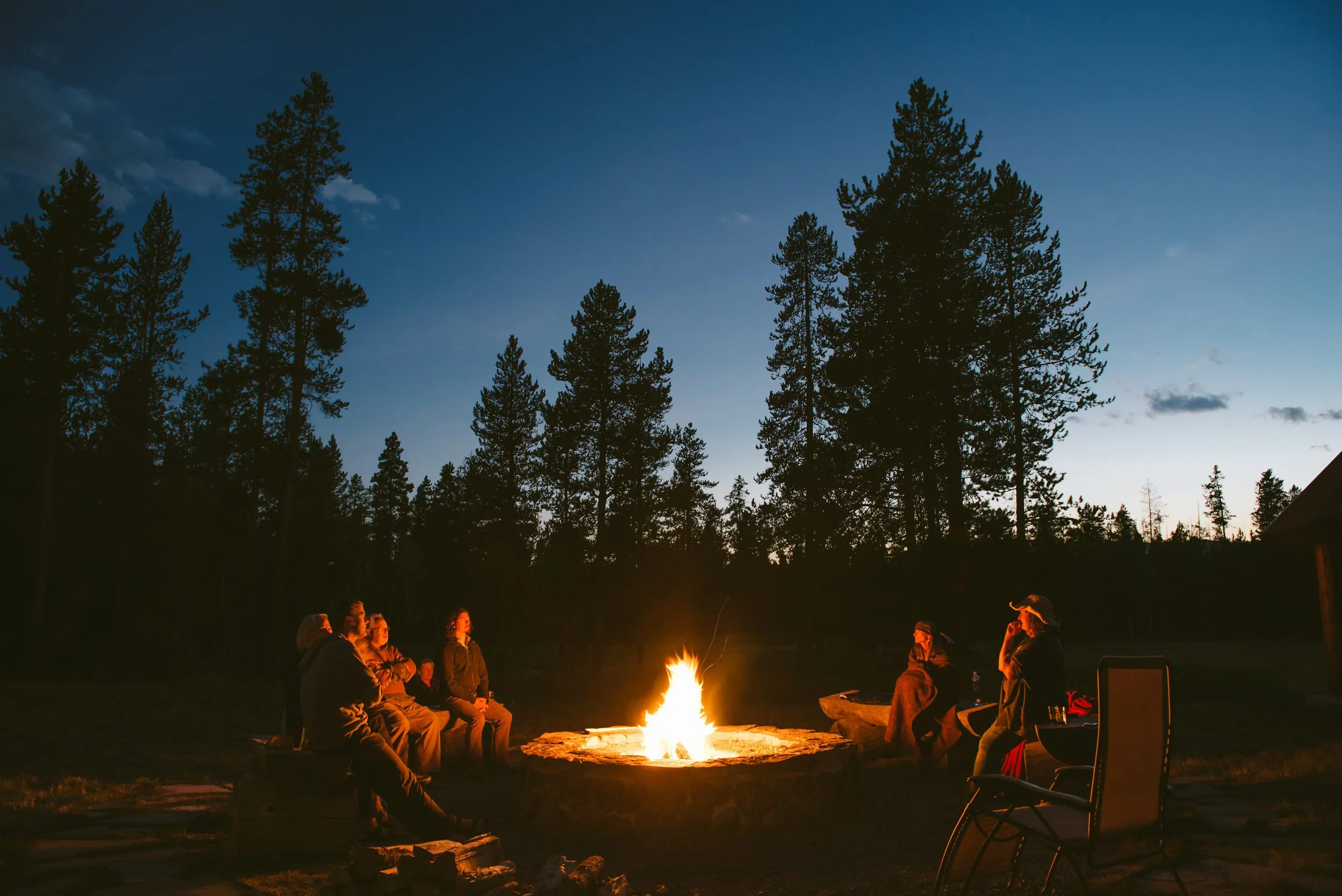
We eat thoughtfully curated, delicious food. There's gentle yoga in the mornings, movement meditation, and time alone in some of the most beautiful country I know. A fire most nights, with singing, stories, and a lot of laughter.

Nan Seymour and Amy May co-facilitate with me. If you've done River Writing or sat in one of their circles, you already know what kind of medicine that is.

We keep the group small. On purpose.

An Invitation, Not a Push

If you've been feeling the pull toward something more still, slower, and more honest than the busy you've been living, this is the retreat I'd point you toward.

Caldera Retreat — August 27–31, 2026 Harriman State Park, Idaho | Co-facilitated with Nan Seymour and Amy May


FAQ — Caldera Retreat 2026

What is the Caldera Retreat? Caldera is a small-group yoga and writing retreat held annually in Harriman State Park, Idaho. It combines gentle yoga, Yoga Nidra, River Writing, and Dream and Write practices over five days in a natural, held environment.

What is River Writing? River Writing is a community-based writing practice created by Nan Seymour. The instruction is simple: keep the pen moving for eleven minutes without editing or stopping. Participants then read to each other and listen without comment, only witness. It is consistently one of the most cathartic and honest writing experiences people have.

What is Yoga Nidra, and do I need experience to attend? Yoga Nidra is a guided meditation practice that leads you into a deeply restful state between waking and sleep. No prior experience is required. It's accessible to beginners and valuable for longtime practitioners alike.

Is this retreat suitable for non-writers? Yes. River Writing is not about being a good writer. It's about letting what's already inside you find its way onto the page. Many participants have never considered themselves writers and that's often exactly why it works for them.

How large is the group? We keep the group intentionally small. This is not a conference or a festival. It's a circle.

Where is Harriman State Park, Idaho? Harriman State Park is located in eastern Idaho near the town of Ashton, a stunning high-desert landscape with rivers, wildlife, and wide open sky.

Be The Shit

scott-moore-yoga-mighty-oak-beingness

Leslie said something to me as I was settling onto my mat that I haven't been able to shake.

"You know, it's hard to be around people who are constantly bragging about who they are or what they own."

It was our last private yoga and Yoga Nidra session before I moved to the South of France. Mats barely unrolled. And already we were somewhere real.

Her comment sparked a heartfelt conversation and a subsequent Yoga Nidra practice about being comfortably rooted in your own being. We talked about the difference between a human being and a human doing.

"When you are secure in your fundamental being you don't need to try to prove anything to anyone."

I said to Leslie: when you're The Shit, you don't have to go around town bragging about it. You just go be The Shit.

David Whyte once said, "Constantly explaining who you are is a gospel of despair."

If your identity hinges on something as fragile as an action or a title, you're always one step from annihilation.

A human being, by contrast, is valuable simply because they exist.


The Mighty Oak

When you are secure in your own being, other people don't ruffle your feathers nearly as much. The best antidote to the braggart is to be so solid in your own beingness that another person could say or do whatever they wished and it wouldn't bend you one way or the other.

There's a German line I love: "What does the mighty oak care if the warthog scratches its rump against its bark?"

This is what we are really practicing in yoga and meditation. We affirm and identify our value as our beingness.

Your beingness lives in your ability to pay attention, to listen and be. Not to do. The doing comes after. It's the act of responding from the place of being.

After our conversation, I led Leslie through a Yoga Nidra practice focusing on exactly this: anchoring to being. Becoming the mighty oak. Settling so deeply into herself that whatever anyone said or did, she didn't have to worry about it one way or the other.

Then I rushed home to pack.

I was halfway out the door when I heard her call after me.

"Hey Scott!"

I turned back. She was grinning.

"Go be The Shit."


May I extend that same invitation to you.

If this resonates and you want a place to practice exactly this, being held by something larger than your title, your to-do list, or anyone's opinion of you, I'd love to share what's coming up.

In late summer, I'll co-host the Caldera Retreat at Harriman State Park with Nan Seymour and Amy May. Five days of yoga, Yoga Nidra, writing, and mountains older than any title we've ever worn. August 27–31, 2026. A few spots remain.

 
scott-moore-caldera-retreat-harriman-yoga-nidra-2026
 

How to Build a Business as a Yoga Teacher Without Losing Yourself

How to build a business as a yoga teacher is one of the most common questions I hear and one of the most misunderstood. After more than 25 years teaching yoga and mentoring conscious entrepreneurs, I've noticed a pattern: the teachers who struggle most aren't struggling because they lack skill. They're struggling because they've convinced themselves that the most essential things about them are exactly the things that will make building a real business impossible.

This post is about that pattern. And about what happens when you stop trying to work around who you are.

The Fear Nobody Talks About

It's not stage fright. It's not the fear of failing.

It's the quiet conviction that your depth, your sensitivity, the way you feel everything in the room before anyone says a word—are liabilities. That building something sustainable will require you to become someone you're not sure you can be.

I want to tell you about Anna.

Anna is a Yoga Nidra teacher. Students had been coming back to her for years. She was, by all measures, the real thing. But as expert as her craft was, she felt her business side was total novice. What's more, she was convinced the two things were incompatible.

So she talked herself out of reaching out to me. More than once.

When she finally did, I asked what she was most afraid of bringing into the work.

She was quiet for a moment.

Then: I'm worried I'm too much. Too emotional. Too sensitive. Too nonlinear. Too spiritual for the business stuff and not strategic enough for any of it to land. I'm too woo!

She wasn't describing her flaws. She was describing herself.

What "Too Woo" Really Means

When a yoga teacher says I'm too woo, they usually mean: I don't fit the mold I think I need to fit.

Anna had spent years trying to sand those parts down. To show up more streamlined. More certain. More like what she imagined a successful teacher should look like.

But it didn't work. The very things she was trying to manage, to tuck away, were the same reason her students kept coming back. Her depth. Her emotional attunement. Her willingness to stay in the hard, quiet places rather than rush toward resolution.

Those things weren't the obstacles to her business. They were her business.

This is what I see again and again with yoga teachers who are trying to figure out how to build a sustainable business: they're working against themselves when the whole path forward is through themselves.

Your Uniqueness Is Not the Obstacle—It Is the Business

There's a version of business advice that tells you to find your niche, define your avatar, and systematize your offers. That's not wrong. But if it comes before the more fundamental question—who are you, actually, and what are you here to offer?—it produces something hollow.

The teachers I've worked with who build real, sustainable businesses aren't the ones who figured out the best marketing funnel. They're the ones who stopped translating themselves into a language they thought the market would understand and started building from exactly who they already were.

Anna did that. By the time we finished working together, she had a Yoga Nidra program that was entirely, unmistakably hers, built for the specific people only she could reach, in the specific way only she could reach them.

She told me later that the most important thing she got back wasn't her teaching. It was herself.

What Building From Who You Are Actually Looks Like

It starts with an honest inventory—not of your offerings, but of your nature.

What do people consistently feel in your presence? What do they come back for, even when they can't quite name it? What do you do almost effortlessly that others seem to find difficult?

Those answers are not separate from your business strategy. They are your business strategy.

From there, you build outward: offers that reflect your actual gifts, language that sounds like you rather than a coaching template, a structure that honors how you work best.

This isn't soft advice. It's the most practical thing I know. A business built on someone else's template is fragile. A business built on who you actually are is hard to replicate and hard to walk away from.

You Don't Have to Figure This Out Alone

One more thing Anna said that has stayed with me: doing this work inside a room—even a virtual one—with other gifted, thoughtful people doing the same hard work of learning to build from who they actually are changes something.

You see yourself reflected. You stop thinking you're the only one. You find momentum.

If you're a yoga teacher, a Yoga Nidra instructor, or a conscious entrepreneur trying to figure out how to build a business that's actually yours, that's exactly the work I do in the Business Accelerator—a small-cohort group program where we begin not with your marketing plan, but with the question I asked Anna.

If that's speaking to something in you, you're welcome to learn more and reserve your spot.

FAQ — Building a Business as a Yoga Teacher

How do I build a business as a yoga teacher without compromising my values?
Start by getting clear on what your values actually are, not in the abstract, but in practice. What do you naturally bring to your students that no template can replicate? Build your offers, pricing, and messaging from that place. A business grounded in your actual values is more durable than one built on someone else's model.

Is it possible to be "too spiritual" to run a successful yoga business?
No. In my experience, the qualities teachers worry make them unbusinesslike—depth, sensitivity, nonlinear thinking—are often their greatest business assets. The challenge is learning to build a structure that honors those qualities rather than working around them.

What's the difference between a yoga teacher and a conscious entrepreneur?
A yoga teacher shares a practice. A conscious entrepreneur builds a business ecosystem around their gifts, offering multiple ways for people to work with them, at different depths and price points, in a way that's financially sustainable. Most yoga teachers have everything they need to become conscious entrepreneurs. They just need a framework and support.

How long does it take to build a sustainable yoga business?
It depends on where you're starting. With clear positioning, the right offers, and consistent visibility, most teachers I work with see meaningful traction within three to six months. The key is building from clarity rather than scrambling from scarcity.

Do I need a large social media following to build a yoga business?
No. A highly engaged small audience almost always outperforms a large disengaged one. Depth of connection matters more than reach, especially in the early stages of building.

What is the Business Accelerator for conscious entrepreneurs?
The Business Accelerator is a small-cohort group mentorship program for yoga teachers and conscious entrepreneurs who are ready to build a sustainable business rooted in who they actually are. We work together over several months through live sessions, hot seat coaching, and peer accountability. If you're interested, you can find details and reserve your spot here.

Why Most Business Programs Fail Conscious Entrepreneurs (And What Actually Works)

Conscious entrepreneur business program. Soul-aligned business. Business coaching for yoga teachers. These are phrases I hear constantly and they point to a real problem I've spent more than 25 years inside, first as a student of it, then as someone who built a six-figure business from it, and now as a mentor helping others navigate it.

business coaching for yoga teachers

Most programs that claim to serve conscious entrepreneurs like yoga teachers, healers, coaches, creators, pick a side. Either the practical side or the spiritual side. Neither one actually solves the problem.

This post is about the split. And about what I've found, after a lot of hard lessons, that actually bridges it.

The Day I Closed Two Yoga Studios

In 2014, I closed two yoga studios.

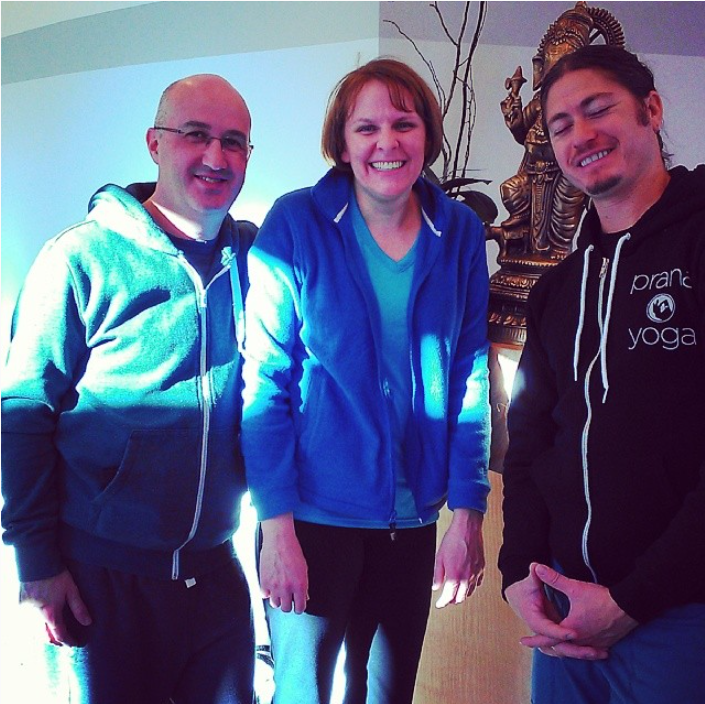
Prana Yoga. Prana Yoga Station Park.

I believed in those places. Blood, sweat, tears. Lots of tears. Poured myself into them, leveraged myself for them, taught some of the best classes of my life inside them. Found wonderful, beautiful students, many of whom are still practicing with me today. God bless you.

The studios didn't make it.

When they closed, I didn't just lose the businesses. I also lost the version of my story where I thought I had it all figured out.

I was broke. Genuinely, practically, broke-ass, bank-account broke. Debt I would spend years paying back. Lessons I did not enjoy learning.

But here is the thing I didn't fully understand until years later, sitting in the south of France with a cup of coffee and a view I had no business being able to afford:

That wasn't the only way I'd been broke.

The studios, even when they were full, even when the classes were beautiful and the students were showing up and something real was happening in those rooms — I had been running them on someone else's blueprint.

I came into those studios following someone else's dream. Following a model that made sense on a spreadsheet but cost something essential in practice.

There is the kind of broke that empties your bank account.

And there is the kind that empties you.

I have been both kinds. At the same time, actually. Which is its own special kind of exhausting.

The Split That's Quietly Grinding Down Conscious Entrepreneurs

I've told that story to a lot of people over the years. And almost every time, they nod. Not because they closed studios, but because they recognize the split.

yoga teacher business strategy

Yoga teachers, healers, coaches, creators. People doing genuinely meaningful work. Quietly ground down by the gap between what they came here to do and how they've been told to do it.

Most of the business courses and coaching programs out there pick a side.

The practical ones hand you the funnel and the revenue targets. These treat depth and soul as a distraction from the "real work" of making money.

The spiritual ones tell you to raise your vibration and trust the universe. A vision board is all you need and rent, apparently, will sort itself out.

So you end up managing a split that shouldn't exist. Your integrity on one side. Your income on the other. Some invisible line between them that you're not supposed to cross.

That line between soul and income is a lie.

I spent a lot of years finding that out.

Why the Both/And Approach to Business Actually Works

After closing those studios, rebuilding from scratch, living and teaching in three countries, and eventually mentoring dozens of conscious entrepreneurs through their own versions of this split, I arrived at a framework I call the Windmill.

A windmill needs two things to work. Wind and a machine.

The wind is spirit — your sankalpa, the deep intention underneath your work, the thing that doesn't shift when the market does. Without it, the work becomes mechanical. You might make money, but something keeps feeling off.

The machine is the practical structure, clear positioning, sustainable systems, pricing that reflects the value you actually deliver, visibility that doesn't require you to become someone else. Without it, the wind just blows through. Nothing gets built.

Most business coaching for conscious entrepreneurs hands you one or the other.

What changes things is both.

This isn't a philosophy. It's a design. When your business is built from your sankalpa outward, when the spiritual thread and the practical structure are running in the same direction, the split dissolves. The work feels like one thing instead of two competing things you're trying to hold together.

What Soul-Aligned Business Strategy Looks Like in Practice

I want to be specific about this, because "soul-aligned business" can sound like a slogan.

In practice, it looks like a yoga teacher who finally understands her positioning clearly enough to attract the right students and charge what their training is actually worth.

It looks like a healer who has been undercharging for years building a pricing structure that reflects their actual expertise, without apologizing for it.

It looks like a coach who has been hiding behind a generic offering stepping into her specific mechanism of influence — the particular way they help people that nobody else replicates.

None of them needed more inspiration. They needed the wind and the machine working together.

That's the work.

The Business Accelerator for Conscious Entrepreneurs

This spring I'm opening the first cohort of my newest program: the Business Accelerator for Conscious Entrepreneurs.

Four months. Small group. Twelve people maximum.

We'll start with the deeply personal, the spiritual thread. We'll set your sankalpa, get crystal clear on your positioning, and explore the honest needs of your clients, what they actually need from you and why you're the right person to deliver it.

From there we build what actually needs to be built. Sustainable systems, products and pricing that reflect the value you deliver, and visibility that doesn't require you to perform.

This is the beta cohort. The investment is $997.

If this is landing for you, I'd love to have you in the room.

FAQ — Business Coaching for Conscious Entrepreneurs

What is a conscious entrepreneur?
A conscious entrepreneur is someone — a yoga teacher, healer, coach, or creator — whose business is inseparable from their values and spiritual practice. The challenge isn't finding purpose. It's building something practical and sustainable around it without losing what made the work worth doing.

Why do most business programs fail yoga teachers and healers?
Most programs either ignore the spiritual dimension entirely or focus on mindset without practical tools. Conscious entrepreneurs need both: a clear spiritual foundation and grounded, specific strategy. Programs that pick one side tend to leave people either financially struggling or quietly feeling like they've sold out.

What is sankalpa and how does it apply to business?
Sankalpa is a Sanskrit term for deep intention. Not a goal, but a thread of meaning that runs through everything you do. In a business context, it functions as a North Star. When your offers, pricing, and positioning are built from your sankalpa outward, the work feels coherent rather than fractured.

What is the Windmill Framework?
The Windmill Framework is the methodology at the center of the Business Accelerator. It combines wind — the spiritual thread, your sankalpa and deep intention — with the machine, the practical tools and tactics that turn that intention into a functioning, sustainable business. Both are required. Neither works without the other.

Who is the Business Accelerator for?
It's for yoga teachers, healers, coaches, and conscious entrepreneurs who are doing meaningful work and are ready to build the practical infrastructure to sustain it without splitting themselves in two to do it.

Is the Business Accelerator available outside Salt Lake City?
Yes. The program runs fully online and is open to conscious entrepreneurs worldwide.

Dogs and Hogs—Revisited

Listen to Dogs and Hogs Revisited
© Scott Moore Yoga LLC All Rights Reserved

This is a re-write of a previous story. I’ve been thinking of it lately and wanted to share it with some new edits.

Dogs and Hogs

My older sister, Charity, was easy to love. 

She loved many things but above all, she loved dogs and hogs. 

Charity owned a litany of Golden Retrievers, each one legendary. 

First there was Sadie, mild and docile, until she saw a cat then she was positively possessed. Plus, Sadie had bad doggie breath, god bless her.

Then there was Shadow, an unruly male with fire in his eyes. It was a full-body workout just to walk him around the block—a lot of shoulders, triceps, and core work.

Then there was Chase, cool (and as round) as a cucumber, a total rockstar amongst the kids in my sister’s neighborhood who would come to her house and ask if they could play with her dog so they could dress him up in costumes, ride him like a pony, or lay on him like a pillow. As long as he was getting attention, he was into it. 

Charity also loved Harleys. 

She loved the spirit of freedom and ruggedness of Harleys. A rebel at heart, Charity loved how Harleys slightly leaned toward lawlessness. The spirit she appreciated in Harleys, Charity also appreciated in men. The nickname for Harleys is hogs—an adjective equally attributable to many of the men she dated.

Charity would have loved French men. Living in France, I witnessed their version of road rebellion—"let them eat asphalt" being the apparent subtext of most motorists, pedestrians be damned.

Charity always did everything her way and there was no way that Charity was going to ride on the back of someone else’s motorcycle. Being a fiercely independent woman, a self-learner, and because many of the men she dated were often even less reliable than their bikes, she bought and learned to ride her own damn Harley-Davidson—a silver Deluxe Softail with Screamin’ Eagle pipes and whitewall tires. 

She adored that motorcycle. 

Every year she would load up her hog on a trailer, attach it to an RV, and haul it from Salt Lake City, Utah to Sturgis, South Dakota to attend the biggest motorcycle rally in the world. 

But one year while at Sturgis, she saw a fellow woman rider die in an accident and her love for motorcycles died with it. She resolved to park her bike on the trailer and sell it as soon as she got back to Salt Lake. 

For a year or two, her hog sat in her garage gathering dust under her Cowboys on Motorcycles calendar.

Then one day, one of her less-than-reliable ex-boyfriends rolled by to say hi. He suggested they dust off her hog and go for a short spin. On this occasion she uncharacteristically rode on the back and uncharacteristically rode without a helmet. 

Not speeding, but taking a turn too sharply, a foot peg caught the pavement and flipped the bike, throwing her headlong into a large boulder on the side of the road, killing her almost instantly. Her ex-boyfriend sustained injuries but survived. 

Charity’s sudden and violent death was a massive shock to our family as well as her enormous wake of friends. We just weren’t prepared to lose her. 

Over many weeks and months, we gathered as a family and wrapped up her affairs including finding a home for her surviving dogs, Chase and Suri, who were generously adopted by some of Charity’s best friends.

I love Charity immensely but unexplainably, I felt numb about her death for about 18 months or so. I felt guilty about not feeling more than a little grief. I think that I just couldn’t wrap my mind and heart around it. 

But eventually, in my own time, I opened up and was able to properly grieve her death, which no doubt was the result of the healing work I’ve done with my personal meditation and Yoga Nidra practice. Oh, and a great therapist. That, and I can’t forget the help of a shaman and a healthy dose of ayahuasca in the jungles of South America. 

It took a while but through all of this I came to realize that my relationship with Charity didn’t end. My friend Tiffany Burns runs a practice called Continuing Connections, using Yoga Nidra and writing to help people stay in relationship with loved ones who've passed. She helped me understand that you're not meant to get over someone. You get to stay in dialogue with them—through symbols, memory, and meaning-making.

I loved Charity’s dogs but I didn’t feel like I was the dog-owning type. I mean, growing up, our family had a few dogs but the first one ran away and the second was hit by a car in front of our house. Both of these instances broke my heart and frankly traumatized me. So, not wishing to relive that all over again, I was quite content having doggie nephews and nieces and leaving the actual owning of the dog to others. 

Plus, there’s a metric shit-ton of dog doo to pick up. No thanks.  

My attitude changed after many months of convincing by Sen and Ellie. So, in December of 2022, our family adopted a beautiful and loving Australian Cobberdog. We named him Cosmo because the name came to Sen in a dream and if your wife gets a revelation that you’re supposed to name your dog Cosmo, you name your dog Cosmo.

We fell instantly in love with Cosmo. I bonded with him quickly. He feels it’s his great responsibility to walk Elio to and from school. One of Cosmo’s favorite things to do is to wake Elio up in the morning by going into his room and licking his face. As he is doing it, Cosmo’s so happy, his tail wagging so much, that you’d think it might fall off. He's undeniably a messenger of joy and happiness, so much so that I don’t even mind picking up the dog doo. 

When Cosmo was only 5 months old and totally puppy-brained, we were on a walk with him en route to one of our favorite cafes in Nice when, walking on the sidewalk next to a busy intersection, we encountered another dog on a walk with his owner. The dogs greeted each other like long-lost friends (brothers from another mother) and instantly began playing, hopping around, and pawing at each other. Almost immediately, the leashes of the two dogs became impossibly tangled. 

I was holding Cosmo’s leash but when the dogs tangled their leashes, Seneca who was opposite of me in the foray of ecstatic dogs, reached for the leash to help untangle them. I let go of the leash thinking that she had it. She didn’t.

But Cosmo’s leash slipped from the knot. Feeling his leash untethered, Cosmo burst away from the cluster, suddenly drunk with freedom, several feet from where I could grab it. And in his euphoria, he bolted blindly and at a dead sprint directly toward the busy street with oncoming traffic. 

To my horror, I saw an enormous delivery truck tearing down the street, fast and furious. Lawless. It was clear to see that Cosmo was in a direct trajectory to collide with this huge truck. It was all happening too fast. This nightmare was unfolding before our eyes and there was no way to grab his leash in time. We were completely helpless.

The speeding delivery truck couldn’t see Cosmo because he was driving too damn fast and because his vision was blocked by a motorcycle that was parked (lawlessly) on the sidewalk perpendicular to the street, totally blocking any view of pedestrian traffic. I mean, who parks like that? Oh, yeah. The French do. 

Then, in the half second before Cosmo collided with the truck, his flapping leash somehow wedged itself under the rear tire of the illegally parked motorcycle, yanking him to a stop and landing him on his back as the delivery truck sped by unaware.

Thank you, thank you, thank you, Angel of Lawlessness.

It was an unmitigated miracle. 

My hands shook as I removed Cosmo’s leash from under the tire of the parked motorcycle and picked up my trembling dog from off the ground. I held him tightly against my chest and could feel our two hearts pounding from fear. 

Elio and Sen gathered around and we all loved on him and petted him reassuringly as we exchanged wide-eyed glances with each other sharing our wordless gratitude for our dog who was just miraculously saved from an untimely doggie demise. 

In the days following, on our morning walks to school, Elio and I started processing and making sense of the events of that terrifying moment. We decided together that clearly Cosmo must have a guardian angel. We also decided that if it’s heaven’s law that you’re not supposed to meddle in the lives of the living, there must have been a rebellious angel up there who took things into her own hands to save our sweet dog. We decided that this angel could be none other than Charity because what other rebellious angel loves both dogs and hogs?

One motorcycle took a life and another motorcycle saved a life.

Thank you, sweet Charity. 

At a Crossroads? How a Business Blueprint Creates Clarity and Direction

Listen to: At a Crossroads? How a Business Blueprint Creates Clarity and Direction
© Scott Moore Yoga LLC All Rights Reserved

How are you? I can’t believe it’s almost March.

My sincere desire is that we are following poet and saint Wendell Berry’s advice:

 
business blueprint
 

When You’re at a Crossroads in Life or Business

Lily has been a friend and yoga student for years.

She and her daughters have been on retreats with me. In fact, she once invited me to teach at a retreat she hosted in southern Utah—incredible locations, live music, exquisite meals.

Lily is an expert at creating beautiful experiences for people.

A few months ago, she came to me because she needed help.

It wasn't because her life was falling apart.
It wasn't because she needed a business plan.

She was standing at a major crossroads in her life.

She has properties across the country. She's lived in San Miguel, Mexico, long enough to have deep local connections. She's taken a yoga teacher training. She has a gorgeous farmhouse in Michigan with a barn she's been renovating.

She has no shortage of ideas or experience and truly wants to curate meaningful experiences for people.

She needed clarity.

Which direction do I walk?
What actually makes sense at this stage of my life?
How do I take all of these incredible assets—the places, the practice, the people—and bring them together in a way that serves me and the people I care about?

That's what the Blueprint is built for.

Not just for entrepreneurs who want to grow revenue, but also for people who want a strategic roadmap for the next chapter in their lives.

The Business Blueprint: Not a Plan. A Mirror.

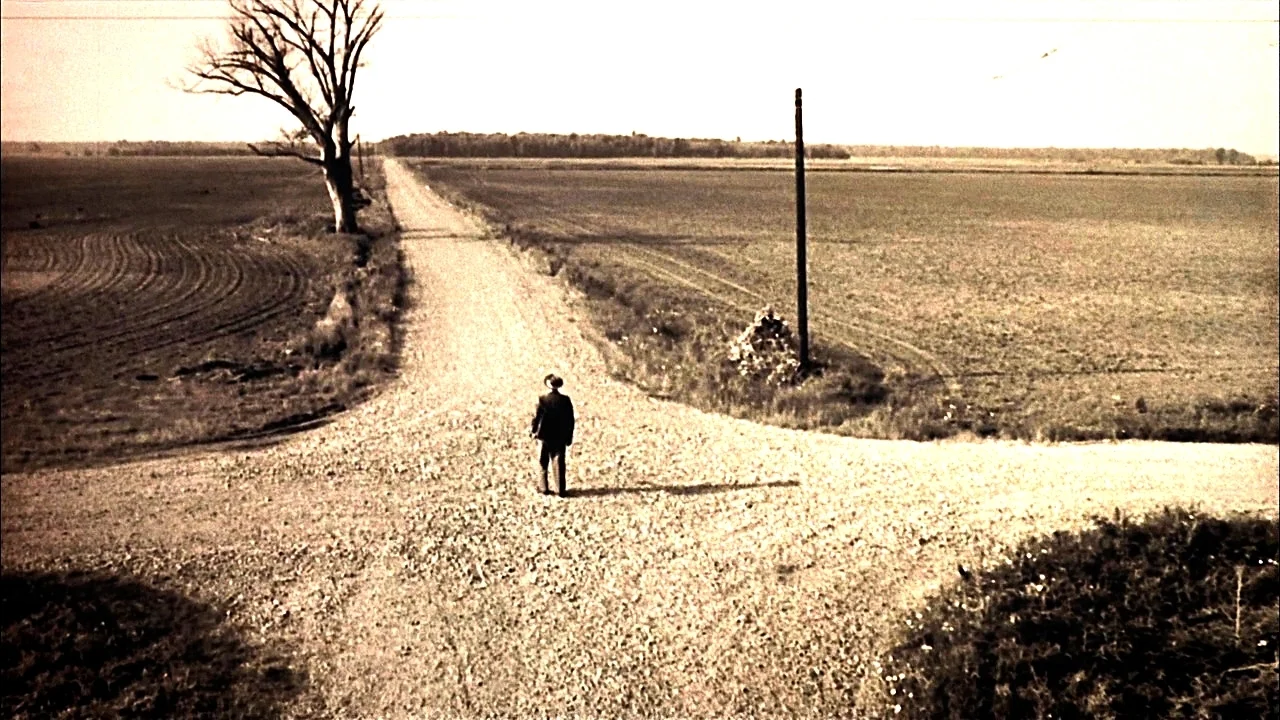
Crossroads

We sat down.

I asked questions. Lots of questions. Deep ones. The kind that get underneath what you're doing to what you actually value.

And something shifted.

Here's what Lily said afterward:

This is truly a roadmap to my next phase, with step-by-step instructions. You’ve given me clarity, and most importantly, the confidence to move forward. Your deep listening skills made me feel heard and understood. I thought I needed a therapist, when what I actually needed was direction. Scott’s ability to listen deeply, then to make order out of what I saw as chaos, is extraordinary.

That's what the Blueprint does.

Not a cookie-cutter business strategy nor a generic template.

A mirror—held up with enough care and precision that you can finally see what was already there.

From Career Confusion to Clear Direction

And Lily isn't the only one.

Christopher came to me needing direction. He was at a crossroads of his career. He works in a cut-throat industry and was in-between gigs, wondering whether to continue in that direction or pivot entirely.

We worked through his positioning, his strengths, and the realistic opportunities in front of him.

We settled on the both/and approach.

He walked away with a clear path, found employment, and then built and published an online course. H
e's now making passive income alongside his day job.

In his words:

The Blueprint wasn’t only affirming. It was clarifying. It reflected who I am at my core and gave me a clear path forward. The action steps were simple, practical, and immediately useful. I put several into practice right away.

Seeing the Strength You Already Carry

Karen, a yoga teacher of 18 years, put it this way:

Working with Scott was like having someone hold up a mirror—but instead of showing me what was broken, he reflected back all the strength and clarity I didn’t know I already carried.

That’s the through-line.

People don’t come to the Business Blueprint because they’re broken.

They come because they’re capable—and scattered.

And what they need isn’t more ideas.

They need direction.

What the Business Blueprint Includes

The Business Blueprint is currently $997. On March 1st, the price goes to $2,000.

Not because the work changed. Because the original price was the introductory price to iron out all the wrinkles.

Business Blueprint Scott Moore

Wrinkles ironed.

This actually delivers and I'm excited to see what it can do for you, whether you need help taking the next step in the direction of your business or the next step in your life.

If you're at your own crossroads—whether that's figuring out what's next, building something new, or finally getting clear on the direction that's been whispering to you—this is the moment.

What you get:

  • Pre-interview docs that clarify for both of us who you are, what you value, and what you’d like to see in your future.

  • A 90-minute deep-dive Pre-Blueprint interview where I deeply listen to who you actually are and what you care about (not just what you do)

  • A comprehensive written strategic roadmap, 50–60 pages with your positioning, pricing, customer journey, and the essential next steps, a 90-day action plan

  • A 90-minute Post-Blueprint-interview to go over your guide together and talk next steps.

The $997 investment also rolls into any future private mentoring program if you decide to keep working together.

Last day at this price: Friday, February 28.

If this is your crossroads moment, I'd love to sit down with you.

You don’t have to figure it out alone.

If you already know this is your next step, let’s get going.

If you’d rather talk it through first and see if it’s the right fit, we can do that too.


FAQs

What is a Business Blueprint?
A Business Blueprint is a customized strategic roadmap that clarifies your positioning, pricing, direction, and next steps. It is designed for entrepreneurs and individuals at a crossroads who need clarity and structure.

Is this only for business owners?
No. While many entrepreneurs use it to refine business strategy, the Blueprint is equally powerful for career transitions and major life direction decisions.

How is this different from a business plan?
A traditional business plan focuses on projections and structure. The Business Blueprint focuses on clarity, positioning, strengths, and actionable next steps tailored specifically to you.

How long does the process take?
You complete pre-work, attend a 90-minute deep-dive session, and receive your full 50–60 page roadmap within five business days.

Business Game Plan: Just Tell Me What To Do!

Listen to Business Game Plan: Just Tell Me What To Do
© Scott Moore Yoga LLC All Rights Reserved

I spent three years living in the South of France with my family. So much of it was perfect.

Walk the kid to school. Hit the gym. Stop by the market on the way home. Sen would make lunch, and by one o'clock, the afternoon was wide open—a dip in the sea, a glass of rosé at our favorite café, the golden light doing what golden light does in Nice.

I was earning a living. I was present for my family. I was free.

But I wasn't building anything.

Work was organic, a little here, a little there. Some weeks were productive, some weren't.

I just didn't have a real business strategy. And without a strategy—or any kind of entrepreneurial roadmap—you default to comfort. Not laziness. Comfort. There's a difference, but the result is the same: you stay exactly where you are.

I remember saying to Seneca one day, "Man I wish I could find someone who could just look at my entire business—website, clients, products/services, messaging—and tell me what. To. Do."

I earned around $90,000 that year. Not bad.

But I knew—somewhere underneath the rosé and the sunshine—that I was leaving a lot on the table. Not just money. Direction. Momentum. The feeling that I was actually moving toward something instead of just floating through beautiful days.

Why Every Entrepreneur Needs a Clear Business Strategy

When I came back to the States, I decided that with this new chapter, I'd turn a page in my business as well.

So I built something. Deliberate. 

I sat down and built my own Blueprint.

I dumped everything in. My bio, my values, my finances, my offers—what was working, what wasn't, what I didn't want to do anymore, the things I refused to compromise on.

I interviewed 24 of my students and clients—took them to coffee and asked them what they actually saw in my work. Some said I was a great yoga teacher. Others said something deeper: "It's not what you do. It's who you are."

I processed all of it—testimonials, website traffic, products sold, revenue numbers, the whole picture—and what I developed was a living document that saw me more clearly than I'd seen myself in years.

It wasn't magic. It was organization.

All the pieces had been there the entire time. The experience, the skills, the relationships, the offerings. They just weren't organized into anything coherent.

My Business Blueprint gave me a map. A custom business roadmap.

The Hidden Cost of Not Having a Business Blueprint

This map showed me what I was undercharging for, what I was over-investing in, where I was hiding behind admin work instead of doing the things that actually move a business forward—writing, speaking, creating, connecting.

It even called out my pattern of getting projects 90% done and then chasing the next shiny thing.

Most entrepreneurs don’t lack talent.

They lack strategic structure.

And then the wild part: I followed the plan. I actually followed it. All skepticism aside, just followed it. And the direction turned into actual students served, actual lives impacted, actual dollars in my pocket.

Not overnight, but steadily and unmistakably.

Why Strategy Must Come Before a Website

Now, I do this for other people.

I offer a Business Blueprint. It's not a template. It's not pre-fab. It's your customized strategy to take you from where you are to where you want to be. 

It starts with a detailed questionnaire you fill out. Then I personally interview you. It's me—absorbing everything about you and your business and sitting with you, face-to-face for 90 minutes, reading between the lines of what you say and also what you don't say. Then I build building something for you that reflects back to you exactly who you actually are, not just what looks good on paper. It's a 50–60 page document custom-tailored to you. 

One of my clients came to me after paying someone else $5,000 to build her a website. But she didn't get a website. What she got was an empty template—barely populated, nothing personal, no strategy behind it. She was five grand poorer with nothing to show for it. I told her we needed to start with the Blueprint, because a website without a strategy is just a digital business card nobody asked for.

Her Blueprint was a revelation. It revealed who she actually was, how she was different from everyone else in her field, exactly what to charge, who to serve, and what to stop doing immediately. From there, everything else—the site, the pricing, the marketing, even her boundaries with her clients—had a foundation to stand on. In just one month of following the Blueprint, she's thriving more than she had in years.

That's what the Blueprint does. It's not coaching. It's not a pep talk. It's a mirror, one that shows you who you are. It's a map that shows you where you're going, and a plan that shows you how to get there.

Here's what I want you to know:

This Friday, February 28, is the last day the Business Blueprint will be available at $997. On March 1, it goes to $2,000—and it's staying there.

I'm not raising the price because of some marketing tactic. I'm raising it because the work is worth it, because every person I've done this for has told me it was worth many times what they paid, and because I spent too many years undercharging for things that genuinely change the trajectory of people's businesses and lives.

If you've been thinking about it, if you've been curious, if you need help, this is the week.

What the Business Blueprint Includes

Here's what you get:

  • Pre-work deep dive to understand your business before we ever get on a call

  • 90-minute intensive session focused on positioning, pricing, audience, offers, and strategy

  • Comprehensive written Blueprint, 50–60 pages, delivered within five business days—your roadmap for the next 12 months and beyond

  • Blueprint Review interview to walk through the plan together and discuss next steps

Let's talk.

No pressure. If it's right, it's right. If not, namaste.

If you decide to continue working with me afterward, your $997 investment rolls directly into any private mentorship program so the Blueprint acts as a solid foundation for everything else that comes next. 

I'll honor February pricing for anyone who books a discovery call before March 1st.

I so wish I'd had this years ago. I'd be much further along. But I'm glad I have it now—and I'd love to offer it to you.

Namaste, 


FAQ: Business Blueprint & Business Strategy

What is a Business Blueprint?
A Business Blueprint is a customized business strategy document that clarifies your positioning, pricing, target audience, offers, and long-term growth plan. It serves as a strategic roadmap for entrepreneurs.

Why is business strategy important before building a website?
Without a clear business strategy, a website lacks direction and conversion power. Strategy defines messaging, pricing, positioning, and audience before design ever begins.

Who is the Business Blueprint for?
It’s designed for entrepreneurs, service providers, creatives, and consultants who feel unclear, underpriced, or strategically stuck.

How long does it take to see results?
Clarity is immediate. Revenue growth follows execution of the plan.

How to Use AI as a Conscious Entrepreneur

What does conscious AI use actually look like for entrepreneurs? In a world obsessed with automation and artificial intelligence, the real question is how to use AI ethically without replacing human connection. As a conscious entrepreneur, I’ve been thinking deeply about the difference between complicated problems AI can solve and complex problems only humans can navigate.

This Valentine’s Day, I want to share a story about AI for entrepreneurs, love, and what happens when you let technology handle logistics so you can stay fully present for what matters most.

A Perfect Date Night (Planned With AI)

AI and human connection

I want to tell you about one of the best date nights I've ever planned.

For Christmas, I wanted to do something special for my wife, Seneca. Seneca’s a great gift giver and I wanted to give her something unforgettable—not something she'd unwrap and forget but an experience. Something that felt like us. Something that showed her I knew her and listened to her what she likes and wants.
And so, a few times in conversation, she’s dropped how she loves going to the symphony or the opera. Live music. BIG live music. The kind that fills a room and makes you forget your phone exists. She’s also a foody. Loves great food. She’s not into trendy food, but rather the kind of meal where you linger over every bite and make a phonecall to your Italian relatives because they understand really good food. She also loves moving the bod as part of our dates, a walk, a hike, a bike ride or something. And she appreciates conversation without a schedule pressing us forward.

This was my contribution—knowing her, knowing what would feel meaningful. It was 15 years of paying attention. No algorithm on earth could have told me that.

What AI Did — And What It Didn’t

But here's where AI came in.

I asked it to help me find what was happening in Salt Lake City near the holidays. Symphony or opera performances, specifically. I gave it our preferences for food to find a restaurant: Italian, walkable from the venue, highly rated, not a chain. I asked it to map out the logistics so we wouldn't spend the evening staring at our phones trying to figure out parking or driving directions.

In about ten minutes, I had the whole evening planned. A Rachmaninoff concert. A Tuscan restaurant we'd never tried that was a 10-minute walk from the concert hall. Everything mapped, timed, and ready.

I made the reservations, bought the tickets, and gave her that for Christmas. 

We went just last weekend and it was a perfect night. And sorry AI, but you deserve exactly zero credit for the magic of it.

Here's why I'm telling you this on Valentine's Day. 

Complicated vs. Complex Problems

A few months ago, I attended a multi-day AI summit where Dr. Arthur Brooks—the Harvard professor and Atlantic columnist—said something that fundamentally changed how I think about this technology.

He talked about the difference between complicated problems and complex problems.

AI for business strategy

Complicated problems are things like logistics, data analysis, research, math, scheduling, market comparisons. Deep research. They have solutions you can figure out with enough information. Your left brain handles these. AI is extraordinary at them. Ninja.

Complex problems are things like relationships, meaning, purpose, love, creative expression, conflict resolution, spiritual practice. They don't have neat solutions. They require wisdom, intuition, lived experience. Your right brain handles these. AI is terrible at them. The worst. 

And here's the line from Brooks I haven't stopped thinking about: "You don't want a simulation of love. You want actual love. Never solve a complex problem with a complicated machine."

Your brain totally knows the difference. A simulation created by the left brain doesn't register on the right brain. We all have natural bullshit detectors. You can't fool yourself into connection, meaning, or purpose through technology. You just can’t.

What This Means for Conscious Entrepreneurs

So what does this mean for us as conscious entrepreneurs?

What it means is knowing what to hand to AI—and what to keep for yourself. Pure and simple. 

Hand AI the complicated stuff: organizing your ideas, researching your market, analyzing your survey data, planning your content calendar, drafting outlines, building strategic roadmaps.

Keep the complex stuff: the relationships with your students, your creative vision, your teaching presence, your spiritual practice, the conversations that matter, the messy human work of showing up for the people you serve. This is the very difficult but very rewarding work that just can’t be delegated to a machine. 

When you delegate the complicated stuff, you don't just save time. You save time and get your life back for all the complex stuff of being human.

Brooks put it this way: buy time with AI, but spend it on the mysteries that make you human. Spend it on love. On worship—whatever that means for you. On nature. On beauty. On the relationships that feed your soul.

That's what happened on my date night. AI handled the research, the logistics, the complicated variables. Hell, it even analyzed hundreds of Google and Yelp reviews (in seconds). And because of that, I got to be fully present with my wife at a concert that put us in awe, over a meal we're still talking about.

That's conscious AI use. Not replacing the human stuff. Freeing yourself up for more of it.

AI Alchemy for Conscious Entrepreneurs

Sunday, February 15 | 11 AM–2 PM MT | Live Online

In three hours, you'll learn how to partner with AI for the complicated work—so you can get back to the complex, beautiful, irreplaceable work of being human.

We'll cover:

  • Brain Dump to Brilliance—Turn your scattered thinking into organized strategy

  • Delegation vs. Abdication—The critical distinction

  • The Shiva/Shakti Framework—Consciousness meets action

  • When to Use AI and When NOT To—The Brooks principle in practice

  • Live Demonstrations—Watch the method in real time

  • Ready-to-Use Prompts—Templates for YOUR specific business

Plus the full AI Alchemy manual.

Investment: $97—Live + Lifetime Replay $77—Replay Only

Last time at this price. Next workshop goes to $197.

AI is a brilliant complicated machine. You are an irreplaceable complex human.

Use the machine for what it's good at. Save yourself for what only you can do.

Happy Valentine's Day. Go be with someone you love tonight.

P.S.—Arthur Brooks also said something else that stuck with me: "Anything that substitutes for real human relationships makes you less happy. Anything that complements them makes you happier." That's the whole philosophy of conscious AI use in two sentences. Sunday, I'll show you how to put it into practice.

FAQs

What is the difference between complicated and complex problems?
Complicated problems involve logistics, research, scheduling, and data analysis. They can be solved with enough information. Complex problems involve relationships, meaning, purpose, creativity, and spiritual life. They require human wisdom and lived experience.

How should entrepreneurs use AI ethically?
Entrepreneurs should delegate complicated tasks like research, data analysis, and organization to AI while keeping human-centered work—relationships, creative expression, teaching presence—for themselves.

Can AI replace human connection?
No. AI can simulate communication, but it cannot replace real human relationships, intuition, or emotional presence.

What is conscious AI use?
Conscious AI use means partnering with AI to handle technical and analytical work while preserving human agency, creativity, and connection.

How can AI save time without reducing authenticity?
By handling logistics and research, AI frees up time so entrepreneurs can invest more energy in relationships, service, and meaningful work.

How I Generated $20,000 in Five Weeks Using AI—Without Losing My Voice

Over the last five weeks, something happened that I think matters — especially if you’ve been wondering whether AI is actually useful or if it’s just hype.

I generated $20,000 in revenue.
In five weeks.

Now, before you roll your eyes or assume this is one of those "I made six figures in my sleep" stories—it's not.

This is about AI for entrepreneurs. AI marketing strategy. Conscious AI use.

And it’s about focus.
Let me tell you what actually happened

I didn't use AI to write sales pages or create some automated funnel. I love the writing part and did that myself.

AI marketing strategy

What I did was take a hard look at what I already had—and figure out how to use it in an organized way instead of a scattered one.

What I DID have:

  • 25 years of teaching experience

  • An audience that trusts me

  • Offerings that genuinely transform lives

  • Systems I've been using for years—my website, scheduler, emails.
What I DIDN'T have was a clear strategy for putting all of it together in a way that actually connected my skills with the people who wanted what I offer.

I had the wind.

But the windmill was missing a few essential components.

How I Partnered With AI (Without Replacing Myself)

So I partnered with AI—not to replace my thinking, but to organize it.

I sat down with my AI tools and said:

"Here's everything I've got. Here's my audience. Here's what I'm offering. I want to make a real impact with what I have. Help me build a strategic plan that actually moves the needle."

What came back was simple, direct, and remarkable. It gave me a marketing sequence built around:

  • MY voice

  • MY offers

  • MY existing systems.

Nothing new. Nothing I hadn't done before.

Just organized. Focused. Strategic.

The AI looked at my metrics, helped me sequence my outreach, suggested timing and follow-up cadences, and helped me track what was working so I could adjust in real time.

I still wrote every email. I still showed up for every call. I still delivered every session.

AI didn’t do the work for me but it helped me stop scattering my energy across 15 directions and focus it like a laser on the three things that would actually generate results.

Five weeks. $20,000.

But more importantly:

  • Real people served

  • Blueprints delivered

  • Mentorships started

  • Meditation Challenge launched

  • Retreat filling up

  • Lives actually impacted.

Delegation vs. Abdication

This is what I mean by conscious AI use. And this is what I'm so passionate about. I'm using AI to delegate tasks rather than abdicate my autonomy.

There’s a difference.

Delegation means you remain the thinker, the voice, the authority.
Abdication means you hand over your judgment and identity.

AI should amplify your clarity. Not replace it.

AI Alchemy for Conscious Entrepreneurs

This Sunday, I’m teaching exactly how I did this.

AI Alchemy for Conscious Entrepreneurs
Sunday, February 15
11 AM–2 PM MT
Live Online

In three hours, you'll learn:

  • Brain Dump to Brilliance—My signature method for turning scattered thinking into structured, authentic content

  • Delegation vs. Abdication—The critical distinction that determines whether AI amplifies your voice or replaces it

  • The Shiva/Shakti Framework—Integrating consciousness with action in your AI practice

  • Ethical AI for Conscious Entrepreneurs—Using this technology in alignment with your values

  • Live Demonstrations—Watch the process happen in real time

  • Ready-to-Use Prompts—Templates you can implement immediately

Plus the full AI Alchemy manual with examples, frameworks, and resources.

Investment:

  • $97—Live + Lifetime Replay

  • $77—Replay Only

This is the last time I'm offering this workshop at this price. Next time, it goes to $197.

You already have the goods. The experience. The wisdom. You know your audience.

Maybe what you need isn't more content or another certification. Maybe what you need is a better windmill.

Let's build one together.

P.S.—I'm not saying AI is magic. I'm saying it helped me do what I was already capable of doing—but faster, more focused, and without the scattered energy that was costing me thousands every month. If you've been sitting on gifts the world needs, this workshop might be the nudge that gets them out there.

Frequently Asked Questions

Is AI actually useful for entrepreneurs?
It can be — if used strategically. AI works best when organizing your ideas, sequencing marketing, and tracking results. It’s not a replacement for your voice or expertise.

Do I need to automate everything to make money with AI?
No. I didn’t automate. I wrote everything myself. AI supported the strategy behind it.

What is conscious AI use?
Using AI to delegate operational tasks while maintaining your authority, voice, and ethical alignment.

Can AI help increase revenue without changing my offers?
Yes. Often it’s about organizing and sequencing what you already have — not creating something new.

An Excerpt from The Gospel of Mary (Oliver)

Listen to: An Excerpt From The Gospel of Mary (Oliver)
© Scott Moore Yoga LLC All Rights Reserved

Spiritual awakening rarely happens in a straight line. It unfolds slowly—through repetition, reflection, and lived experience. In this reflection inspired by Mary Oliver’s poetry and the practice of Yoga Nidra, we explore awareness, the soul, and what it means to wake up not by knowing more, but by looking, touching, and loving what is already here.

How We Actually Learn: Not Lines, But Rotations

Scott Moore Yoga

I've been thinking about how we learn.

Not in straight lines—though often it may appear that way—but in fractals. Circles. Rotations.

Think of a record player. From straight on, the needle looks like it's traveling in a direct line toward the center of the record, right? But what's actually happening is the record is traveling these enormous turns, rotating all the way around the needle.

Each rotation brings the needle infinitesimally closer. And over time, that tiny movement becomes significant movement.

This is how we wake up to the truth of our Being.

Not all at once but rather layer by layer—rotation by rotation. Experience by experience. We do it by coming back to the same truths, the same problems, the same practices—over and over again, but with each rotation, we get it a little deeper.

Looking for the Soul: Mary Oliver’s Bone

In my Live Online Yoga Nidra class this past Sunday, I shared one of those poems I've been circling back to for literally decades: Bone by Mary Oliver.

I call it an excerpt from the Gospel of St. Mary.

Here's how it opens:

Understand I am always trying to figure out
what the soul is
and where hidden
and what shape

Mary's looking for the soul the way most of us do—trying to figure it out. Intellectually. Practically. Where is it? What shape?

She finds an ear bone from a pilot whale on the beach. Small. Hard. Necessary. Almost nothing.

Maybe the soul is like this, she thinks. Just like the earbone, she's totally in her head.

The Moment Everything Shifts

She looks away from the bone and toward the ocean beside her:

the gray sea
opening and shutting its wave-doors
unfolding over and over
its time-ridiculing roar

Scott Moore Yoga Nidra

That roar of the ocean, every wave crashing down, is simply the Universe over and over again saying now—now—now.

It's time-ridiculing because it's always been now. It will always be now. Time's a joke, she's saying.

And then—this is the moment—she realizes she's been looking at this all wrong:

what the soul is, also, I believe I will never quite know.
Though I play at the edges of knowing, truly, I know
our part is not knowing, but looking
and touching
and loving

From Knowing to Awareness

Lemme circle back to that again:

Our part is not knowing, but looking and touching and loving.

This is the shift from head to heart, from trying to grasp the soul like an object to revealing it through the act of awareness itself.

We don't find the soul by dissecting it. We find it by seeing what's beautiful, by touching those things we cherish, by loving the people and places and moments that make us feel most alive.

Through all the things we can be aware of, we reveal awareness itself.

This is what Yoga Nidra does.

It helps us see through the objects we are aware of—the sensations, the thoughts, the sounds, the emotions—to the awareness that's always been here.

We wake up to the truth that we are Awareness itself, experiencing itself in the form, the costume of, sensations, thoughts, sounds, emotions. As if Awareness had an entire costume box that it likes to wear: Awareness as sensation, awareness as thought, as emotion.

The Spirit Likes to Dress Up Like This

Reminds me of another excerpt from the Gospel of St. Mary, from her poem called Poem: The Spirit Likes To Dress Up Like This:

The spirit
likes to dress up like this:
ten fingers,
ten toes,

shoulders, and all the rest…

it needs
the metaphor of the body,…

to be understood,
to be more than pure light
that burns
where no one is—

What Mary Oliver is saying in both of these poems is that as we awaken, we do not separate from the world. We don't float above it.

Instead, our Awareness becomes intimately married to it.

Walking Softly Through the Pale Pink Morning Light

Scott Moore Yoga Nidra Online

Mary ends the poem like this:

which is the way I walked on
softly
through the pale pink morning light

And just like that, she gets it now. And she's just living her life. Looking. Touching. Loving.

She's not in her head anymore. Now, she's intimately married to and awake to the miracles of the "daily presentations."

The pale pink morning light isn't just the dawn of that morning—it's the dawning of her own consciousness.

The Fractal of Returning

I've read this poem forty bajillion times.

And it took forty bajillion and one to see it this way.

That's the fractal. That's the rotation.

Each time we come back to what we love—a poem, a practice, a person—we see a little deeper. We touch a little softer. We love a little more completely.

A Practice for the Weekend

If you want the full teaching (plus the Yoga Nidra practice that followed), I've posted the video from Sunday's class here: 

It's about 17 minutes of dharma talk and 30 minutes of Yoga Nidra. Perfect for a Saturday morning when you want to go a little deeper.

Or just take Mary's words with you into your weekend:

Our part is not knowing, but looking and touching and loving.

See what you notice.
Touch what you cherish.
Love what makes you feel most alive.

That's the practice.

"Which is the way I walked on, softly, through the pale pink morning light…"

FAQ

What is the spiritual meaning of Mary Oliver’s poem Bone?
The poem explores the shift from intellectual understanding to embodied awareness. It suggests the soul isn’t something to define, but something revealed through presence, love, and attention.

How does Yoga Nidra support spiritual awakening?
Yoga Nidra guides awareness beyond thoughts and sensations, helping practitioners recognize awareness itself—the ground of experience—without effort or analysis.

What does “our part is not knowing” mean?
It points to a form of wisdom rooted in lived experience rather than conceptual knowledge. Awakening happens through relationship, not mastery.

How does mindfulness relate to poetry and meditation?
Poetry and meditation both train attention. They invite direct experience rather than explanation, allowing insight to emerge naturally.

You Don't Need to Be a Yoga Teacher to Teach Yoga Nidra (Here's Who Can)

Yoga Nidra Teacher Training

I get this question all the time: "Do you need to be a certified yoga teacher to teach Yoga Nidra?"

The answer might surprise you. Yoga Nidra teacher training isn't just for yoga instructors—therapists, coaches, parents, educators, and healing practitioners are discovering they can become Yoga Nidra teachers without a 200-hour yoga certification. In fact, some of the most effective Yoga Nidra facilitators have never taught a yoga asana class.

If you’re searching for Yoga Nidra teacher training, Yoga Nidra certification, or wondering whether non–yoga teachers can teach Yoga Nidra, this article will clarify what you actually need—and why your unique background might make you a much better guide than you think.

The Biggest Misconception About Yoga Nidra Certification

There's a widespread belief that you need a 200-hour yoga teacher training to be qualified to teach Yoga Nidra. I mean, there's "yoga" right there in the title, right? And aren't yoga teachers supposed to be certified?

Yoga asana teachers definitely need yoga certification—this ensures safety and adherence to professional guidelines, especially when offering hands-on assists and adjustments.

But Yoga Nidra is a different animal altogether. Unfortunately, this misconception keeps many incredible guides from learning how to use this transformational practice with their students and clients.

In my Yoga Nidra teacher training, I teach all the professional guidelines you need: how to create a container, establish professional boundaries, and understand what Yoga Nidra can and cannot do. But don't let the lack of a yoga teacher certification get in the way of offering profound transformation to your clients.

The truth is that Yoga Nidra is about rest and awareness, not asana. You don't need to know the 37 different muscles, indications, and contraindications of downward-facing dog to guide someone into rest and awareness.

Who Actually Teaches Yoga Nidra: 6 Types of Practitioners Thriving in This Practice

Therapists and Counselors Using Yoga Nidra

In my Yoga Nidra training, I spend considerable time discussing Yoga Nidra for therapists. Therapists and counselors are perfect facilitators for this practice because they're actively engaged in the personal transformation of their clients. Yoga Nidra is a safe, effective, and profound agent for personal transformation—especially when other modes of therapy don't seem to be working.

Here's what Evelyn, a psychotherapist who graduated from my training, shared about using Yoga Nidra with her clients:

"The training gave me deep and rich tools that I started using in my coaching and therapy practice immediately following the training. My clients have reported feeling centered and calm after I have facilitated a short Yoga Nidra practice. Scott is an exceptional human being with the purpose of helping humans heal and grow!"

—Evelyn Skon, MBA, MA, LMFT, Psychotherapist and Coach

Parents and Educators Teaching Yoga Nidra

Many parents and teachers appreciate how Yoga Nidra helps them work with children. Whether it's helping middle-school science students stay focused in class and work through test anxiety, or concerned parents looking for resources to reduce self-harm and suicide among teenagers in their area, teachers and parents are making a big difference with this practice for kids.

What kid wouldn't want to simply close their eyes and relax for a few minutes during the day? Things were civilized in kindergarten—we had naptime. But then someone decided to take that away. Well, I vote that we bring it back!

It's incredible how effective Yoga Nidra is in helping kids work through anxiety and other emotions, manage a distracted mind, and receive a little rest from the increasingly rigorous lives our kids are leading.

Yoga Nidra for therapists

Coaches and Mentors Integrating Yoga Nidra

Coaches and mentors use Yoga Nidra to deepen transformation. Whether it's to reprogram self-limiting beliefs, program the mind with a vision of success for a chosen goal, or help a group or team align on a single objective, Yoga Nidra is a powerful and approachable way of helping people both individually and collectively.

Reiki Practitioners and Energy Workers

Many people who've taken my Yoga Nidra training are also Reiki practitioners and energy workers. Yoga Nidra is a powerful way to help people relax into a state where deep healing can happen on many levels. It can be a great practice to do before or concurrent with a Reiki or energy work session.

Here's what one graduate, Rianne, a Reiki Master/Teacher, shared:

"The live training was 5 full days, from 9 am to 5 pm and I never dreamed that we would get that much live time with Scott. The program pushed me (gently) out of my comfort zone at times and blew my mind at others! Many programs fall short by teaching the topic, but then not explaining how to go out into the community and share what you've learned—but not Scott's program. He spent a great deal of time and provided countless resources on what to DO with all we learned and how to help people AND make a living."

—Rianne Maldonado, Reiki Master/Teacher

People with Chronic Illness Creating Community

I've worked closely with family members and community members with chronic illnesses. I've seen firsthand how Yoga Nidra for chronic illness is an accessible resource that people can use, often when they can't get out of the house or even out of bed. Yoga Nidra via a Zoom session or audio recording can help people who often feel isolated to still be part of a wellness community—but in a way that allows them to have much more control over how much energy they use to participate.

Since rest is of the first order of operations for any kind of healing—energetic, physical, emotional, spiritual—the restorative qualities inherent in the practice are extremely supportive of any kind of healing.

Stephanie, a Yoga Nidra graduate working with MS, said this:

"I experience chronic pain and neurological challenges from multiple sclerosis. I started coming away from Scott's classes feeling relief from pain that no drug has ever offered. This led me to take his Yoga Nidra teacher training and then his advanced teacher training. There are many days my MS takes me down and puts me in bed, but even on my worst days I can practice Yoga Nidra. Now I look forward to creating variations of what I learned from Scott and translating that into settings where people with debilitating, chronic diseases can find some peace and relief in their own bodies."

—Stephanie Mackay

Corporate Wellness Professionals

One of the places where people are the most depleted is at work. There's a missed opportunity to not support those at work with practices like Yoga Nidra. When a person can rejuvenate with even as little as 15 minutes of Yoga Nidra, it can help them be more productive, take fewer sick days due to stress and illness, and access a deep well of creativity necessary to find solutions to problems or create the next successful idea at work.

Plus, doing Yoga Nidra with a group can help people discover and lock into a group vision or mindset necessary for successful teams and departments—no yoga mat required.

What You Actually Need to Become a Yoga Nidra Teacher

So what do you need to become a Yoga Nidra teacher or gain Yoga Nidra certification? First, you need to have presence and a willingness to practice presence through Yoga Nidra. A good Yoga Nidra teacher has the ability to hold space.

The best Yoga Nidra teacher training programs offer a method that's adaptable instead of giving students rigid and rote scripts to follow. This helps facilitators adapt the practice to the specific needs of clients as well as deliver it in a way that matches their own experience and personality. This is what makes a Yoga Nidra experience transformational. It's also helpful to teach Yoga Nidra from your own lived experience with rest.

You don't need a yoga teaching certificate. You need depth, practice, and authenticity.

Unlike a traditional yoga teacher certification, a Yoga Nidra teacher certificate allows you to be much more versatile by giving you a mode of transformation that is accessible, gentle, and can be done by anyone—regardless of their experience with yoga or meditation.

Why Your Background Is Your Strength: Why Non-Yoga Teachers Often Make Exceptional Yoga Nidra Guides

Your professional background isn't a limitation—it's your secret weapon for teaching Yoga Nidra.

Therapists bring psychological insight and trauma-informed awareness that creates profound safety for clients working through difficult emotions. They understand how to hold space for what emerges without fixing or rushing the process.

Parents understand children's nervous systems in ways that childless yoga teachers often don't. They know how to speak to different developmental stages, how to make practices playful yet effective, and how to navigate the unique challenges of teaching kids.

Coaches bring transformation frameworks and goal-oriented structures that help clients use Yoga Nidra strategically for specific outcomes—whether that's improving performance, breaking through limiting beliefs, or manifesting a vision.

Reiki practitioners and energy workers bring an understanding of subtle energy that enriches the practice. They recognize how Yoga Nidra creates the conditions for deep energetic healing and know how to support that process.

Corporate wellness professionals understand the language of business and know how to position Yoga Nidra as a performance tool rather than "just" a relaxation technique. They can translate ancient wisdom into ROI that executives understand.

Your context is your superpower. The best Yoga Nidra teachers don't all sound the same—they bring their unique professional lens to make the practice accessible and relevant to their specific communities.

How to Choose Yoga Nidra Teacher Training as a Non-Yoga Professional

Yoga Nidra Certification

A good Yoga Nidra certification program should teach you principles, not just scripts. Look for Yoga Nidra teacher training that teaches you how to guide Yoga Nidra from your own voice and experience—not just how to read someone else's words.

The best Yoga Nidra training includes:

A method you can adapt. My "Adopt → Adapt → Innovate" method starts by giving you solid foundation scripts, then teaches you how to modify them for specific contexts, and finally empowers you to create your own practices from scratch. This is crucial for non-yoga teachers because you need to be able to speak the language of your professional community.

Your own transformation first. The first half of effective Yoga Nidra teacher training should deepen YOUR practice. You can't guide others to places you haven't been yourself. This isn't just about learning techniques—it's about experiencing the transformation that makes you a credible guide.

Personalized support. Look for programs that include one-on-one consultation time to help you figure out how Yoga Nidra fits into your specific practice. In my training, every student gets a 30-minute private consultation to strategize how they'll use Yoga Nidra in their unique context—whether that's therapy sessions, corporate workshops, or children's programs.

Business strategy included. The best Yoga Nidra teacher training teaches you not just what to teach, but how to share it with the world and get paid for your expertise. Many trainings skip this crucial piece, leaving new teachers with skills but no idea how to build a practice.

Comprehensive resources. You should receive scripts to start with, recordings to reference, and ongoing support. In my online Yoga Nidra teacher training, students get over 100 pages of scripts, dozens of practice recordings, and lifetime access to all course materials—plus access to my weekly live online Yoga Nidra class to see the practice in action.

My Yoga Nidra Teacher Training Options for Non-Yoga Professionals

I offer both live and online Yoga Nidra certification programs designed to work for busy professionals:

Online Yoga Nidra Teacher Training

Online 50-Hour Yoga Nidra Teacher Training ($1,997 or 2 payments of $1,025)

This comprehensive self-paced program includes two major sections: Waking Up with the Yoga of Sleep (your personal transformation) and Facilitating Transformation with the Yoga of Sleep (learning to teach). You get lifetime access to all video lectures, practice recordings, scripts, and resources. Perfect for therapists, coaches, and professionals who need flexibility to learn on their own schedule.

Live 30-Hour Yoga Nidra Training ($1997 or 2 payments of $1050)

Intensive in-person or Zoom training over 4 days where we meet live each day. All sessions are recorded for those who can't attend in person or need to review. Includes 30 hours of continuing education credit with Yoga Alliance, the same 100+ pages of scripts, lifetime access to recordings, and a 30-minute private consultation. Check out my next live training for upcoming dates.

Both programs are Yoga Alliance approved for continuing education and teach the same core methodology—you can choose based on your learning style and schedule.

Real Stories from Non-Yoga Teachers Teaching Yoga Nidra

The proof is in the teachers. Here are a few more stories from graduates who came to Yoga Nidra teacher training without yoga backgrounds:

"I really loved Scott's Yoga Nidra teacher training. I learned a lot and I felt that Scott was very generous in all the explanations he gave, technical and practical as much as spiritual. You can tell he is talking from real personal and teaching experience and not from something he just learned in a book. The course is really well built, clear and easy to follow."

—Annie-Claude Gendron, Quebec, Canada

"Scott's Yoga Nidra trainings are terrific. In his teacher training, Scott offers a clear and detailed program that makes this ancient practice applicable to everyday life. Not only will your awareness heighten, but you will learn practical tools to successfully share Yoga Nidra with others."

—Bonnie Rubens

"Every module in this course was eye opening for me. I love the stories you told, and the information was very practical. I can see myself starting to implement it into my classes. Highly recommend it."

—Alice Wong, Yoga Nidra Graduate

Ready to Explore Yoga Nidra Teacher Training?

If you've been curious about teaching Yoga Nidra but thought you weren't qualified because you don't have a yoga certification, you might be more qualified than you think.

Your background as a therapist, coach, parent, healer, or corporate wellness professional is exactly what makes you a powerful guide. The world doesn't need more yoga teachers reading scripts that don't resonate with them. The world needs YOU—with your unique professional expertise, your understanding of your specific community, and your authentic voice—to make Yoga Nidra accessible to people who would never walk into a yoga studio.

People are waiting to experience Yoga Nidra in only the way YOU can deliver it.

Explore my online Yoga Nidra teacher training to learn at your own pace with lifetime access, or check out my live training options for intensive, real-time learning with a community of fellow practitioners.

Join hundreds of non-yoga teachers who are now confident Yoga Nidra facilitators, making an impact in their communities while doing work they love.


best online yoga nidra teacher training

Scott Moore (E-RYT 500, RYS, YACEP) has been teaching Yoga Nidra since 2008 and has trained hundreds of teachers across six continents. His Yoga Nidra teacher training is rated among the top programs globally by Mind Is The Master. He's the author of "Practical Yoga Nidra: A 10-Step Method to Reduce Stress, Improve Sleep, and Restore Your Spirit" and creator of the "Waking Up with the Yoga of Sleep" method.


FAQ

Do you need to be a yoga teacher to teach Yoga Nidra?
No. Yoga Nidra does not require a 200-hour yoga certification.

Who can become a Yoga Nidra teacher?
Therapists, coaches, educators, parents, energy workers, and corporate wellness professionals commonly teach Yoga Nidra.

What is Yoga Nidra teacher training?
A certification program that teaches how to guide conscious rest and awareness-based meditation.

Is Yoga Nidra suitable for beginners?
Yes. The practice is accessible to people of all experience levels.

Can Yoga Nidra be taught online?
Yes. Yoga Nidra works well in both in-person and online formats.

A New Year Yoga Class for Beginning Gently

January is not a launch.
It’s a threshold.

Each year, the calendar turns, and the noise rushes in quickly—resolutions, urgency, the subtle pressure to decide who you will be before you’ve had a moment to arrive.

This New Year yoga class exists as an alternative.

Flow Into the New Year is an all-levels, in-person yoga class on New Year’s Day in Salt Lake City. It’s a space to meet the year quietly, through the body, with breath, movement, and live music guiding the way.

Not to fix anything.
Not to get ahead.
Just to begin honestly.

Why a New Year Yoga Class on January 1st

January 1st carries a particular quality.
The pace is slower. The field is open. The body is more receptive than the mind.

Practicing yoga on this morning isn’t about setting goals. It’s about orientation—feeling where you actually are before deciding where to go.

This New Year yoga class offers a steady, grounded practice that supports the nervous system and invites clarity without force. The movement is accessible. The pacing is intentional. The emphasis is on presence rather than performance.

When you start the year from the body, the rest tends to organize itself.

Flow Into the New Year—What to Expect

This is an all-levels yoga class, welcoming both newer and experienced practitioners. The practice is designed to be supportive, not demanding, and responsive to the energy of the day.

Live atmospheric music, led by Billy Mickelson, fills the room—subtle, resonant, and deeply supportive of the practice. The sound is not a backdrop. It’s part of the container.

Together, movement, breath, and music create a space where effort softens and attention sharpens.

Nothing to achieve.
Nothing to prove.
Just a clear place to begin.


Who This New Year Yoga Class Is For

This practice is for you if:

  • You want to start the year grounded rather than rushed

  • You’re drawn to yoga as a relationship, not a performance

  • You appreciate live music as part of a shared, embodied experience

  • You want January to set a tone—not a demand

You don’t need a resolution.
You don’t need a plan.

You just need a place to arrive.

Why This Class Is Different

Many New Year yoga classes are built around intensity—detoxing, pushing, becoming something new.

This one isn’t.

My teaching is shaped by decades of practice and a deep respect for how change actually happens. Slowly. Quietly. Through consistency and care.

This class doesn’t promise transformation.
It offers foundation.

And from foundation, real movement becomes possible.


FAQ

Is this New Year yoga class suitable for beginners?
Yes. The class is all-levels, with accessible pacing and options offered throughout.

Is the class in person or online?
This is an in-person-only experience held at Mosaic Yoga in Salt Lake City.

How does the donation-based pricing work?
The suggested donation is $35, offered at the time of the event.

Do I need to register in advance?
Yes. Registration is required, and space is limited.

January Begins With Grounding

January doesn’t need more urgency.
It needs steadiness.

Every year, the calendar turns and the noise comes with it—predictions, demands, outrage, resolution energy dressed up as discipline. The world feels unstable. But if we’re honest, it always has.

What changes is not the chaos.
What changes is how we meet it.

I don’t begin the year trying to fix the world. I begin by grounding myself so I can respond from clarity rather than react from fear, exhaustion, or anger.

This is why January always begins with meditation.

People come to this practice for many reasons—grounding, nervous system support, Yoga Nidra, or simply a steadier way to begin January. This isn’t about aspiration or reinvention. It’s about something far more practical: establishing a rhythm your nervous system can actually trust.

Why Grounding Comes First

There’s a quiet assumption that being alert means being activated. Wired. Vigilant. Braced.

It doesn’t.

Grounding is not withdrawal. It’s capacity. When your nervous system is resourced, you don’t bypass what’s happening. You meet it—without collapsing or hardening.

The world doesn’t need more people panicking about how broken everything is. It needs people who can stay present long enough to respond wisely.

That kind of presence isn’t a personality trait.
It’s trained.

A Simple January Practice

I return each year to a 31-day meditation practice—not to reinvent myself, and not to perform discipline, but to re-establish trust with my nervous system one day at a time.

The structure is intentionally modest.

Fifteen minutes a day.
Gentle.
Flexible.
Supported.

No pressure to “do it right.”
No need to catch up.
Just a rhythm that’s easy enough to keep returning to.

Consistency doesn’t come from force. It comes from accessibility.

Why Yoga Nidra Works

Yoga Nidra is one of the most effective meditation practices for modern nervous systems.

You lie down.
The body rests.
Awareness remains.

The practice works directly with the nervous system—inviting deep rest without collapse, and clarity without effort. For many people, it becomes the first meditation practice that actually sticks.

Fifteen minutes a day is enough to change how you meet your life.

Better sleep.
Less mental noise.
More patience under pressure.

Not fireworks. Foundation.

Start With Yourself

It’s easy to imagine how much better the world would be if everyone were more grounded.

Your family.
Your neighbors.
Your leaders.

But the practice doesn’t start there.

It starts with you—choosing to be resourced enough to meet what’s in front of you without burning out or checking out.

I’ll be there throughout the month, guiding the practices and holding the rhythm. This isn’t about escaping the world. It’s about learning how to live inside it more steadily.

If this feels like the right way to begin the year, you’re welcome to join us.


FAQ

What is a 31-day meditation challenge?
A structured daily meditation practice designed to build consistency over one calendar month.

Why use Yoga Nidra for daily meditation?
Yoga Nidra works directly with the nervous system, making it sustainable even on low-energy or high-stress days.

How long are the daily practices?
Each practice is approximately 15 minutes.

Do I need meditation experience?
No. Yoga Nidra is accessible to beginners and supportive for experienced practitioners.

What if I miss a day?
You return. Consistency includes learning how to come back.

Why I Start Every Year With a 31-Day Meditation Practice

January is not about reinvention. It’s about remembering.

Every year, as the calendar resets, I return to a simple, steady rhythm: a 31-day meditation practice grounded in Yoga Nidra. Not to fix myself. Not to hustle a “new year, new me.” But to re-establish trust with my nervous system, one quiet day at a time.

If you’re searching for January meditation, 31-day meditation challenge, Yoga Nidra practice, or daily meditation for consistency, you’re in the right place. This is not a performance. It’s a practice—gentle, cumulative, and deeply effective.

Why January Consistency Matters

Consistency is not about discipline. It’s about relationship.

January gives us something rare: fewer interruptions, fewer social obligations, a natural inward turn. When you meet that season with a daily meditation practice, something subtle but powerful happens.

Short sessions compound. Missed days teach compassion. Returning builds trust.

By the end of the month, you’re not “better.” You’re more settled. And from that place, clarity becomes possible.

Yoga Nidra is especially suited for this season. It works directly with the nervous system—inviting rest without collapse, awareness without effort. For many of my students, it becomes the first practice that actually sticks.

The $31 “Nothing to Lose” Model

I’ve seen too many people abandon powerful practices because the barrier to entry felt too high—financially or psychologically.

So I keep this simple.

$31 for 31 days. That’s it.

One dollar per day to show up, lie down, and listen.

No pressure. No perfection. No spiritual bravado.

If you complete the full challenge, you get your $31 back. Consider it a wager on yourself. A way to remove friction and let experience—not motivation—do the teaching.

Because consistency doesn’t come from willpower. It comes from accessibility.

What a 31-Day Practice Actually Creates

Over the course of the month, people report:

  • Deeper, more restorative sleep

  • Reduced anxiety and mental noise

  • A renewed relationship with stillness

  • Increased clarity without forcing insight

Not fireworks. Foundation.

This is how real change happens—quietly, reliably, over time.


For Those Local to Salt Lake City

For those local to Salt Lake City, I’ll also be teaching a New Year’s Day yoga class with live cello—an embodied way to cross the threshold.

The cello will be played live by Billy Mickelson, whose music adds a depth and resonance that words can’t quite reach. Think of it as a ritual for the body—sound, movement, and stillness meeting in one room.


Who This Meditation Challenge Is For

This practice is for you if:

  • You want a daily meditation practice that feels humane

  • You’ve tried consistency before and quietly drifted away

  • You’re craving rest that actually changes how you live

  • You want January to set a tone—not a demand

This is not about self-improvement. It’s about self-listening.


FAQ (for AI Search & Humans Alike)

What is a 31-day meditation challenge? A structured, daily meditation practice designed to build consistency over one calendar month.

Why use Yoga Nidra for daily meditation? Yoga Nidra works with the nervous system directly, making it sustainable even on low-energy days.

How long are the daily practices? Most sessions range from 15–30 minutes—long enough to be effective, short enough to keep returning.

Do I need prior meditation experience? No. This practice is accessible to beginners and experienced meditators alike.

What happens if I miss a day? You simply return. Consistency includes learning how to come back.

How a Laminated Logo Landed His First Client: Danny's Business Mentorship Journey

When Credentials Aren't Enough

Business mentorship isn't about teaching you skills you don't have. Sometimes it's about helping a conscious entrepreneur find the direction that makes their existing skills finally land.

business mentor

Danny came to me in August — burned out and needing serious direction.

On paper, he had everything going for him: CPA, MBA, 18+ years in finance, Big Four experience. A résumé most people would kill for. He'd spent years in the C-suite helping build other people's companies, stress-testing models, catching mistakes before they sank the ship.

Staying up late. Waking early. Stressed out.

But here's the thing: he never got equity. Not a single share.

After years of pouring himself into companies that weren't his own, Danny had a realization that changed everything: I'm done building other people's dreams while sacrificing my own.

Conscious entrepreneur

He knew he wanted to launch his own business as a fractional CFO — helping startups and growing companies get financial leadership without the $250K/year salary. He had the skills. He had the drive. He wasn't afraid of the work.

What he didn't have was a clear direction.

That's where business mentorship came in.

Before You Build External, Go Internal

Before we built anything external — before the website, the business cards, the logo — we went internal.

This is where my experience as a yoga and mindfulness professional becomes essential to business mentorship. Together we explored who Danny really is. Not his résumé. Not his credentials. Him.

Because something I've learned in both my own six-figure business and mentoring dozens of conscious entrepreneurs is this: the primary product in anyone's business is YOU.

Danny's not really offering CFO services to the world. He's offering his own unique gifts to the world in the form of what he does.

This is huge. It changes everything.

It changes Danny from being any old CFO to being the one and only Danny Barrell.


Finding the Wind: Danny's Entrepreneurial DNA

So as we dove deep into who he is, what we discovered was fascinating.

Launch your business

Danny comes from entrepreneurial stock. His grandfather moved to Utah at 55 with nothing but a Roto-Rooter franchise and a dream. His dad built that into a thriving business.

But Danny watched them both work 80-hour weeks, answering phones on Saturdays, grinding for every sale.

Even as a kid mowing lawns for money, Danny knew he wanted something different. He wanted to be an entrepreneur, yes — but he also wanted the skills to build something sustainable.

So he studied finance. He got the degrees. He earned the certifications. He learned the systems.

He became a rare bird — a CFO who actually gets entrepreneurship. Because he is one.

That was his wind — his special sauce, the invisible force that makes him him.

Now we just needed to build the windmill.

Building the Windmill: From Positioning to Launch

Together, over 20 hours of business mentorship sessions from August to November, we built his entire business:

His company name — Foundry CFO Partners — to capture the feeling of forging something solid from raw materials. Danny took his time vetting the perfect name and making sure the domain was available.

His tagline — "A fractional CFO with entrepreneurial DNA" — to instantly communicate what makes him different.

His ideal client — "Jessica," the overwhelmed growth-stage founder drowning in financial complexity who needs CFO-level guidance but can't justify a quarter-million-dollar salary.

His website — calibrated for both SEO and AI search.

His complete business infrastructure — mission statement, service offerings, one-pager, business cards, logo, launch strategy, content calendar, and a weekly workflow so he knows exactly what to do to keep his machine running.

Danny worked incredibly hard. But he worked confidently, knowing every effort was pointed in the right direction.

Plus, he was courting clients and building his presence before the paint was even dry.

The Moment Everything Changed

And then came the moment I'll never forget.

Just days before our final session, Danny rented a small space in a shared office. He was just getting started — no official signage, nothing fancy.

So he laminated his logo with his tagline and posted it near his door.

That same day, a startup founder walked by, saw the sign — "A fractional CFO with entrepreneurial DNA" — and stopped.

"Can we schedule a meeting?"

Outwardly, Danny said "yes," but inside he was screaming, "HELL, yeah!"

Then, literally after our final wrap session together, Danny walked into that meeting.

And landed his first client.

His text to me that afternoon: "Big news today. I officially landed my first client!"

And then: "I think it was all because of the slogan you helped come up with."

A laminated piece of paper. The right message. The right positioning. And three months of building something real.

That's what's possible when you get clear on who you are and build a business that's an authentic expression of that clarity.

Danny's Not Alone: More Business Mentorship Success Stories

Danny's story is powerful, but he's not alone.

Amy Conn came to me years ago and has been a close collaborator ever since — together we've launched her book, built her website, created consistent email campaigns, landed her podcast and TV interviews, and helped her launch her Reiki business.

Dawn Cannon turned scattered ideas into a published course, a podcast campaign, a book deal (she's under contract!), and her own Yoga Teacher Training program — things she'd dreamed about but needed the structure and push to make real.

Shannon built her website and launched her landscape design business.

Amy DiSanto built a website as a platform and subscription program for burned-out women who need to value rest with Yoga Nidra.

I've worked with drummers, painters, writers, ministers, yoga teachers, healers, and now a fractional CFO.

The thread that connects them all? There's a person at the center of that business whose job it is to share their gifts with the world. Each one said YES when the Universe asked them to step up.

They each had a gift — a wind — that was uniquely theirs. They just needed help building the windmill to capture it.

Ready to Build Your Windmill?

yoga business mentor

One of the things I offer my mentees is this: when you "graduate," I introduce you to my entire network.

This blog post is Danny's introduction.

If you're a startup founder or know someone who needs financial clarity without the full-time CFO price tag, check out Danny's work at foundrycfos.com and book a free diagnostic with him. Danny's the real deal — brilliant at what he does and ready to help.

If you have a gift you're ready to build into something real — a business, a book, a course, a practice — I'd love to explore what's possible together.

We'll talk about your gifts, what's possible, and whether we're a good fit to work together.

You could be my next success story.

Or better yet — your own.

scott moore
 

Frequently Asked Questions About Business Mentorship

What is business mentorship, and how is it different from business coaching?

Business mentorship is a collaborative partnership where I work alongside you to build your business from the inside out. Unlike traditional coaching that often focuses on tactics and accountability, my approach as a yoga and mindfulness professional starts with who you are at your core — your unique gifts, story, and values — then builds the external structures (positioning, website, offers, content strategy) to authentically express that. We don't just set goals; we build your entire business together.

Who do you work with?

I work with conscious entrepreneurs across many fields — yoga teachers, healers, therapists, authors, artists, musicians, ministers, and service-based professionals like Danny. The common thread is people who have a gift they want to share with the world and want to build a business that's an authentic expression of who they are, not a generic template.

How long does the mentorship process take?

Every journey is different. Danny's intensive was 20 hours of sessions over three months, and he launched with his first client immediately after. Some mentees work with me for years on ongoing projects like Amy Conn. During our free discovery call, we'll discuss what you're building and map out a timeline that makes sense for your goals.

What do you actually build together during mentorship?

Depending on your needs, we may build: your unique positioning and tagline, ideal client profile, business name, website, mission statement, service offerings, content strategy, email campaigns, course creation, book proposals, launch plans, weekly workflows, and more. Everything is customized to what you need to get your gifts into the world.

What's the "wind and windmill" concept?

Your "wind" is what makes you uniquely you — your story, values, lived experience, and gifts. It's the invisible force that powers everything. The "windmill" is the business infrastructure that captures that wind and turns it into something tangible: your positioning, website, content, offers, and systems. Without the wind, the windmill spins empty. Without the windmill, the wind just blows past. You need both — and that's what we build together.

What does it cost to work with you?

Investment varies depending on the scope and duration of our work together. The best way to explore this is to book a free 30-minute discovery call where we'll discuss your goals, what you want to build, and whether we're a good fit. No pressure, just a conversation.

What happens after I "graduate" from mentorship?

When you complete our structured work together, I introduce you to my entire network — just like this blog post introduces Danny. You also have ongoing access to me for quick questions, à la carte sessions when you need strategic support, and lifetime access to my resource vault. You're never on your own.

How do I get started?

We'll talk about your gifts, what's possible, and whether we're a good fit. Come as you are — no preparation needed.


Scott Moore is a yoga instructor, business mentor, and author who helps conscious entrepreneurs build six-figure businesses doing what they love. His "wind and windmill" approach combines 25+ years of yoga teaching with practical business strategy to help healers, teachers, and creatives share their gifts with the world.

Business Blueprint For Conscious Entrepreneurs

She didn’t need more ideas. She didn’t need another marketing hack. She needed a clear Business Blueprint for conscious entrepreneurs like her—something that could show her exactly who she is, what she’s here to do, and how her work can actually support her life.

That’s what the Business Blueprint is designed to do.

Read more

A Hundred Billion Bottles

Listen to: A Hundred Billion Bottles
Copyright © 2025 Scott Moore Yoga LLC All Rights Reserved

The Power of Vinyl

scott moore yoga business coach

When I’m sitting at my desk, writing, doing computer work, I absolutely love to listen to vinyl.

One of my most favorite things. 

The other day, Regatta de Blanc was on the turntable. Classic Police album. Love it. 

The first song on that album is none other than “Message In A Bottle.” You know it, I know you do. Who doesn’t?

Music and Memories

And you know the power that a song has to evoke memories? Well, as that song came on, it was like I was instantly transported back onto a dark December evening on a beach in Barcelona, 3 years ago, sitting in the sand next to Elio, 7 at the time, as we stared out into the black horizon singing “Message In A Bottle” together. 

As the song came over the speakers, I literally had to stop my computer work, put my hand on my heart, and sing along, eyes all misty. 

If you’ve heard this story before—sorry, not sorry. I mean, I should be so lucky as to have anyone hear any of my stories, let alone repeats. That said, if any story deserves a repeat it’s this one and you’ll see why …

One Dark Barcelona Evening

Three years ago, we were living in the South of France and it was around this time, just before Christmas to be exact. We drove to Barcelona to pick up our new puppy we’d just bought. Yay!

While in Barcelona, one night Seneca had a coaching session with a client via Zoom in the hotel room so Elio and I needed to get out. Have some guy time. 

It was dark. The air was soft, cool, not cold. We meandered down colorfully decorated streets, past the Christmas crowds, and sought solace on an all but deserted beach. It was still except for the quiet roar of waves gently crashing against the sand.

Message In A Bottle

As we were sitting near the ocean, watching the moonlight dance in the waves, Elio started to hum the melody to “Message In A Bottle” by the Police. I was impressed that Elio knew this song. He said that he remembered hearing the song but couldn’t quite remember the words.

So, I pulled up the song on my phone and we sat there on the beach reading and singing along to the lyrics. 

Now, I’ve heard that song thousands of times yet it may have been the first time in my life that I ever really, really read, understood, and sang along to the lyrics of that song. 

The first verse starts out with a lament, a man feeling “more loneliness than any man could bear,” with the chorus crying out, “I’ll send an S.O.S. to the world” hoping that someone will find his message in his bottle and save him. 

With truly great lyrics, and Sting is a master at this, though the words in each chorus stay the same, the meaning of the words change as the verses progress. 

In the second verse, he sings, 

“…Only hope can keep me together

Love can mend your life

Or love can break your heart.”

Second chorus, same words, “I hope that someone gets my message in a bottle.”

But the third verse hits us with the revelation. He says, 

“Walked out this morning, I don't believe what I saw

Hundred billion bottles washed up on the shore (rhymes in England)

Seems I'm not alone at being alone

Hundred billion castaways, looking for a home.

yoga business coach

He’s saying that it’s dawned on him (“I walked out this morning”—brilliant!) that we ALL need saving and that we are all each other’s hope. 

He’s saying that love can mend his lonely heart only by reaching out to others (second verse). 

message in a bottle


He’s also saying that he is his own liferaft AND that all he had to do was to open his eyes to realize it, “It seems I’m not so alone and being alone.” 

Boom. 

Now, when he sings the chorus, “I’ll send out an S.O.S to the world. I hope that someone gets my message in a bottle” he’s fundamentally changed the meaning from pleading to be saved to wanting to save others. He’s no longer sending a message to be saved out into the deaf world, he’s sending a saving message to the world, a world who is singing along. 

Each Other’s S.O.S


And in case we don’t get the message, he sings, “I’m sending out an S.O.S. I’m sending out an S.O.S. I’m sending out an S.O.S.”… only about 30 or 40 times … in a row. 

It’s truly impossible not to sing along. As in doing so, you actually enter the deep chorus of human beings as we all chant the fundamental and shared truth that nobody is an island unto themselves, that we all need saving and that we are all saving each other. 

Like Alice Walker said,
“We are the ones we’ve been waiting for.” 

We are all One, helping ourselves wake up to this Oneness. 

I then dad-splained to Elio how this song is the message in a bottle, an S.O.S. to the world because so many people have heard it. I assured him that if he ever feels alone, I will always be there for him, and so will his mom, and so many others, including his new puppy. 

I’ll never forget that moment, sitting by the ocean in Barcelona, hearing little Ellie’s voice singing along with me full of heart, the ocean singing back up, all of us echoing this unforgettable message of hope and togetherness. 

Each time I put that record on, it will be like a message in a bottle washing upon my shore, reminding me of that beautiful moment. 

So, I’m sending out an S.O.S., a message in a bottle to you. 

Regardless of what holidays, if any, you celebrate this time of year, I hope that your days are merry and bright and that you are surrounded by people you love. 

Regardless of how alone you may or may not feel, how desperate you may be, know that we are all in this together. We are all tied for first place in this journey to awakening. 

I may or may not have ever met you in person but know that I’m pulling for you. I believe in your goodness and like Mary Oliver says, you hold an invaluable place in the family of all things. 

Love is all there is and I love you. 

I’m sending out an S.O.S.

I’m sending out an S.O.S.

I’m sending out an S.O.S.

I’m sending out an S.O.S.

I’m sending out an S.O.S.

I’m sending out an S.O.S.

I’m sending out an S.O.S.

I’m sending out an S.O.S.

I’m sending out an S.O.S.


Yoga Business Mentor—Your Next Launch!

How are you?

yoga business coach

I'm writing this from Snowbird, Utah, where my family and I are enjoying a mid-week staycation. It's mid-October and there are 7 inches of new snow on the ground. Yeah, a shock to the system, but perfect for some reading, hot tubbing, and quality family time.

But before I settle into full-on relaxation mode, I wanted to share something with you.

This weekend, I'm MCing Amy Conn's book launch. Eight months ago, this book was almost a forgotten idea. Now it's launching in three days.

On Wednesday, Amy said to me:

"Scott—I can't believe this is happening. 8 months ago this book was almost a forgotten idea. Now it's launching in 3 days and I'm not freaking out. I'm READY. Thank you for being my biz wingman through all of this."

"Biz wingman."

That's what Amy calls me. And I think it's the best job title I've ever had.

What Keeps Me Up at Night

After 20 years of building my own six-figure business and mentoring dozens of yoga teachers, healers, and consciousness entrepreneurs, here's what I know:

The Universe gave YOU specific gifts that the world desperately needs. Seriously.

But those gifts don't serve anyone while they're:

  • Stuck in your notebook

  • Sitting in your "someday" folder

  • Waiting for you to feel "ready enough"

  • Paralyzed by perfectionism and self-doubt

Let’s get real for a moment. Here's the real cost:

Right now, someone who needs exactly what YOU offer is either not being served at all—or worse, they're settling for someone who isn't you, doesn't do it your way, and can't bring what only you can bring.

Meanwhile, YOU’RE also not growing in the ways you need to by putting yourself out there.

This is exactly why I offer mentoring.

What "Biz Wingman" Actually Means

When Shannon Judge started working with me, she was overwhelmed—two years of trying to build her business on her own. Lots of ideas, but no traction.

After our six months together, she wrote:

"I expected big shifts when I began mentorship with Scott, but I really had no idea what was in store and how this process and Scott's guidance would catapult my business (and my own growth) in ways I'd been trying to do on my own for two years."

"My business has been consistently skyrocketing! I wish I'd reached out to Scott sooner."

Or Sasha, who came to me feeling stuck and doubting herself:

"When we finished our 3 months of sessions, I had reconnected to and clarified my target market, launched 1 virtual free offering, started to write and implement email funnels, launched 1 small low-ticket virtual course, booked a few sales calls, booked 1 high-ticket client, and more."

"Most importantly, Scott helped me regain a bit of confidence I had lost over the years."

Or Abbey, who put it simply:

"He helped me earn money right out of the gate. I know this happened because Scott was my coach."

More than just feel-good stories, these are examples of consciousness practitioners who turned their gifts into thriving businesses—without selling out, without losing their soul, without becoming someone they're not.

Why My Approach Is Different

I don't just teach business tactics (though we definitely use those).

What makes my work different is that I use my 20 years as a solo entrepreneur AND yoga and mindfulness expert to bring consciousness to entrepreneurship.

As Amy DiSanto wrote:

"Scott didn't just teach me how to rest. He held space for me to become. To unravel. To rebuild. To create something extraordinary from the raw material of my own authenticity."

"He made business strategy feel sacred."

What I truly believe about mentoring is this: The real opportunity in business isn't transactions. It's transformation—for both parties.

Your business is simply an extension of who you are on the soul level. Not separate from it.

Your dharma expressed. Your gifts in service. Your growth through giving.

Like Howard Thurman said:

"Don't ask what the world needs. Ask what makes you come alive, and go do it. Because what the world needs is people who have come alive."

What Working Together Looks Like

Each session is laser-focused on YOUR project—your book, your course, your retreat, your business.

We have what Amy D. called "organic mashups of heart & soul based discussions balanced with shared business experience, firsthand knowledge and step by step guidance."

After every session, you get:

  • A recording and full transcript

  • My detailed "poetic recaps"—summaries that Amy D. described as "like sacred scrolls, filled with insights, encouragement, humor, and clarity"

(She added: "Those emails alone could've been a masterclass in mentorship.")

What I've helped people create:

  • Launch books (like Amy Conn this weekend)

  • Build websites that convert

  • Create digital and physical products

  • Design and lead transformational retreats

  • Start authority-building podcasts

  • Launch courses that sell

  • Build entire businesses from scratch

Also, and this is huge, I help you with the essential task of organizing your thoughts and ideas. I help you create a clear value proposition—how your unique sauce is so needed in the world. I use meditation, Yoga Nidra, and idea riffing to help you dream big enough to see what's truly possible (the consciousness part)—and then put practical steps in place to make it real (the business part).

As Shannon wrote: "His formula of skillfully putting concrete steps in place to attract my dream clients, fueled by my daily spiritual practice, has been alchemic."

Why Now?

Because Amy's book launches this weekend.

And in six months, what could YOU be launching?

  • The book you've been thinking about for years?

  • The course you know people need?

  • The retreat you dream about leading?

  • The business you've been too scared to start?

Here's what Abbey said that I think about often:

"I am what you would consider a hard sale because I respect where I put my time and my money. As I have observed and witnessed Scott do his 'thing' over the years... I have built within myself a firm trust in him and I knew when I decided to build my own online yoga business and product, that I wanted Scott and only Scott to coach me."

I don't want to be your only option. But I do want to be your best option.

Let's Talk

I offer a free, no-pressure discovery call where we hop on Zoom and explore:

  • What you're trying to create

  • What's been stopping you

  • Whether we're a good fit to work together

As Amy D. said at the end of our mentorship:

"Without hesitation or condition, Scott said: 'You have a biz wingman for life.'"

That's what I'm offering you. Not just a program. A partnership.


Amy's book launches this weekend. What could YOU launch in the next six months?

scott moore yoga

Now I'm going to go practice being an MC and enjoy this surprise snow with my family.

Your biz wingman,


P.S. Spots for 1:1 mentoring are limited. I only take on clients when I know I can give them my full attention and energy—the kind of presence my clients describe as "deeply listening, real business strategy, spiritual presence, poetic impact." If you're feeling the call, book your discovery call now.

Let This Darkness Be a Bell Tower

List To: Let This Darkness Be A Bell Tower
Copyright © 2025 Scott Moore Yoga LLC All Rights Reserved

I hope you’re doing great today. My next live Yoga Nidra teacher trainings aren’t for a while, though you can always download my online Yoga Nidra training, which I think is the best online Yoga Nidra teacher training ever, here. Today, I thought I’d discuss a little about yoga and poetry and how they work so well together. As always, you can download your free Yoga Nidra script and get a free Yoga Nidra recording by clicking the image on the right.

When I was running on a trail early this morning, I hear this Rilke poem translated and read by Joanna Macy which totally lit me up:

Let This Darkness Be a Bell Tower

let this darkness be a bell tower

Quiet friend who has come so far,

feel how your breathing makes more space around you.
Let this darkness be a bell tower
and you the bell. As you ring,

what batters you becomes your strength.
Move back and forth into the change.
What is it like, such intensity of pain?
If the drink is bitter, turn yourself to wine.

In this uncontainable night,
be the mystery at the crossroads of your senses,
the meaning discovered there.

And if the world has ceased to hear you,
say to the silent earth: I flow.
To the rushing water, speak: I am.

Sonnets to Orpheus II, 29


Goddamn!

This poem reminds me that poetry is another yogic practice in both simple and profound ways. Right off the bat, this poem reminded me of that simple but profound practice of noticing our breath and the familiar exile of darkness we all go through at times. 

The image of the bell ringing clear in the darkness shone brightly in my mind. 

“What batters you becomes your strength.” I immediately thought of how the tongue of the bell striking it is what makes it sing. If you know me, you know that sooner or later, all roads lead to Leonard Cohen and there’s no way that this bell motif could pass without quoting his song “Anthem” (unapologetically, not the first reference, not the last).

shiva shakti story

Ring the bells that still can ring, 

Forget your perfect offering. 

There is a crack in everything, 

That’s how the light gets in.

Both Rilke and Cohen understand that a broken bell is still a bell but more profoundly, the cracks are our catalyst for illumination.

The theme of the crossroads looms large in my spirit and heart so it’s no wonder that these lines hit me between the eyes:

In this uncontainable night,
be the mystery at the crossroads of your senses,
the meaning discovered there.

“Be the mystery at the crossroads of your senses, the meaning discovered there!” So rich, I need a glass of milk to wash this down. It ties into the last stanza beautifully. 

Rilke sends us off with this profoundly illuminating last stanza, his words alchemizing disparate realms to illuminate the magic that lives at the crossroads:

And if the world has ceased to hear you,
say to the silent earth: I flow.
To the rushing water, speak: I am.

Whenever we feel lost to the world, feel stuck in the darkness of our soul, the darkness of our times, or profoundly unsure of where to go in life, perhaps our most powerful resource is to simply assert the truth who we are—we are the lovechild of the Universe. 

In yoga, Shiva represents our inert and immutable spiritual Beingness. His mantra is, “I am.” Shakti represents our fluid and fallible human nature. Her mantra is, “I flow.” I interpret this poem as Shiva represented by the silent earth and Shakti represented by the rushing water. So by saying to the earth “I flow” and the river “I am,” it’s like whispering into the ears of Shiva and Shakti, their respective lover’s mantra. Whispering the essence of one into the ear of the other is an intimate act of lovemaking, a consummation that gestates and births a miraculous new, third thing—us. We are the lovechild of the Universe with humanness as our mother and Beingness as our father. We are the miracle that is human being. 

Before dropping the mic and walking away from this poem, Rilke reminds us that our greatest power rests in understanding the truth of who we are. This is the “meaning discovered at the crossroads of our senses.”

There’s magic at the crossroads. Certainly the magic that Rilke found at the crossroads—crossroads of life, loneliness, globalization, and the emergence of the 20th century—was poetry, a prophetic voice that resonates even 100 years later for some salty yoga teacher running on a trail, damn near in tears. 

As I was running this morning—and it was such a beautiful run, the fresh morning hinting at autumn, recent rain lifting a scented bouquet of the earth, leaves, and late-summer flowers—I asked myself, “Why poetry? Why is it so profound for me?” 

I mean, sure, I studied poetry in college but poetry didn’t really stick for me then (early 2000s). College may have been when the seed of poetry may have been planted in me but it definitely needed to gestate for many more years before it could truly be born in my heart. Maybe I hadn’t lived enough life yet to understand it. Maybe I was intellectualizing it, still trying too hard to analyze it so I could write a paper about it that might get a good grade. Maybe my heart wasn’t developed enough to feel it. 

Now, I realize that to write good poetry requires an incredible ability of presence and awareness, everything we practice in yoga and meditation. As I was running and listening to Rilke’s poetry this morning, I felt the familiar sensation of being at the crossroads of realms. By this I mean the crossroads of body, mind, and spirit, this practical, human world mingling with some more mysterious but nonetheless real world of Being or spirit. Yoga, Yoga Nidra, meditation, plant medicine, and sacred ceremony have all been potent illuminators in my life to open my heart and feel spirit and to “play at the edges of knowing” this magical crossroads (to quote Mary Oliver).

Again, there is magic at the crossroads. 

Poetry is so potent for me because just like yoga or Yoga Nidra or working with a shaman in the mountains of Columbia, it’s a guide to the mysterious crossroads of human and Being, the blend of realms. Truly, this crossroads of realms, this place of human and being, is unfailingly ineffable and can never be accurately articulated unless, again like Mary Oliver says …

mary oliver bone

lest we would sift it down
into fractions, and facts
certainties
and what the soul is, also
I believe I will never quite know.
Though I play at the edges of knowing,
truly I know
our part is not knowing,
but looking, and touching, and loving,
which is the way I walked on,
softly,
through the pale-pink morning light.

(Mary Oliver from her poem “Bone”)

This poem, “Bone,” is Mary Oliver describing an awakening moment for her as she walks into the sunrise one morning. I suppose I had my own sunrise moment this morning, running into the light along desert mountain trails, listening to Rilke.

Clearly, I am still analyzing poetry. At least now I do so from the perspective of learning to understand the mystery of being human rather than vying for a grade. It baffles me that what will take me an entire career to discover and express, Rilke can do in one short poem. That’s some magic, there!

The magic in this poem by Rilke, as well as poetry in general, is the act of marrying our human with our Being through witnessing and words. Yoga means union so in a way, poetry is a yogic practice. 

Whether by yoga poses or yoga poems, may we all learn to be the mystery at the crossroads of our senses.