
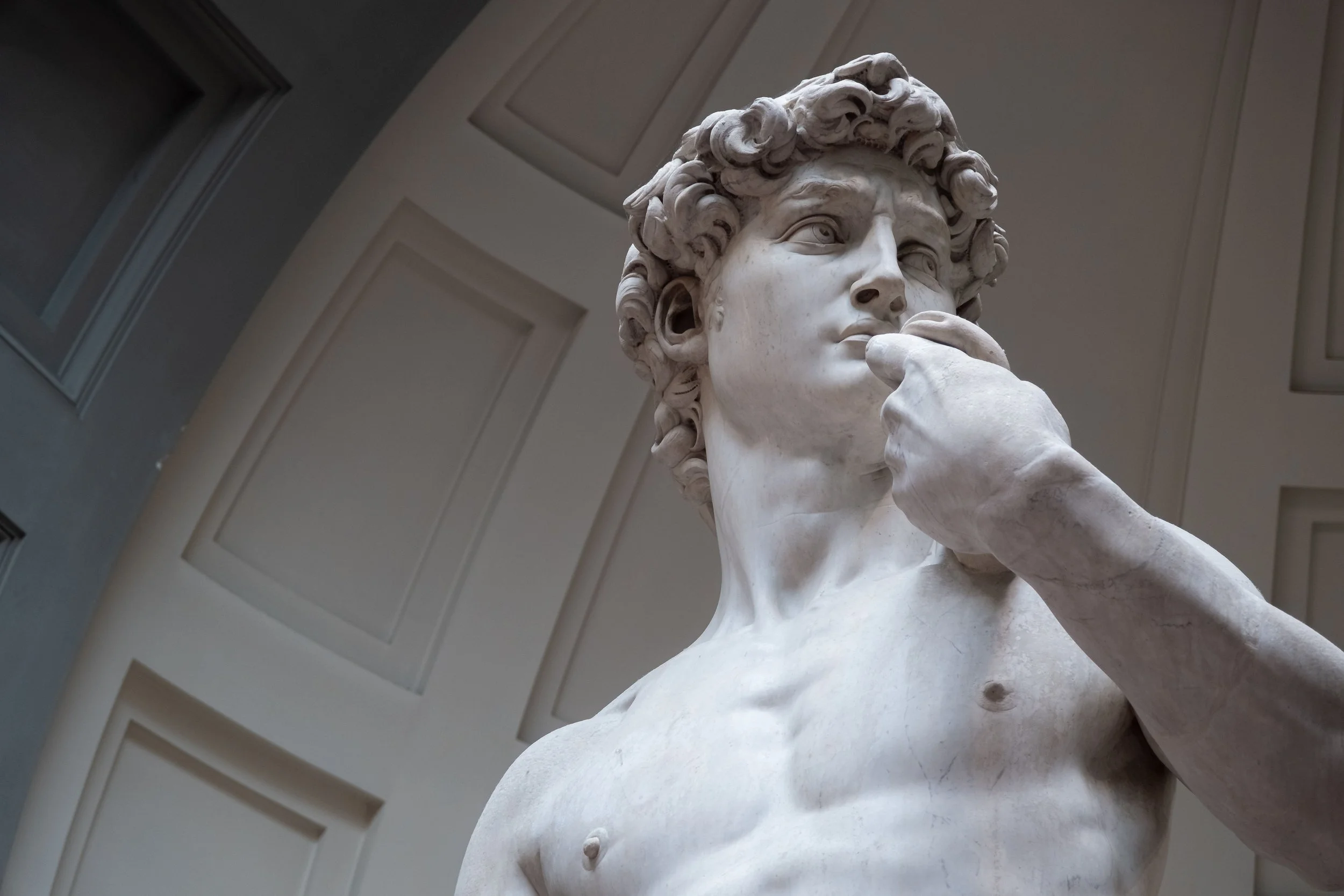
Standing before Michelangelo’s David in Florence, it’s easy to admire the finished masterpiece and miss the difficult history of the marble beneath it. The stone had been abandoned for decades before a young Michelangelo took on the challenge. After more than 25 years teaching yoga, meditation, and Yoga Nidra, I often return to this question: what do we do with the circumstances we’re given? It matters because most of us are working with something unfinished, inherited, or far from ideal.
The First Look
There is a lot of impressive art in the Accademia in Florence, but you go to this museum for one reason—to see The David. Even if you’ve seen reproductions of The David in photos, replicas, or a cheeky apron with his chiseled body printed on the front, you’ve never seen The David until you’ve actually stood in front of the actual marble.
I love to watch people’s faces as they see The David for the first time. Invariably, their pace slows, their jaws drop, and their eyes widen as they gaze down the long aisle and take in the immensity of what is perhaps the greatest statue of all time standing there in all its glory.
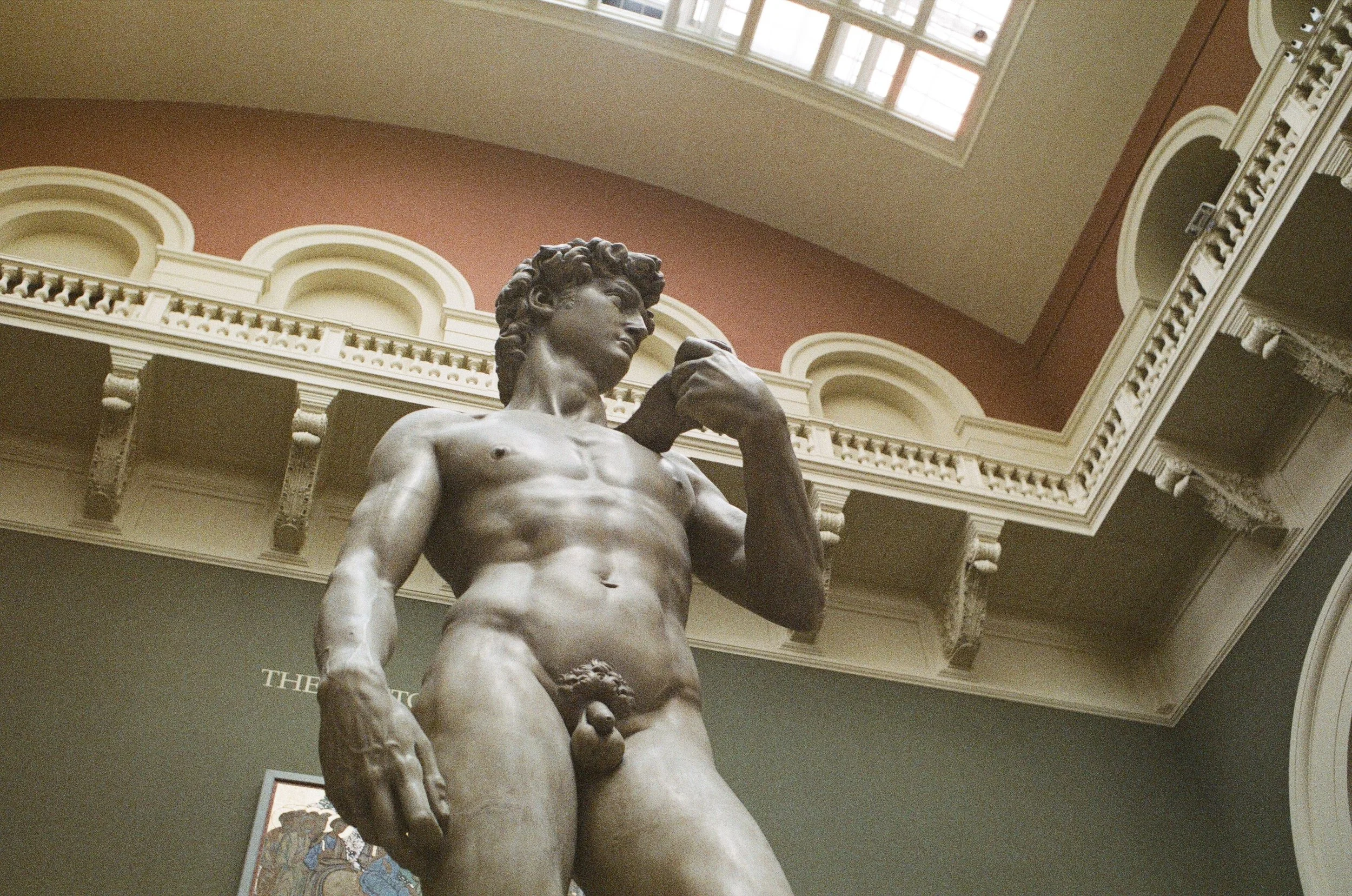
Most people look at his body. Understandable. But for me, it’s his face that is the most remarkable part of the statue—his furrowed brow, the flared nostrils, the tension in his neck, and his eyes looking at something a distance away. His face is the entire statue. Michelangelo captured David, not after his victory, but instead in the split second when he saw Goliath for the first time, when he’s thinking to himself, can I really do this?
But more remarkable than the story of David and Goliath is the story of the stone that he’s carved from.
Il Gigante
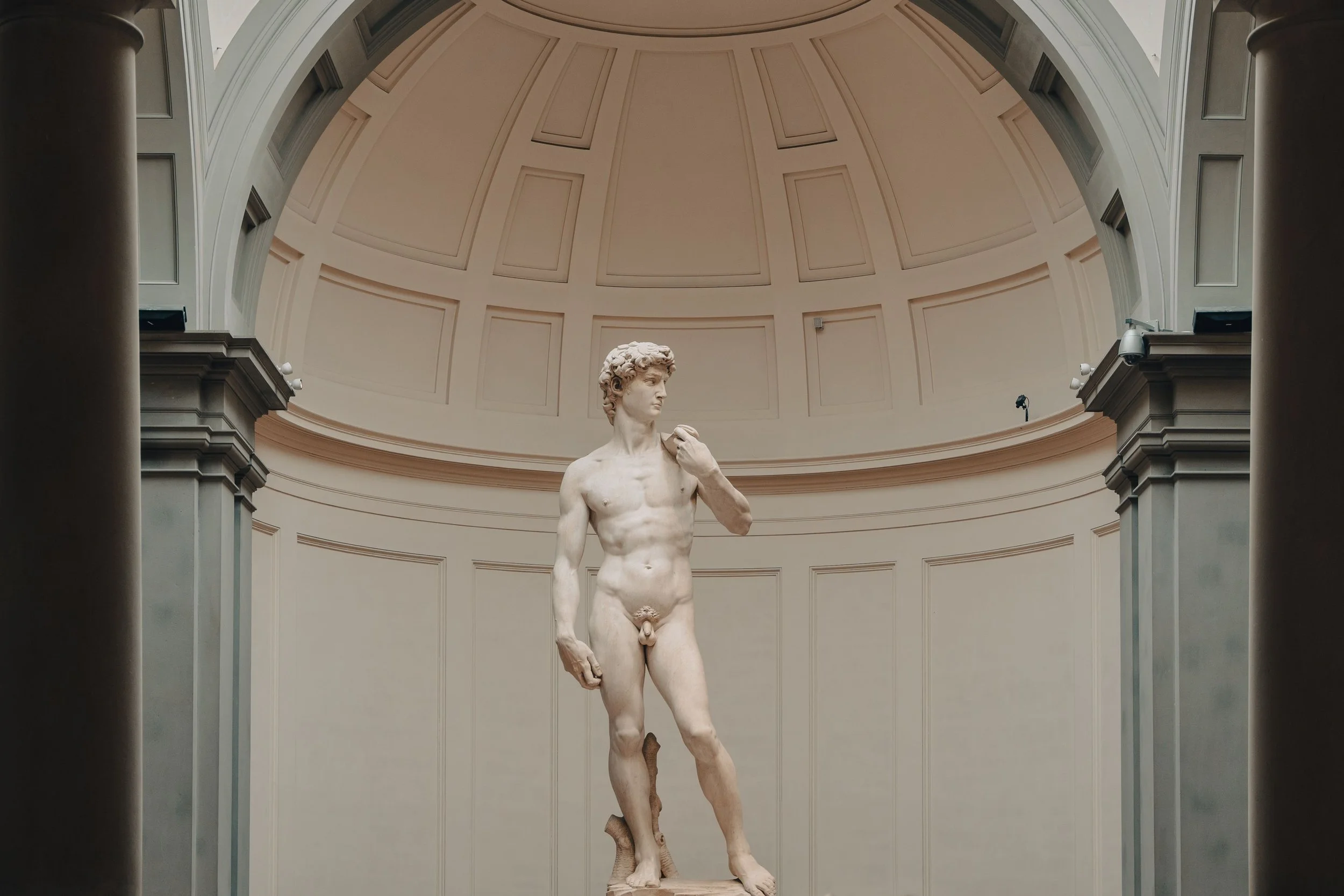
It’s 1464 and the cathedral works committee wants a giant David statue to adorn the cathedral roofline as part of its series of Old Testament heroes. Florence has long loved the David motif because it’s a story about the underdog who takes down the bully because of their smarts, ingenuity, and righteousness. They first give the job of carving The David to Agostino di Duccio, a relatively unknown artist but a student of Donatello, the early Renaissance rock star. This would be like hiring the student of Keith Richards for a high-profile gig. The committee wants a 17-foot statue which they assume is way too big for one block of stone so they send Agostino out to find, quarry, and bring back four blocks that he could fit together to make one larger statue. Somehow, Agostino manages to come back from the Carrara quarries with one massive block of stone that was more than 17 feet tall and weighs about nine tons. Bringing this monolith back to Florence proves to be Agostino’s genius and only legacy because in 1466 Donatello dies, and Agostino’s contract dies with him. With the master gone, this unique block of marble is too valuable to let any hack try to carve it.
After 10 years, in 1476, the committee hires another artist, Antonio Rossellino, to take a crack at finishing The David. That contract doesn’t last long; nobody recorded why.
For 25 years, the stone lies mostly abandoned, growing lichen and being weathered by the rain. The records describe the stone as “badly blocked out” and lying on its back. Florentines call it il Gigante, the Giant.
Marble in the Milk
Michelangelo is born in 1475, more than a decade after the original commission of The David. He is partially raised by a wet nurse who comes from a family of stone cutters in Settignano, in the hills just outside of Florence. Legend says that he drinks marble dust with his milk giving him his talent for carving stone. Even Michelangelo himself jokes that’s where he got his hammer and chisel. Despite not having any artists in his family line, Michelangelo shows signs of a remarkable artistic aptitude from a young age. Lorenzo de’ Medici (Il Magnifico), always on the hunt for new talent, snatches him up and gives him the best art education a person could have.
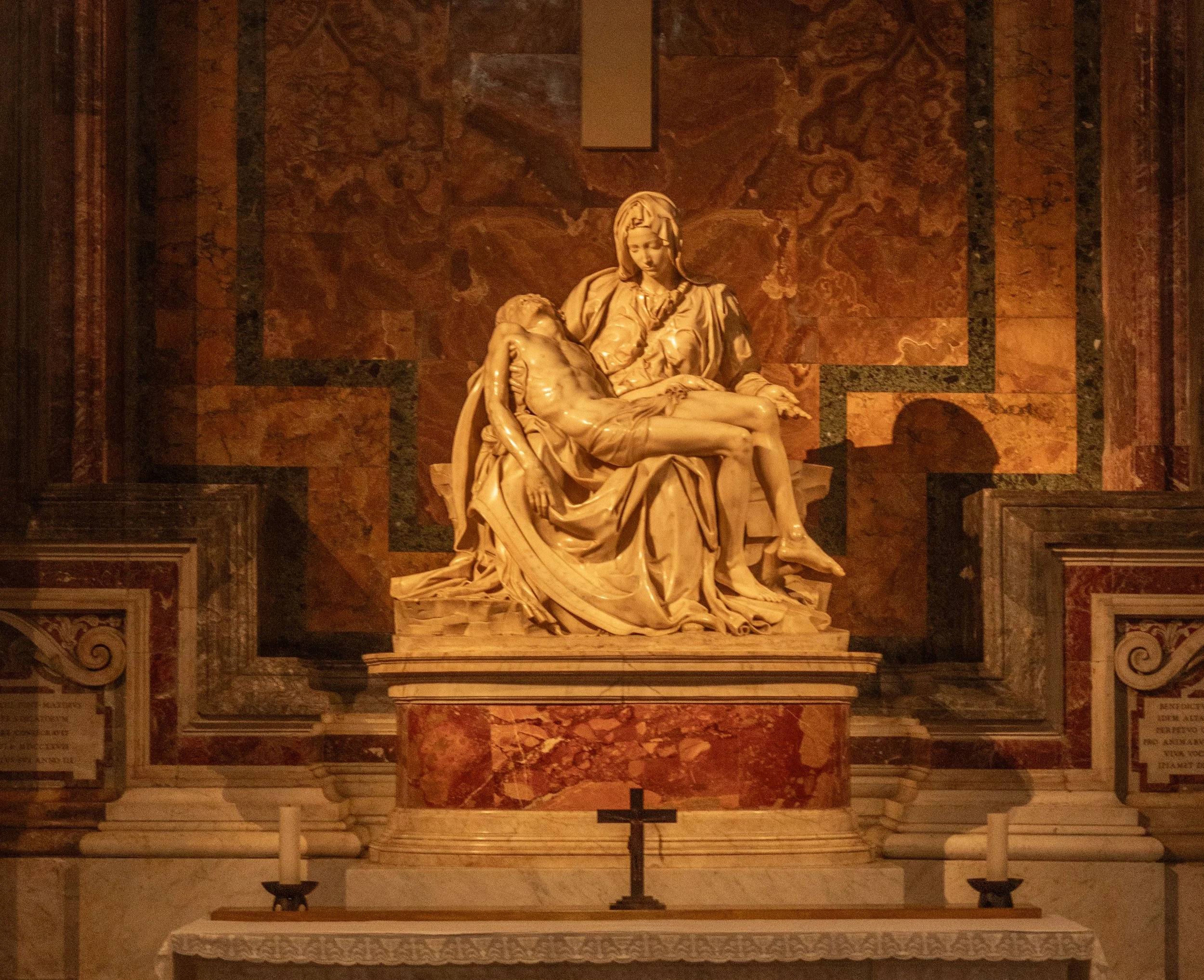
Mike’s first big sculpture commission comes when he’s 21. He’s asked to carve the Bacchus, the Roman god of wine. It’s rejected by the cardinal who commissioned it but purchased by Jacopo Galli, a banker and art collector who recognizes his talent, the same person who would help him to land the gig for the piece that would put Michelangelo on the map, the Pietà.
When the Pietà is revealed, people are astonished and wonder who could have carved such a transcendent statue. Surely it couldn’t be this young, no-name artist Michelangelo from Florence. The story goes that fearing he wouldn’t get credit for his masterpiece, that night, Michelangelo creeps back into the church and carves his name on the sash across Mary’s chest. It’s the only statue that Michelangelo ever signed. It’s the only one he would need to sign.
Michelangelo becomes Rome’s newest rock star. Then in 1501, when Mike is 26, he comes home to Florence and asks to have a go at the Giant.
What He Did With What Was Left
Not only does Michelangelo have the arduous task of carving something that does justice to this gigantic marble monolith, he’s got to work with the poor craftsmanship of at least two other artists who came before him. But he gets to work and labors tirelessly, every day, for three years, from 1501 to 1504.
When it’s done, Florence is dumbfounded. They decide that it’s too beautiful, too magnificent, to put on top of the church so they convene a group of people to decide where to place it. This group includes none other than Leonardo da Vinci, Botticelli and about every other heavy-hitter at the time. One artist suggested, “Why don’t we ask Mike where he wants it?” They decide that the statue should stand right at the entrance of Palazzo Vecchio, Florence’s city hall, as the perfect symbol of the underdog carved from a block that nobody wanted.
The Threshold Moment
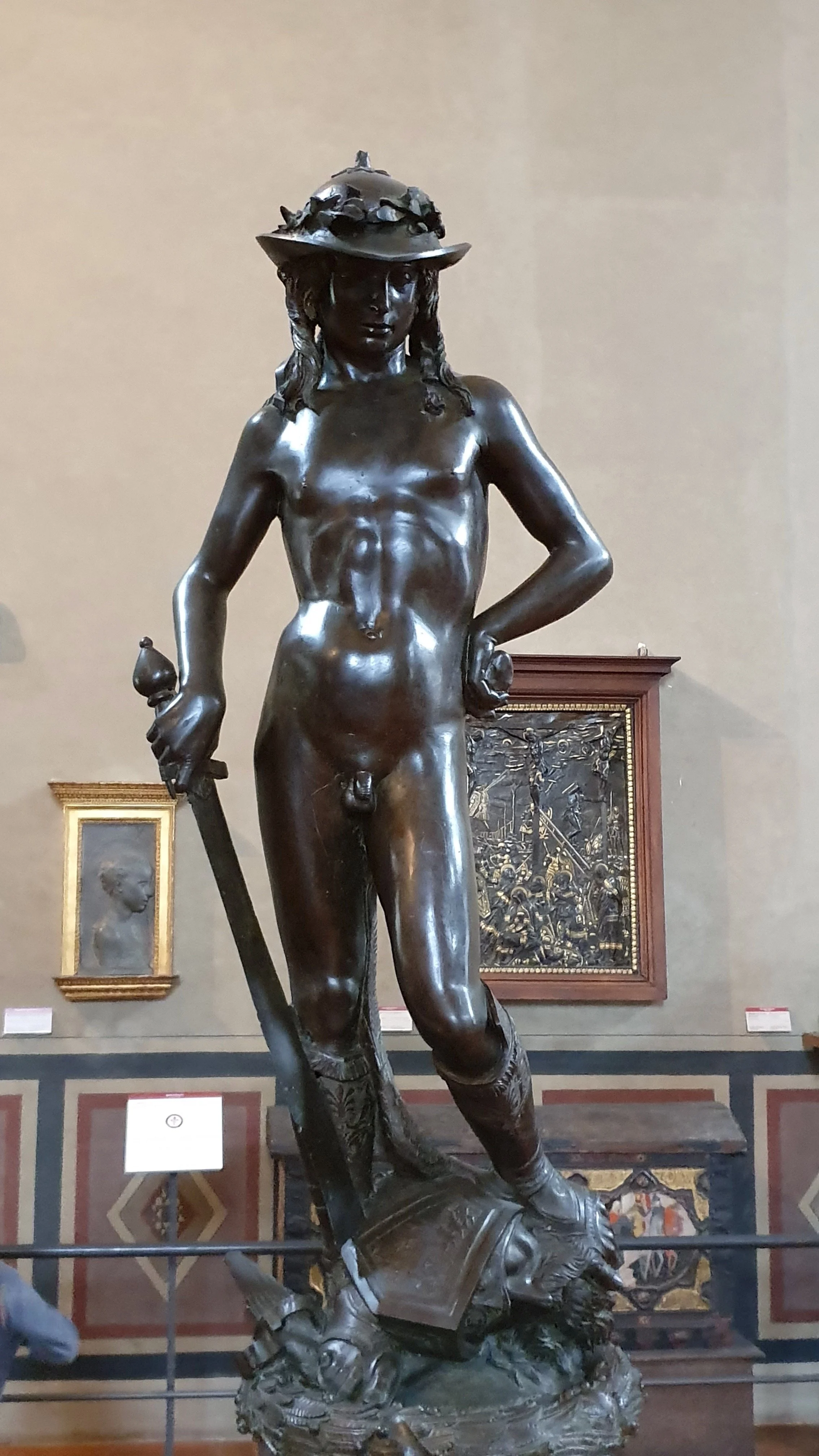
The David isn’t your typical David. Earlier Davids, like Donatello’s bronze version, show the victory: a boy standing over Goliath’s severed head, relaxed, pleased with himself. That head is how you know it’s David and not just some kid. But victory would have been too easy, too obvious for Mike. He carved the threshold, the moment David sees what he’s really up against and has to choose whether to step forward or run for the hills. That’s the look on his face you saw when you first walked into the gallery.
Nobody knows exactly why Michelangelo chose the threshold over the victory moment. Maybe there wasn’t enough stone left for Goliath’s head at his feet. Maybe he didn’t want people looking up at a gruesome severed head staring back down at them. Maybe he just wanted to see it differently. Whatever the reason, he turned the stone nobody knew what to do with into a masterpiece.
It’s staggering to think that perhaps the world’s two finest sculptures, The Pietà and The David, were created by the same person, and all while he was in his 20s.
If Florence and its extraordinary stories speak to you, you're welcome to join the interest list for Scott's future Tuscany retreats and receive updates as new details become available.
Your Block, Your Giant
Beyond a masterpiece, Michelangelo leaves us the legacy to remember that it’s not what you’re given but what you make of it. He also reminds us that the moment we see our first giant counts, even before anything is won.
What’s your block? What’s your giant? What half-carved block have you been handed: a job, a family, a body, a business someone else started?
Whatever came before you, there’s enough marble in it for a masterpiece.
FAQ — Michelangelo’s David and the Renaissance
What is the story behind Michelangelo’s David?
Michelangelo’s David was carved from a massive block of Carrara marble that had been left unfinished for decades. Several artists had previously been commissioned to work on the stone, but the project remained incomplete until Michelangelo took it on in 1501. He transformed the abandoned marble into one of the most celebrated sculptures of the Renaissance.
Why was the marble used for Michelangelo’s David abandoned?
The marble had been partially worked by earlier sculptors, including Agostino di Duccio. When their commissions ended, the stone remained unfinished and exposed to the elements. Its size, previous carving, and condition made it a difficult project for the artists who followed.
How long did it take Michelangelo to sculpt David?
Michelangelo worked on David for approximately three years, from 1501 to 1504. He was just 26 years old when he began the project.
Where can I see Michelangelo’s David in Florence?
The original marble statue of David is displayed at the Accademia Gallery in Florence, Italy. Visitors can approach the sculpture along the gallery's central aisle and appreciate its extraordinary scale and detail in person.
Why does Michelangelo’s David look worried rather than victorious?
Unlike earlier sculptures of David that depict his victory over Goliath, Michelangelo portrayed him before the confrontation. His furrowed brow, focused gaze, and tense expression suggest a moment of anticipation and uncertainty. The precise reason Michelangelo chose this moment remains open to interpretation.
What can Michelangelo’s David teach us about overcoming challenges?
The sculpture offers a reminder that remarkable things can emerge from imperfect beginnings. Michelangelo worked with a block of marble that others had abandoned. His story invites us to consider what might be possible with the circumstances and materials already in front of us.