
Spiritual awakening rarely happens in a straight line. It unfolds slowly—through repetition, reflection, and lived experience. In this reflection inspired by Mary Oliver’s poetry and the practice of Yoga Nidra, we explore awareness, the soul, and what it means to wake up not by knowing more, but by looking, touching, and loving what is already here.
How We Actually Learn: Not Lines, But Rotations
I've been thinking about how we learn.
Not in straight lines—though often it may appear that way—but in fractals. Circles. Rotations.
Think of a record player. From straight on, the needle looks like it's traveling in a direct line toward the center of the record, right? But what's actually happening is the record is traveling these enormous turns, rotating all the way around the needle.
Each rotation brings the needle infinitesimally closer. And over time, that tiny movement becomes significant movement.
This is how we wake up to the truth of our Being.
Not all at once but rather layer by layer—rotation by rotation. Experience by experience. We do it by coming back to the same truths, the same problems, the same practices—over and over again, but with each rotation, we get it a little deeper.
Looking for the Soul: Mary Oliver’s Bone
In my Live Online Yoga Nidra class this past Sunday, I shared one of those poems I've been circling back to for literally decades: Bone by Mary Oliver.
I call it an excerpt from the Gospel of St. Mary.
Here's how it opens:
Understand I am always trying to figure out
what the soul is
and where hidden
and what shape
Mary's looking for the soul the way most of us do—trying to figure it out. Intellectually. Practically. Where is it? What shape?
She finds an ear bone from a pilot whale on the beach. Small. Hard. Necessary. Almost nothing.
Maybe the soul is like this, she thinks. Just like the earbone, she's totally in her head.
The Moment Everything Shifts
She looks away from the bone and toward the ocean beside her:
the gray sea
opening and shutting its wave-doors
unfolding over and over
its time-ridiculing roar
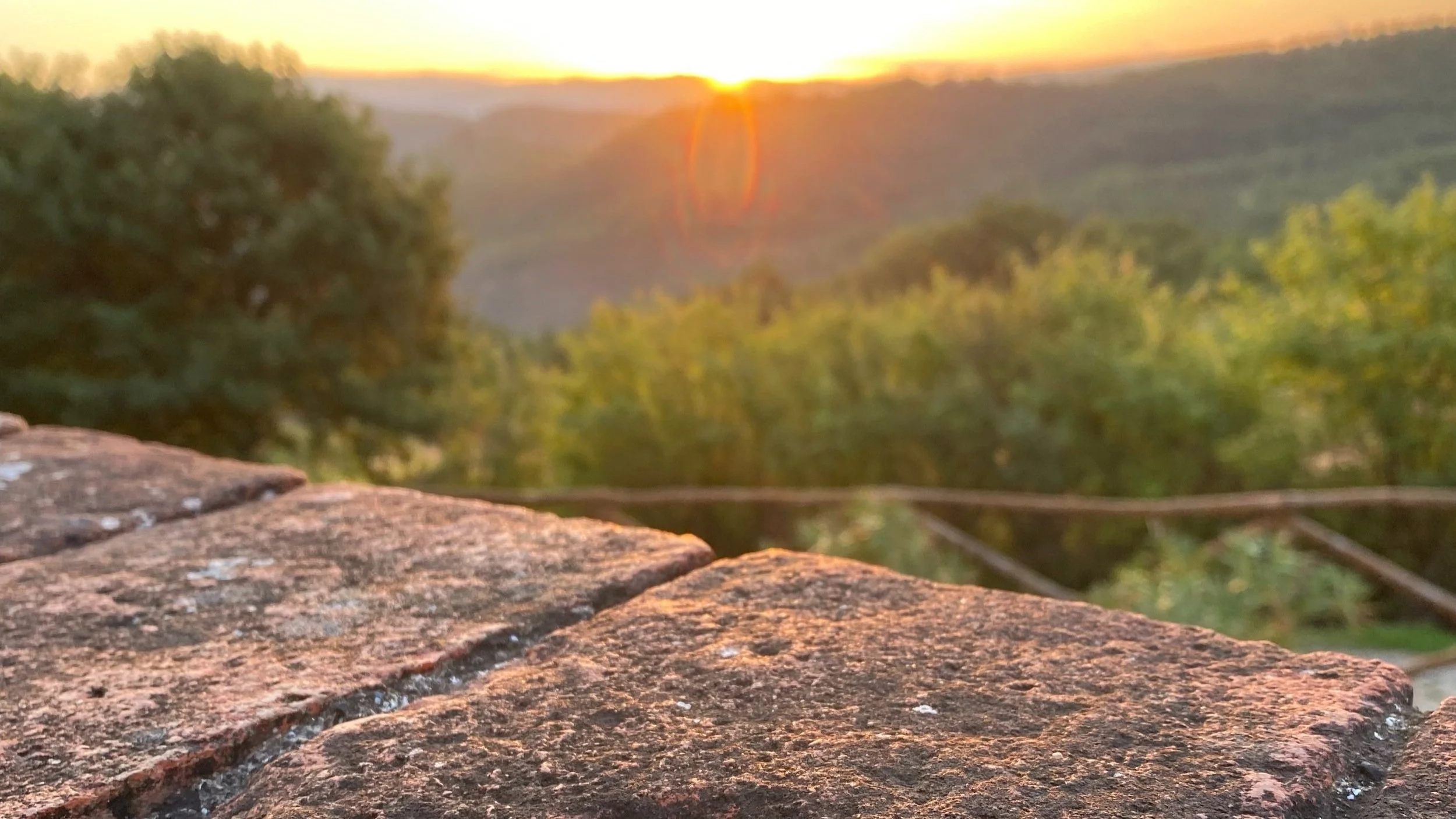
That roar of the ocean, every wave crashing down, is simply the Universe over and over again saying now—now—now.
It's time-ridiculing because it's always been now. It will always be now. Time's a joke, she's saying.
And then—this is the moment—she realizes she's been looking at this all wrong:
what the soul is, also, I believe I will never quite know.
Though I play at the edges of knowing, truly, I know
our part is not knowing, but looking
and touching
and loving
From Knowing to Awareness
Lemme circle back to that again:
Our part is not knowing, but looking and touching and loving.
This is the shift from head to heart, from trying to grasp the soul like an object to revealing it through the act of awareness itself.
We don't find the soul by dissecting it. We find it by seeing what's beautiful, by touching those things we cherish, by loving the people and places and moments that make us feel most alive.
Through all the things we can be aware of, we reveal awareness itself.
This is what Yoga Nidra does.
It helps us see through the objects we are aware of—the sensations, the thoughts, the sounds, the emotions—to the awareness that's always been here.
We wake up to the truth that we are Awareness itself, experiencing itself in the form, the costume of, sensations, thoughts, sounds, emotions. As if Awareness had an entire costume box that it likes to wear: Awareness as sensation, awareness as thought, as emotion.
The Spirit Likes to Dress Up Like This
Reminds me of another excerpt from the Gospel of St. Mary, from her poem called Poem: The Spirit Likes To Dress Up Like This:
The spirit
likes to dress up like this:
ten fingers,
ten toes,
shoulders, and all the rest…
it needs
the metaphor of the body,…
to be understood,
to be more than pure light
that burns
where no one is—
What Mary Oliver is saying in both of these poems is that as we awaken, we do not separate from the world. We don't float above it.
Instead, our Awareness becomes intimately married to it.
Walking Softly Through the Pale Pink Morning Light
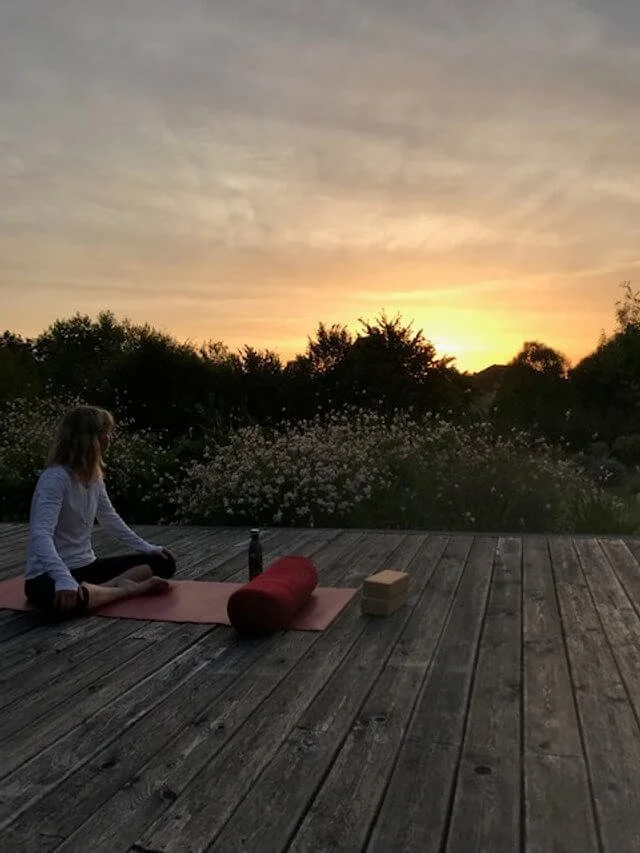
Mary ends the poem like this:
which is the way I walked on
softly
through the pale pink morning light
And just like that, she gets it now. And she's just living her life. Looking. Touching. Loving.
She's not in her head anymore. Now, she's intimately married to and awake to the miracles of the "daily presentations."
The pale pink morning light isn't just the dawn of that morning—it's the dawning of her own consciousness.
The Fractal of Returning
I've read this poem forty bajillion times.
And it took forty bajillion and one to see it this way.
That's the fractal. That's the rotation.
Each time we come back to what we love—a poem, a practice, a person—we see a little deeper. We touch a little softer. We love a little more completely.
A Practice for the Weekend
If you want the full teaching (plus the Yoga Nidra practice that followed), I've posted the video from Sunday's class here:
It's about 17 minutes of dharma talk and 30 minutes of Yoga Nidra. Perfect for a Saturday morning when you want to go a little deeper.
Or just take Mary's words with you into your weekend:
Our part is not knowing, but looking and touching and loving.
See what you notice.
Touch what you cherish.
Love what makes you feel most alive.
That's the practice.
"Which is the way I walked on, softly, through the pale pink morning light…"
FAQ
What is the spiritual meaning of Mary Oliver’s poem Bone?
The poem explores the shift from intellectual understanding to embodied awareness. It suggests the soul isn’t something to define, but something revealed through presence, love, and attention.
How does Yoga Nidra support spiritual awakening?
Yoga Nidra guides awareness beyond thoughts and sensations, helping practitioners recognize awareness itself—the ground of experience—without effort or analysis.
What does “our part is not knowing” mean?
It points to a form of wisdom rooted in lived experience rather than conceptual knowledge. Awakening happens through relationship, not mastery.
How does mindfulness relate to poetry and meditation?
Poetry and meditation both train attention. They invite direct experience rather than explanation, allowing insight to emerge naturally.


