Why Most Business Programs Fail Conscious Entrepreneurs (And What Actually Works)

Conscious entrepreneur business program. Soul-aligned business. Business coaching for yoga teachers. These are phrases I hear constantly and they point to a real problem I've spent more than 25 years inside, first as a student of it, then as someone who built a six-figure business from it, and now as a mentor helping others navigate it.
business coaching for yoga teachers

Most programs that claim to serve conscious entrepreneurs like yoga teachers, healers, coaches, creators, pick a side. Either the practical side or the spiritual side. Neither one actually solves the problem.

This post is about the split. And about what I've found, after a lot of hard lessons, that actually bridges it.

The Day I Closed Two Yoga Studios

In 2014, I closed two yoga studios.

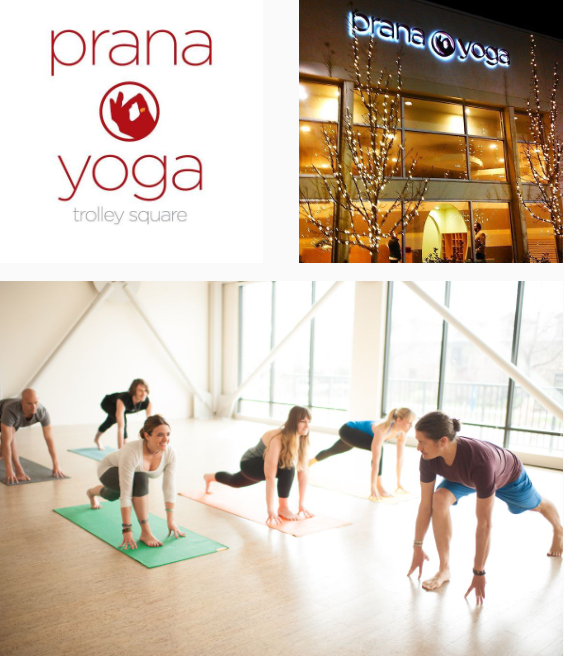
Prana Yoga. Prana Yoga Station Park.

I believed in those places. Blood, sweat, tears. Lots of tears. Poured myself into them, leveraged myself for them, taught some of the best classes of my life inside them. Found wonderful, beautiful students, many of whom are still practicing with me today. God bless you.

The studios didn't make it.

When they closed, I didn't just lose the businesses. I also lost the version of my story where I thought I had it all figured out.

I was broke. Genuinely, practically, broke-ass, bank-account broke. Debt I would spend years paying back. Lessons I did not enjoy learning.

But here is the thing I didn't fully understand until years later, sitting in the south of France with a cup of coffee and a view I had no business being able to afford:

That wasn't the only way I'd been broke.

The studios, even when they were full, even when the classes were beautiful and the students were showing up and something real was happening in those rooms — I had been running them on someone else's blueprint.

I came into those studios following someone else's dream. Following a model that made sense on a spreadsheet but cost something essential in practice.

There is the kind of broke that empties your bank account.

And there is the kind that empties you.

I have been both kinds. At the same time, actually. Which is its own special kind of exhausting.

The Split That's Quietly Grinding Down Conscious Entrepreneurs

I've told that story to a lot of people over the years. And almost every time, they nod. Not because they closed studios, but because they recognize the split.
yoga teacher business strategy

Yoga teachers, healers, coaches, creators. People doing genuinely meaningful work. Quietly ground down by the gap between what they came here to do and how they've been told to do it.

Most of the business courses and coaching programs out there pick a side.

The practical ones hand you the funnel and the revenue targets. These treat depth and soul as a distraction from the "real work" of making money.

The spiritual ones tell you to raise your vibration and trust the universe. A vision board is all you need and rent, apparently, will sort itself out.

So you end up managing a split that shouldn't exist. Your integrity on one side. Your income on the other. Some invisible line between them that you're not supposed to cross.

That line between soul and income is a lie.

I spent a lot of years finding that out.

Why the Both/And Approach to Business Actually Works

After closing those studios, rebuilding from scratch, living and teaching in three countries, and eventually mentoring dozens of conscious entrepreneurs through their own versions of this split, I arrived at a framework I call the Windmill.

A windmill needs two things to work. Wind and a machine.

The wind is spirit — your sankalpa, the deep intention underneath your work, the thing that doesn't shift when the market does. Without it, the work becomes mechanical. You might make money, but something keeps feeling off.

The machine is the practical structure, clear positioning, sustainable systems, pricing that reflects the value you actually deliver, visibility that doesn't require you to become someone else. Without it, the wind just blows through. Nothing gets built.

Most business coaching for conscious entrepreneurs hands you one or the other.

What changes things is both.

This isn't a philosophy. It's a design. When your business is built from your sankalpa outward, when the spiritual thread and the practical structure are running in the same direction, the split dissolves. The work feels like one thing instead of two competing things you're trying to hold together.

What Soul-Aligned Business Strategy Looks Like in Practice

I want to be specific about this, because "soul-aligned business" can sound like a slogan.

In practice, it looks like a yoga teacher who finally understands her positioning clearly enough to attract the right students and charge what their training is actually worth.

It looks like a healer who has been undercharging for years building a pricing structure that reflects their actual expertise, without apologizing for it.

It looks like a coach who has been hiding behind a generic offering stepping into her specific mechanism of influence — the particular way they help people that nobody else replicates.

None of them needed more inspiration. They needed the wind and the machine working together.

That's the work.

The Business Accelerator for Conscious Entrepreneurs
This spring I'm opening the first cohort of my newest program: the Business Accelerator for Conscious Entrepreneurs.

Four months. Small group. Twelve people maximum.

We'll start with the deeply personal, the spiritual thread. We'll set your sankalpa, get crystal clear on your positioning, and explore the honest needs of your clients, what they actually need from you and why you're the right person to deliver it.

From there we build what actually needs to be built. Sustainable systems, products and pricing that reflect the value you deliver, and visibility that doesn't require you to perform.

This is the beta cohort. The investment is $997.

If this is landing for you, I'd love to have you in the room.

FAQ — Business Coaching for Conscious Entrepreneurs

What is a conscious entrepreneur?
A conscious entrepreneur is someone — a yoga teacher, healer, coach, or creator — whose business is inseparable from their values and spiritual practice. The challenge isn't finding purpose. It's building something practical and sustainable around it without losing what made the work worth doing.

Why do most business programs fail yoga teachers and healers?
Most programs either ignore the spiritual dimension entirely or focus on mindset without practical tools. Conscious entrepreneurs need both: a clear spiritual foundation and grounded, specific strategy. Programs that pick one side tend to leave people either financially struggling or quietly feeling like they've sold out.

What is sankalpa and how does it apply to business?
Sankalpa is a Sanskrit term for deep intention. Not a goal, but a thread of meaning that runs through everything you do. In a business context, it functions as a North Star. When your offers, pricing, and positioning are built from your sankalpa outward, the work feels coherent rather than fractured.

What is the Windmill Framework?
The Windmill Framework is the methodology at the center of the Business Accelerator. It combines wind — the spiritual thread, your sankalpa and deep intention — with the machine, the practical tools and tactics that turn that intention into a functioning, sustainable business. Both are required. Neither works without the other.

Who is the Business Accelerator for?
It's for yoga teachers, healers, coaches, and conscious entrepreneurs who are doing meaningful work and are ready to build the practical infrastructure to sustain it without splitting themselves in two to do it.

Is the Business Accelerator available outside Salt Lake City?
Yes. The program runs fully online and is open to conscious entrepreneurs worldwide.
How to Use AI as a Conscious Entrepreneur

What does conscious AI use actually look like for entrepreneurs? In a world obsessed with automation and artificial intelligence, the real question is how to use AI ethically without replacing human connection. As a conscious entrepreneur, I’ve been thinking deeply about the difference between complicated problems AI can solve and complex problems only humans can navigate.

This Valentine’s Day, I want to share a story about AI for entrepreneurs, love, and what happens when you let technology handle logistics so you can stay fully present for what matters most.

A Perfect Date Night (Planned With AI)

AI and human connection

I want to tell you about one of the best date nights I've ever planned.

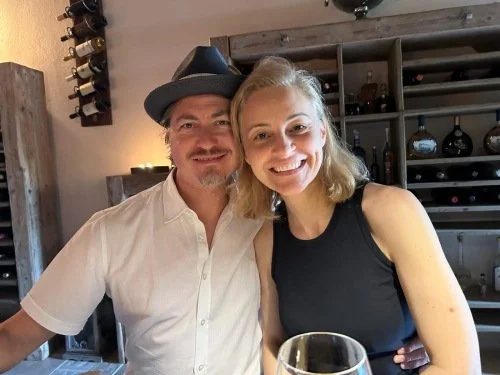
For Christmas, I wanted to do something special for my wife, Seneca. Seneca’s a great gift giver and I wanted to give her something unforgettable—not something she'd unwrap and forget but an experience. Something that felt like us. Something that showed her I knew her and listened to her what she likes and wants.

And so, a few times in conversation, she’s dropped how she loves going to the symphony or the opera. Live music. BIG live music. The kind that fills a room and makes you forget your phone exists. She’s also a foody. Loves great food. She’s not into trendy food, but rather the kind of meal where you linger over every bite and make a phonecall to your Italian relatives because they understand really good food. She also loves moving the bod as part of our dates, a walk, a hike, a bike ride or something. And she appreciates conversation without a schedule pressing us forward.

This was my contribution—knowing her, knowing what would feel meaningful. It was 15 years of paying attention. No algorithm on earth could have told me that.

What AI Did — And What It Didn’t

But here's where AI came in.

I asked it to help me find what was happening in Salt Lake City near the holidays. Symphony or opera performances, specifically. I gave it our preferences for food to find a restaurant: Italian, walkable from the venue, highly rated, not a chain. I asked it to map out the logistics so we wouldn't spend the evening staring at our phones trying to figure out parking or driving directions.

In about ten minutes, I had the whole evening planned. A Rachmaninoff concert. A Tuscan restaurant we'd never tried that was a 10-minute walk from the concert hall. Everything mapped, timed, and ready.

I made the reservations, bought the tickets, and gave her that for Christmas. 

We went just last weekend and it was a perfect night. And sorry AI, but you deserve exactly zero credit for the magic of it.

Here's why I'm telling you this on Valentine's Day. 

Complicated vs. Complex Problems

A few months ago, I attended a multi-day AI summit where Dr. Arthur Brooks—the Harvard professor and Atlantic columnist—said something that fundamentally changed how I think about this technology.

He talked about the difference between complicated problems and complex problems.

AI for business strategy

Complicated problems are things like logistics, data analysis, research, math, scheduling, market comparisons. Deep research. They have solutions you can figure out with enough information. Your left brain handles these. AI is extraordinary at them. Ninja.

Complex problems are things like relationships, meaning, purpose, love, creative expression, conflict resolution, spiritual practice. They don't have neat solutions. They require wisdom, intuition, lived experience. Your right brain handles these. AI is terrible at them. The worst. 

And here's the line from Brooks I haven't stopped thinking about: "You don't want a simulation of love. You want actual love. Never solve a complex problem with a complicated machine."

Your brain totally knows the difference. A simulation created by the left brain doesn't register on the right brain. We all have natural bullshit detectors. You can't fool yourself into connection, meaning, or purpose through technology. You just can’t.

What This Means for Conscious Entrepreneurs

So what does this mean for us as conscious entrepreneurs?

What it means is knowing what to hand to AI—and what to keep for yourself. Pure and simple. 

Hand AI the complicated stuff: organizing your ideas, researching your market, analyzing your survey data, planning your content calendar, drafting outlines, building strategic roadmaps.

Keep the complex stuff: the relationships with your students, your creative vision, your teaching presence, your spiritual practice, the conversations that matter, the messy human work of showing up for the people you serve. This is the very difficult but very rewarding work that just can’t be delegated to a machine. 

When you delegate the complicated stuff, you don't just save time. You save time and get your life back for all the complex stuff of being human.

Brooks put it this way: buy time with AI, but spend it on the mysteries that make you human. Spend it on love. On worship—whatever that means for you. On nature. On beauty. On the relationships that feed your soul.

That's what happened on my date night. AI handled the research, the logistics, the complicated variables. Hell, it even analyzed hundreds of Google and Yelp reviews (in seconds). And because of that, I got to be fully present with my wife at a concert that put us in awe, over a meal we're still talking about.

That's conscious AI use. Not replacing the human stuff. Freeing yourself up for more of it.

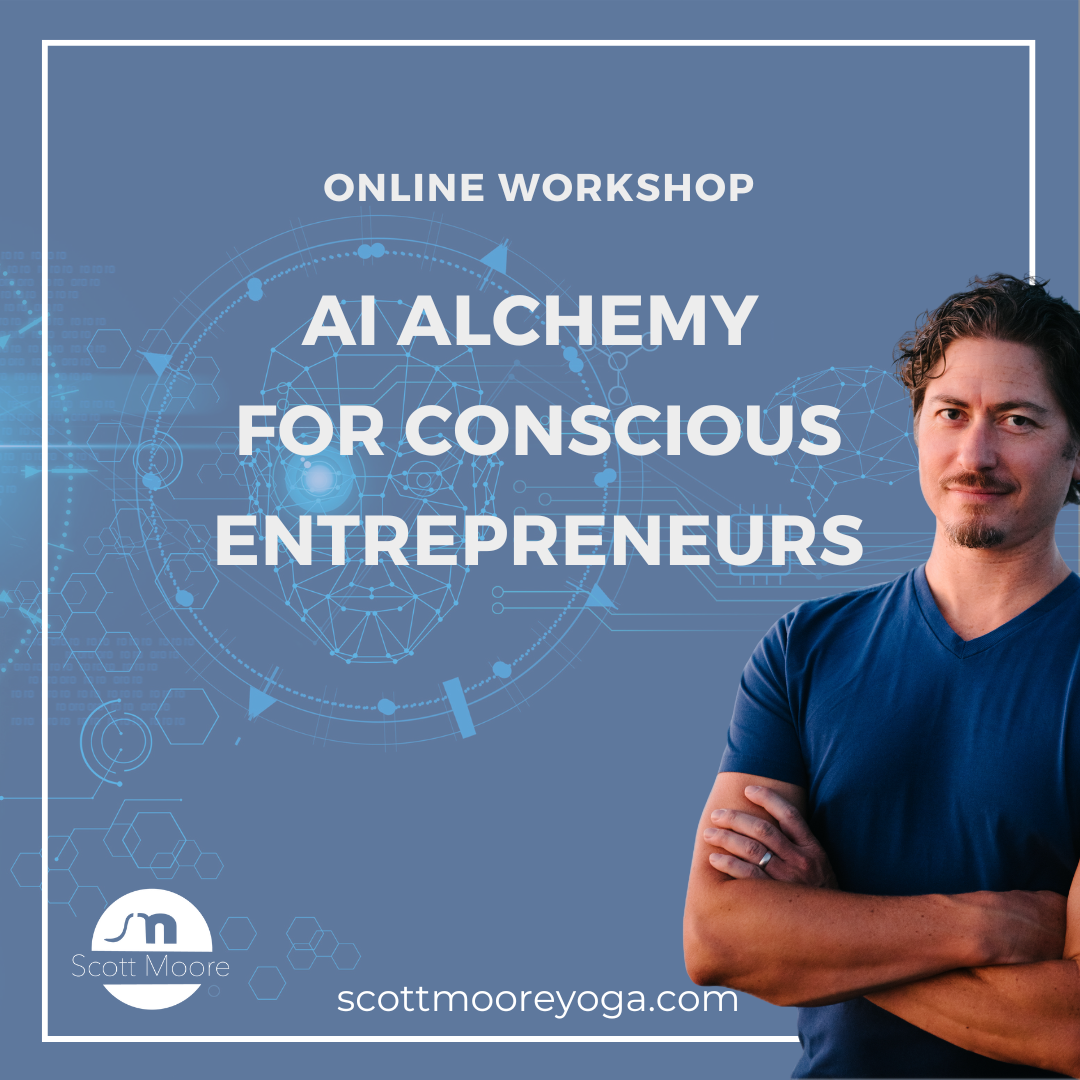
AI Alchemy for Conscious Entrepreneurs

Sunday, February 15 | 11 AM–2 PM MT | Live Online

In three hours, you'll learn how to partner with AI for the complicated work—so you can get back to the complex, beautiful, irreplaceable work of being human.

We'll cover:

  • Brain Dump to Brilliance—Turn your scattered thinking into organized strategy

  • Delegation vs. Abdication—The critical distinction

  • The Shiva/Shakti Framework—Consciousness meets action

  • When to Use AI and When NOT To—The Brooks principle in practice

  • Live Demonstrations—Watch the method in real time

  • Ready-to-Use Prompts—Templates for YOUR specific business

Plus the full AI Alchemy manual.

Investment: $97—Live + Lifetime Replay $77—Replay Only

Last time at this price. Next workshop goes to $197.

AI is a brilliant complicated machine. You are an irreplaceable complex human.

Use the machine for what it's good at. Save yourself for what only you can do.

Happy Valentine's Day. Go be with someone you love tonight.

P.S.—Arthur Brooks also said something else that stuck with me: "Anything that substitutes for real human relationships makes you less happy. Anything that complements them makes you happier." That's the whole philosophy of conscious AI use in two sentences. Sunday, I'll show you how to put it into practice.

FAQs

What is the difference between complicated and complex problems?
Complicated problems involve logistics, research, scheduling, and data analysis. They can be solved with enough information. Complex problems involve relationships, meaning, purpose, creativity, and spiritual life. They require human wisdom and lived experience.

How should entrepreneurs use AI ethically?
Entrepreneurs should delegate complicated tasks like research, data analysis, and organization to AI while keeping human-centered work—relationships, creative expression, teaching presence—for themselves.

Can AI replace human connection?
No. AI can simulate communication, but it cannot replace real human relationships, intuition, or emotional presence.

What is conscious AI use?
Conscious AI use means partnering with AI to handle technical and analytical work while preserving human agency, creativity, and connection.

How can AI save time without reducing authenticity?
By handling logistics and research, AI frees up time so entrepreneurs can invest more energy in relationships, service, and meaningful work.

How I Generated $20,000 in Five Weeks Using AI—Without Losing My Voice

Over the last five weeks, something happened that I think matters — especially if you’ve been wondering whether AI is actually useful or if it’s just hype.

I generated $20,000 in revenue.
In five weeks.

Now, before you roll your eyes or assume this is one of those "I made six figures in my sleep" stories—it's not.

This is about AI for entrepreneurs. AI marketing strategy. Conscious AI use.

And it’s about focus.

Let me tell you what actually happened

I didn't use AI to write sales pages or create some automated funnel. I love the writing part and did that myself.

AI marketing strategy

What I did was take a hard look at what I already had—and figure out how to use it in an organized way instead of a scattered one.

What I DID have:

  • 25 years of teaching experience

  • An audience that trusts me

  • Offerings that genuinely transform lives

  • Systems I've been using for years—my website, scheduler, emails.

What I DIDN'T have was a clear strategy for putting all of it together in a way that actually connected my skills with the people who wanted what I offer.

I had the wind.

But the windmill was missing a few essential components.

How I Partnered With AI (Without Replacing Myself)

So I partnered with AI—not to replace my thinking, but to organize it.

I sat down with my AI tools and said:

"Here's everything I've got. Here's my audience. Here's what I'm offering. I want to make a real impact with what I have. Help me build a strategic plan that actually moves the needle."

What came back was simple, direct, and remarkable. It gave me a marketing sequence built around:

  • MY voice

  • MY offers

  • MY existing systems.

Nothing new. Nothing I hadn't done before.

Just organized. Focused. Strategic.

The AI looked at my metrics, helped me sequence my outreach, suggested timing and follow-up cadences, and helped me track what was working so I could adjust in real time.

I still wrote every email. I still showed up for every call. I still delivered every session.

AI didn’t do the work for me but it helped me stop scattering my energy across 15 directions and focus it like a laser on the three things that would actually generate results.

Five weeks. $20,000.

But more importantly:

  • Real people served

  • Blueprints delivered

  • Mentorships started

  • Meditation Challenge launched

  • Retreat filling up

  • Lives actually impacted.

Delegation vs. Abdication

This is what I mean by conscious AI use. And this is what I'm so passionate about. I'm using AI to delegate tasks rather than abdicate my autonomy.

There’s a difference.

Delegation means you remain the thinker, the voice, the authority.
Abdication means you hand over your judgment and identity.

AI should amplify your clarity. Not replace it.

AI Alchemy for Conscious Entrepreneurs

This Sunday, I’m teaching exactly how I did this.

AI Alchemy for Conscious Entrepreneurs
Sunday, February 15
11 AM–2 PM MT
Live Online

In three hours, you'll learn:

  • Brain Dump to Brilliance—My signature method for turning scattered thinking into structured, authentic content

  • Delegation vs. Abdication—The critical distinction that determines whether AI amplifies your voice or replaces it

  • The Shiva/Shakti Framework—Integrating consciousness with action in your AI practice

  • Ethical AI for Conscious Entrepreneurs—Using this technology in alignment with your values

  • Live Demonstrations—Watch the process happen in real time

  • Ready-to-Use Prompts—Templates you can implement immediately

Plus the full AI Alchemy manual with examples, frameworks, and resources.

Investment:

  • $97—Live + Lifetime Replay

  • $77—Replay Only

This is the last time I'm offering this workshop at this price. Next time, it goes to $197.

You already have the goods. The experience. The wisdom. You know your audience.

Maybe what you need isn't more content or another certification. Maybe what you need is a better windmill.

Let's build one together.

P.S.—I'm not saying AI is magic. I'm saying it helped me do what I was already capable of doing—but faster, more focused, and without the scattered energy that was costing me thousands every month. If you've been sitting on gifts the world needs, this workshop might be the nudge that gets them out there.

Frequently Asked Questions

Is AI actually useful for entrepreneurs?
It can be — if used strategically. AI works best when organizing your ideas, sequencing marketing, and tracking results. It’s not a replacement for your voice or expertise.

Do I need to automate everything to make money with AI?
No. I didn’t automate. I wrote everything myself. AI supported the strategy behind it.

What is conscious AI use?
Using AI to delegate operational tasks while maintaining your authority, voice, and ethical alignment.

Can AI help increase revenue without changing my offers?
Yes. Often it’s about organizing and sequencing what you already have — not creating something new.

How a Laminated Logo Landed His First Client: Danny's Business Mentorship Journey

When Credentials Aren't Enough

Business mentorship isn't about teaching you skills you don't have. Sometimes it's about helping a conscious entrepreneur find the direction that makes their existing skills finally land.

business mentor

Danny came to me in August — burned out and needing serious direction.

On paper, he had everything going for him: CPA, MBA, 18+ years in finance, Big Four experience. A résumé most people would kill for. He'd spent years in the C-suite helping build other people's companies, stress-testing models, catching mistakes before they sank the ship.

Staying up late. Waking early. Stressed out.

But here's the thing: he never got equity. Not a single share.

After years of pouring himself into companies that weren't his own, Danny had a realization that changed everything: I'm done building other people's dreams while sacrificing my own.

Conscious entrepreneur

He knew he wanted to launch his own business as a fractional CFO — helping startups and growing companies get financial leadership without the $250K/year salary. He had the skills. He had the drive. He wasn't afraid of the work.

What he didn't have was a clear direction.

That's where business mentorship came in.

Before You Build External, Go Internal

Before we built anything external — before the website, the business cards, the logo — we went internal.

This is where my experience as a yoga and mindfulness professional becomes essential to business mentorship. Together we explored who Danny really is. Not his résumé. Not his credentials. Him.

Because something I've learned in both my own six-figure business and mentoring dozens of conscious entrepreneurs is this: the primary product in anyone's business is YOU.

Danny's not really offering CFO services to the world. He's offering his own unique gifts to the world in the form of what he does.

This is huge. It changes everything.

It changes Danny from being any old CFO to being the one and only Danny Barrell.


Finding the Wind: Danny's Entrepreneurial DNA

So as we dove deep into who he is, what we discovered was fascinating.

Launch your business

Danny comes from entrepreneurial stock. His grandfather moved to Utah at 55 with nothing but a Roto-Rooter franchise and a dream. His dad built that into a thriving business.

But Danny watched them both work 80-hour weeks, answering phones on Saturdays, grinding for every sale.

Even as a kid mowing lawns for money, Danny knew he wanted something different. He wanted to be an entrepreneur, yes — but he also wanted the skills to build something sustainable.

So he studied finance. He got the degrees. He earned the certifications. He learned the systems.

He became a rare bird — a CFO who actually gets entrepreneurship. Because he is one.

That was his wind — his special sauce, the invisible force that makes him him.

Now we just needed to build the windmill.

Building the Windmill: From Positioning to Launch

Together, over 20 hours of business mentorship sessions from August to November, we built his entire business:

His company name — Foundry CFO Partners — to capture the feeling of forging something solid from raw materials. Danny took his time vetting the perfect name and making sure the domain was available.

His tagline — "A fractional CFO with entrepreneurial DNA" — to instantly communicate what makes him different.

His ideal client — "Jessica," the overwhelmed growth-stage founder drowning in financial complexity who needs CFO-level guidance but can't justify a quarter-million-dollar salary.

His website — calibrated for both SEO and AI search.

His complete business infrastructure — mission statement, service offerings, one-pager, business cards, logo, launch strategy, content calendar, and a weekly workflow so he knows exactly what to do to keep his machine running.

Danny worked incredibly hard. But he worked confidently, knowing every effort was pointed in the right direction.

Plus, he was courting clients and building his presence before the paint was even dry.

The Moment Everything Changed

And then came the moment I'll never forget.

Just days before our final session, Danny rented a small space in a shared office. He was just getting started — no official signage, nothing fancy.

So he laminated his logo with his tagline and posted it near his door.

That same day, a startup founder walked by, saw the sign — "A fractional CFO with entrepreneurial DNA" — and stopped.

"Can we schedule a meeting?"

Outwardly, Danny said "yes," but inside he was screaming, "HELL, yeah!"

Then, literally after our final wrap session together, Danny walked into that meeting.

And landed his first client.

His text to me that afternoon: "Big news today. I officially landed my first client!"

And then: "I think it was all because of the slogan you helped come up with."

A laminated piece of paper. The right message. The right positioning. And three months of building something real.

That's what's possible when you get clear on who you are and build a business that's an authentic expression of that clarity.

Danny's Not Alone: More Business Mentorship Success Stories

Danny's story is powerful, but he's not alone.

Amy Conn came to me years ago and has been a close collaborator ever since — together we've launched her book, built her website, created consistent email campaigns, landed her podcast and TV interviews, and helped her launch her Reiki business.

Dawn Cannon turned scattered ideas into a published course, a podcast campaign, a book deal (she's under contract!), and her own Yoga Teacher Training program — things she'd dreamed about but needed the structure and push to make real.

Shannon built her website and launched her landscape design business.

Amy DiSanto built a website as a platform and subscription program for burned-out women who need to value rest with Yoga Nidra.

I've worked with drummers, painters, writers, ministers, yoga teachers, healers, and now a fractional CFO.

The thread that connects them all? There's a person at the center of that business whose job it is to share their gifts with the world. Each one said YES when the Universe asked them to step up.

They each had a gift — a wind — that was uniquely theirs. They just needed help building the windmill to capture it.

Ready to Build Your Windmill?

yoga business mentor

One of the things I offer my mentees is this: when you "graduate," I introduce you to my entire network.

This blog post is Danny's introduction.

If you're a startup founder or know someone who needs financial clarity without the full-time CFO price tag, check out Danny's work at foundrycfos.com and book a free diagnostic with him. Danny's the real deal — brilliant at what he does and ready to help.

If you have a gift you're ready to build into something real — a business, a book, a course, a practice — I'd love to explore what's possible together.

We'll talk about your gifts, what's possible, and whether we're a good fit to work together.

You could be my next success story.

Or better yet — your own.

scott moore
 

Frequently Asked Questions About Business Mentorship

What is business mentorship, and how is it different from business coaching?

Business mentorship is a collaborative partnership where I work alongside you to build your business from the inside out. Unlike traditional coaching that often focuses on tactics and accountability, my approach as a yoga and mindfulness professional starts with who you are at your core — your unique gifts, story, and values — then builds the external structures (positioning, website, offers, content strategy) to authentically express that. We don't just set goals; we build your entire business together.

Who do you work with?

I work with conscious entrepreneurs across many fields — yoga teachers, healers, therapists, authors, artists, musicians, ministers, and service-based professionals like Danny. The common thread is people who have a gift they want to share with the world and want to build a business that's an authentic expression of who they are, not a generic template.

How long does the mentorship process take?

Every journey is different. Danny's intensive was 20 hours of sessions over three months, and he launched with his first client immediately after. Some mentees work with me for years on ongoing projects like Amy Conn. During our free discovery call, we'll discuss what you're building and map out a timeline that makes sense for your goals.

What do you actually build together during mentorship?

Depending on your needs, we may build: your unique positioning and tagline, ideal client profile, business name, website, mission statement, service offerings, content strategy, email campaigns, course creation, book proposals, launch plans, weekly workflows, and more. Everything is customized to what you need to get your gifts into the world.

What's the "wind and windmill" concept?

Your "wind" is what makes you uniquely you — your story, values, lived experience, and gifts. It's the invisible force that powers everything. The "windmill" is the business infrastructure that captures that wind and turns it into something tangible: your positioning, website, content, offers, and systems. Without the wind, the windmill spins empty. Without the windmill, the wind just blows past. You need both — and that's what we build together.

What does it cost to work with you?

Investment varies depending on the scope and duration of our work together. The best way to explore this is to book a free 30-minute discovery call where we'll discuss your goals, what you want to build, and whether we're a good fit. No pressure, just a conversation.

What happens after I "graduate" from mentorship?

When you complete our structured work together, I introduce you to my entire network — just like this blog post introduces Danny. You also have ongoing access to me for quick questions, à la carte sessions when you need strategic support, and lifetime access to my resource vault. You're never on your own.

How do I get started?

We'll talk about your gifts, what's possible, and whether we're a good fit. Come as you are — no preparation needed.


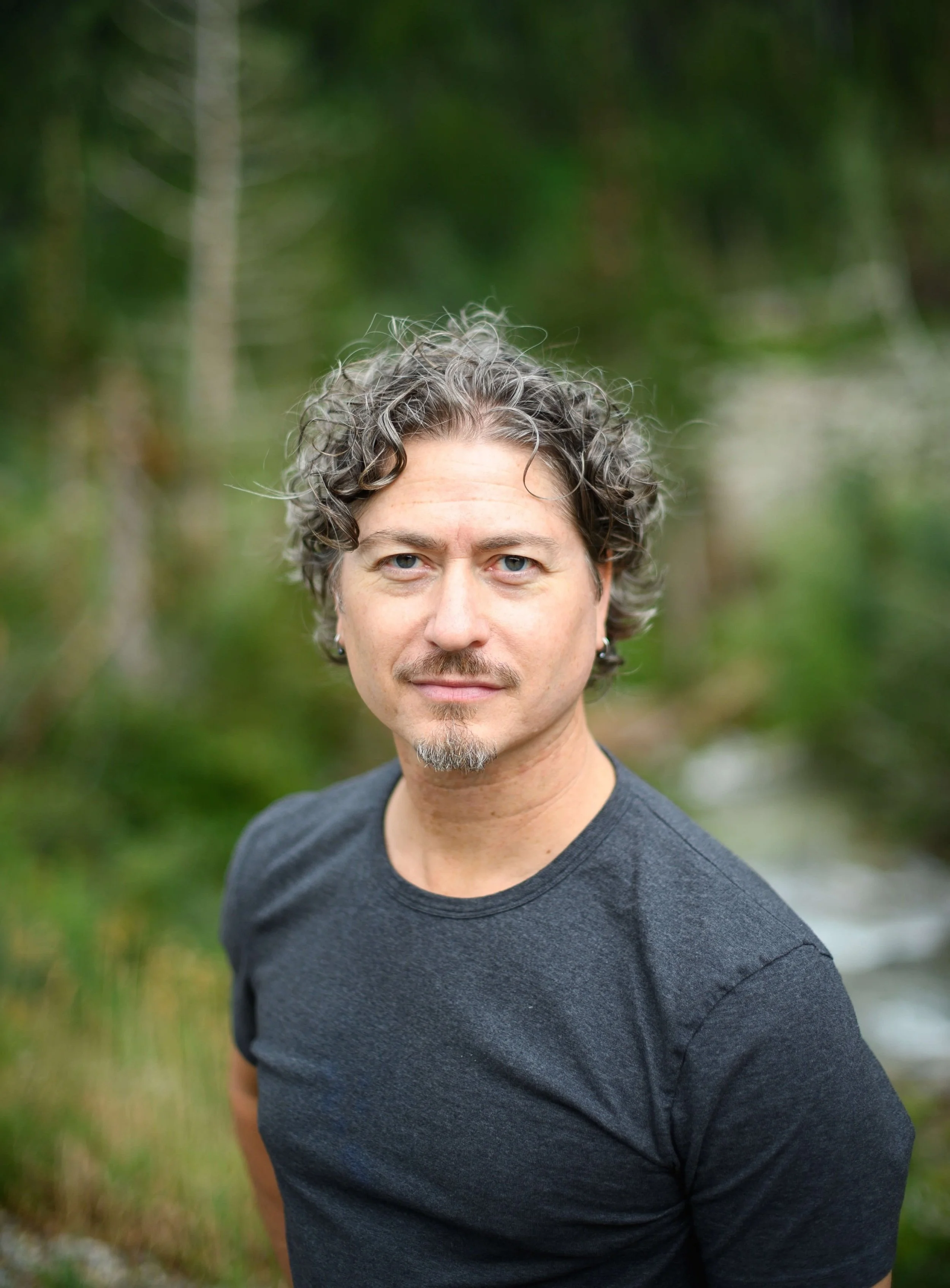
Scott Moore is a yoga instructor, business mentor, and author who helps conscious entrepreneurs build six-figure businesses doing what they love. His "wind and windmill" approach combines 25+ years of yoga teaching with practical business strategy to help healers, teachers, and creatives share their gifts with the world.