Business Game Plan: Just Tell Me What To Do!

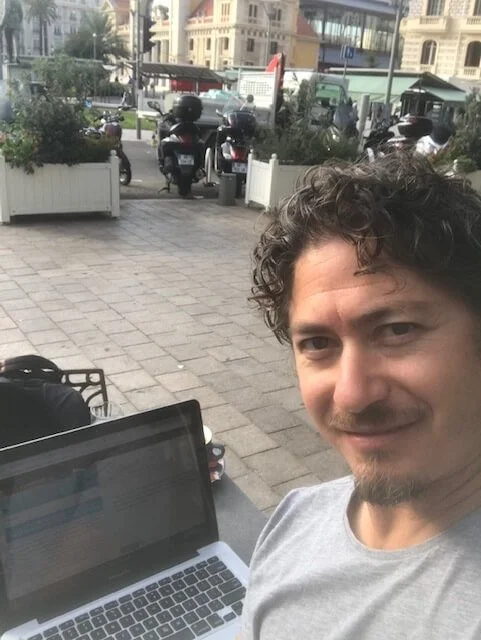
I spent three years living in the South of France with my family. So much of it was perfect.

Walk the kid to school. Hit the gym. Stop by the market on the way home. Sen would make lunch, and by one o'clock, the afternoon was wide open—a dip in the sea, a glass of rosé at our favorite café, the golden light doing what golden light does in Nice.

I was earning a living. I was present for my family. I was free.

But I wasn't building anything.

Work was organic, a little here, a little there. Some weeks were productive, some weren't.

I just didn't have a real business strategy. And without a strategy—or any kind of entrepreneurial roadmap—you default to comfort. Not laziness. Comfort. There's a difference, but the result is the same: you stay exactly where you are.

I remember saying to Seneca one day, "Man I wish I could find someone who could just look at my entire business—website, clients, products/services, messaging—and tell me what. To. Do."

I earned around $90,000 that year. Not bad.

But I knew—somewhere underneath the rosé and the sunshine—that I was leaving a lot on the table. Not just money. Direction. Momentum. The feeling that I was actually moving toward something instead of just floating through beautiful days.

Why Every Entrepreneur Needs a Clear Business Strategy

When I came back to the States, I decided that with this new chapter, I'd turn a page in my business as well.

So I built something. Deliberate. 

I sat down and built my own Blueprint.

I dumped everything in. My bio, my values, my finances, my offers—what was working, what wasn't, what I didn't want to do anymore, the things I refused to compromise on.

I interviewed 24 of my students and clients—took them to coffee and asked them what they actually saw in my work. Some said I was a great yoga teacher. Others said something deeper: "It's not what you do. It's who you are."

I processed all of it—testimonials, website traffic, products sold, revenue numbers, the whole picture—and what I developed was a living document that saw me more clearly than I'd seen myself in years.

It wasn't magic. It was organization.

All the pieces had been there the entire time. The experience, the skills, the relationships, the offerings. They just weren't organized into anything coherent.

My Business Blueprint gave me a map. A custom business roadmap.

The Hidden Cost of Not Having a Business Blueprint
This map showed me what I was undercharging for, what I was over-investing in, where I was hiding behind admin work instead of doing the things that actually move a business forward—writing, speaking, creating, connecting.

It even called out my pattern of getting projects 90% done and then chasing the next shiny thing.

Most entrepreneurs don’t lack talent.

They lack strategic structure.

And then the wild part: I followed the plan. I actually followed it. All skepticism aside, just followed it. And the direction turned into actual students served, actual lives impacted, actual dollars in my pocket.

Not overnight, but steadily and unmistakably.

Why Strategy Must Come Before a Website

Now, I do this for other people.

I offer a Business Blueprint. It's not a template. It's not pre-fab. It's your customized strategy to take you from where you are to where you want to be. 

It starts with a detailed questionnaire you fill out. Then I personally interview you. It's me—absorbing everything about you and your business and sitting with you, face-to-face for 90 minutes, reading between the lines of what you say and also what you don't say. Then I build building something for you that reflects back to you exactly who you actually are, not just what looks good on paper. It's a 50–60 page document custom-tailored to you. 

One of my clients came to me after paying someone else $5,000 to build her a website. But she didn't get a website. What she got was an empty template—barely populated, nothing personal, no strategy behind it. She was five grand poorer with nothing to show for it. I told her we needed to start with the Blueprint, because a website without a strategy is just a digital business card nobody asked for.

Her Blueprint was a revelation. It revealed who she actually was, how she was different from everyone else in her field, exactly what to charge, who to serve, and what to stop doing immediately. From there, everything else—the site, the pricing, the marketing, even her boundaries with her clients—had a foundation to stand on. In just one month of following the Blueprint, she's thriving more than she had in years.

That's what the Blueprint does. It's not coaching. It's not a pep talk. It's a mirror, one that shows you who you are. It's a map that shows you where you're going, and a plan that shows you how to get there.

Here's what I want you to know:

This Friday, February 28, is the last day the Business Blueprint will be available at $997. On March 1, it goes to $2,000—and it's staying there.

I'm not raising the price because of some marketing tactic. I'm raising it because the work is worth it, because every person I've done this for has told me it was worth many times what they paid, and because I spent too many years undercharging for things that genuinely change the trajectory of people's businesses and lives.

If you've been thinking about it, if you've been curious, if you need help, this is the week.

What the Business Blueprint Includes
Here's what you get:

  • Pre-work deep dive to understand your business before we ever get on a call

  • 90-minute intensive session focused on positioning, pricing, audience, offers, and strategy

  • Comprehensive written Blueprint, 50–60 pages, delivered within five business days—your roadmap for the next 12 months and beyond

  • Blueprint Review interview to walk through the plan together and discuss next steps

Let's talk.

No pressure. If it's right, it's right. If not, namaste.

If you decide to continue working with me afterward, your $997 investment rolls directly into any private mentorship program so the Blueprint acts as a solid foundation for everything else that comes next. 

I'll honor February pricing for anyone who books a discovery call before March 1st.

I so wish I'd had this years ago. I'd be much further along. But I'm glad I have it now—and I'd love to offer it to you.

Namaste, 


FAQ: Business Blueprint & Business Strategy

What is a Business Blueprint?
A Business Blueprint is a customized business strategy document that clarifies your positioning, pricing, target audience, offers, and long-term growth plan. It serves as a strategic roadmap for entrepreneurs.

Why is business strategy important before building a website?
Without a clear business strategy, a website lacks direction and conversion power. Strategy defines messaging, pricing, positioning, and audience before design ever begins.

Who is the Business Blueprint for?
It’s designed for entrepreneurs, service providers, creatives, and consultants who feel unclear, underpriced, or strategically stuck.

How long does it take to see results?
Clarity is immediate. Revenue growth follows execution of the plan.
How to Use AI as a Conscious Entrepreneur

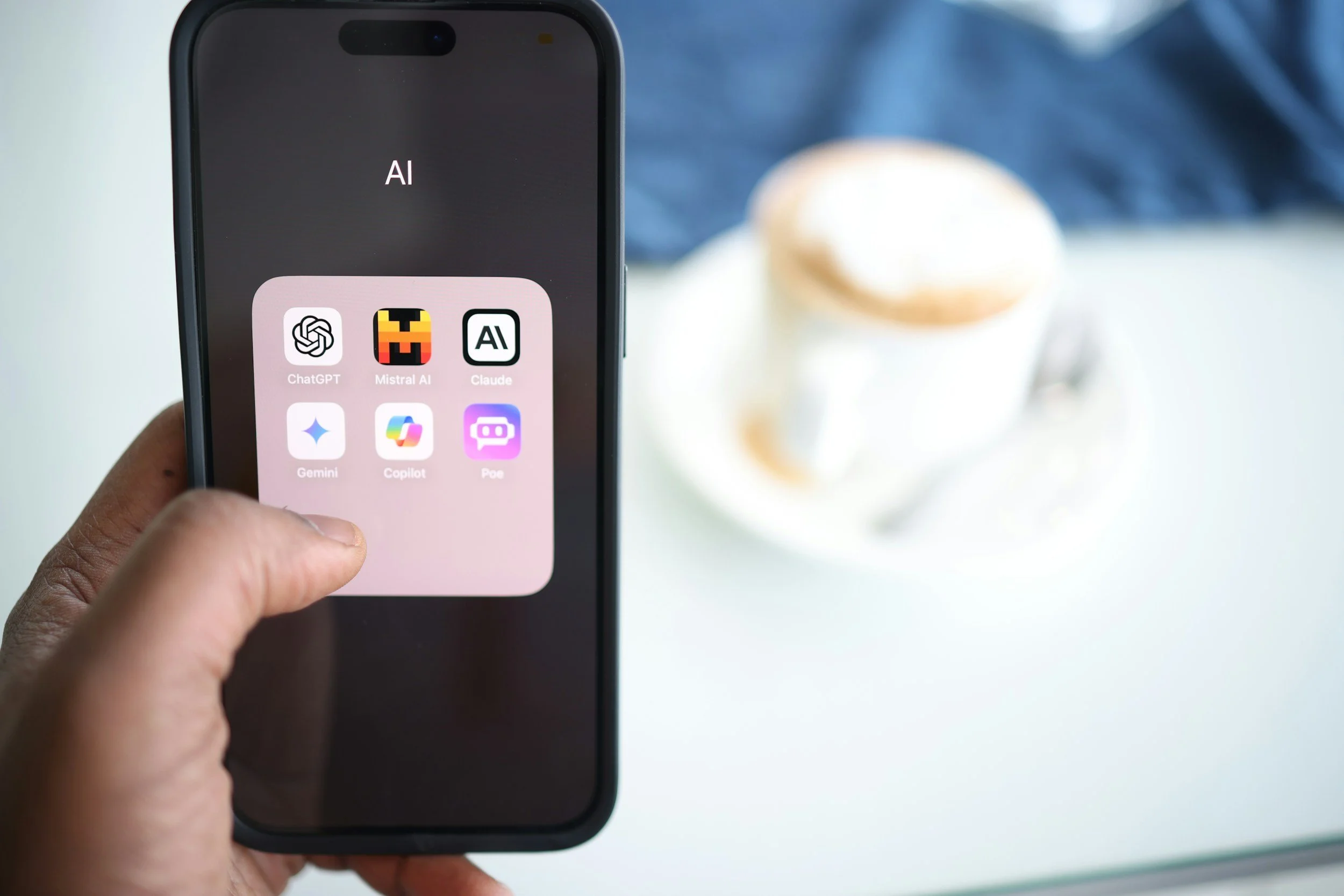
What does conscious AI use actually look like for entrepreneurs? In a world obsessed with automation and artificial intelligence, the real question is how to use AI ethically without replacing human connection. As a conscious entrepreneur, I’ve been thinking deeply about the difference between complicated problems AI can solve and complex problems only humans can navigate.

This Valentine’s Day, I want to share a story about AI for entrepreneurs, love, and what happens when you let technology handle logistics so you can stay fully present for what matters most.

A Perfect Date Night (Planned With AI)

AI and human connection

I want to tell you about one of the best date nights I've ever planned.

For Christmas, I wanted to do something special for my wife, Seneca. Seneca’s a great gift giver and I wanted to give her something unforgettable—not something she'd unwrap and forget but an experience. Something that felt like us. Something that showed her I knew her and listened to her what she likes and wants.

And so, a few times in conversation, she’s dropped how she loves going to the symphony or the opera. Live music. BIG live music. The kind that fills a room and makes you forget your phone exists. She’s also a foody. Loves great food. She’s not into trendy food, but rather the kind of meal where you linger over every bite and make a phonecall to your Italian relatives because they understand really good food. She also loves moving the bod as part of our dates, a walk, a hike, a bike ride or something. And she appreciates conversation without a schedule pressing us forward.

This was my contribution—knowing her, knowing what would feel meaningful. It was 15 years of paying attention. No algorithm on earth could have told me that.

What AI Did — And What It Didn’t

But here's where AI came in.

I asked it to help me find what was happening in Salt Lake City near the holidays. Symphony or opera performances, specifically. I gave it our preferences for food to find a restaurant: Italian, walkable from the venue, highly rated, not a chain. I asked it to map out the logistics so we wouldn't spend the evening staring at our phones trying to figure out parking or driving directions.

In about ten minutes, I had the whole evening planned. A Rachmaninoff concert. A Tuscan restaurant we'd never tried that was a 10-minute walk from the concert hall. Everything mapped, timed, and ready.

I made the reservations, bought the tickets, and gave her that for Christmas. 

We went just last weekend and it was a perfect night. And sorry AI, but you deserve exactly zero credit for the magic of it.

Here's why I'm telling you this on Valentine's Day. 

Complicated vs. Complex Problems

A few months ago, I attended a multi-day AI summit where Dr. Arthur Brooks—the Harvard professor and Atlantic columnist—said something that fundamentally changed how I think about this technology.

He talked about the difference between complicated problems and complex problems.

AI for business strategy

Complicated problems are things like logistics, data analysis, research, math, scheduling, market comparisons. Deep research. They have solutions you can figure out with enough information. Your left brain handles these. AI is extraordinary at them. Ninja.

Complex problems are things like relationships, meaning, purpose, love, creative expression, conflict resolution, spiritual practice. They don't have neat solutions. They require wisdom, intuition, lived experience. Your right brain handles these. AI is terrible at them. The worst. 

And here's the line from Brooks I haven't stopped thinking about: "You don't want a simulation of love. You want actual love. Never solve a complex problem with a complicated machine."

Your brain totally knows the difference. A simulation created by the left brain doesn't register on the right brain. We all have natural bullshit detectors. You can't fool yourself into connection, meaning, or purpose through technology. You just can’t.

What This Means for Conscious Entrepreneurs

So what does this mean for us as conscious entrepreneurs?

What it means is knowing what to hand to AI—and what to keep for yourself. Pure and simple. 

Hand AI the complicated stuff: organizing your ideas, researching your market, analyzing your survey data, planning your content calendar, drafting outlines, building strategic roadmaps.

Keep the complex stuff: the relationships with your students, your creative vision, your teaching presence, your spiritual practice, the conversations that matter, the messy human work of showing up for the people you serve. This is the very difficult but very rewarding work that just can’t be delegated to a machine. 

When you delegate the complicated stuff, you don't just save time. You save time and get your life back for all the complex stuff of being human.

Brooks put it this way: buy time with AI, but spend it on the mysteries that make you human. Spend it on love. On worship—whatever that means for you. On nature. On beauty. On the relationships that feed your soul.

That's what happened on my date night. AI handled the research, the logistics, the complicated variables. Hell, it even analyzed hundreds of Google and Yelp reviews (in seconds). And because of that, I got to be fully present with my wife at a concert that put us in awe, over a meal we're still talking about.

That's conscious AI use. Not replacing the human stuff. Freeing yourself up for more of it.

AI Alchemy for Conscious Entrepreneurs

Sunday, February 15 | 11 AM–2 PM MT | Live Online

In three hours, you'll learn how to partner with AI for the complicated work—so you can get back to the complex, beautiful, irreplaceable work of being human.

We'll cover:

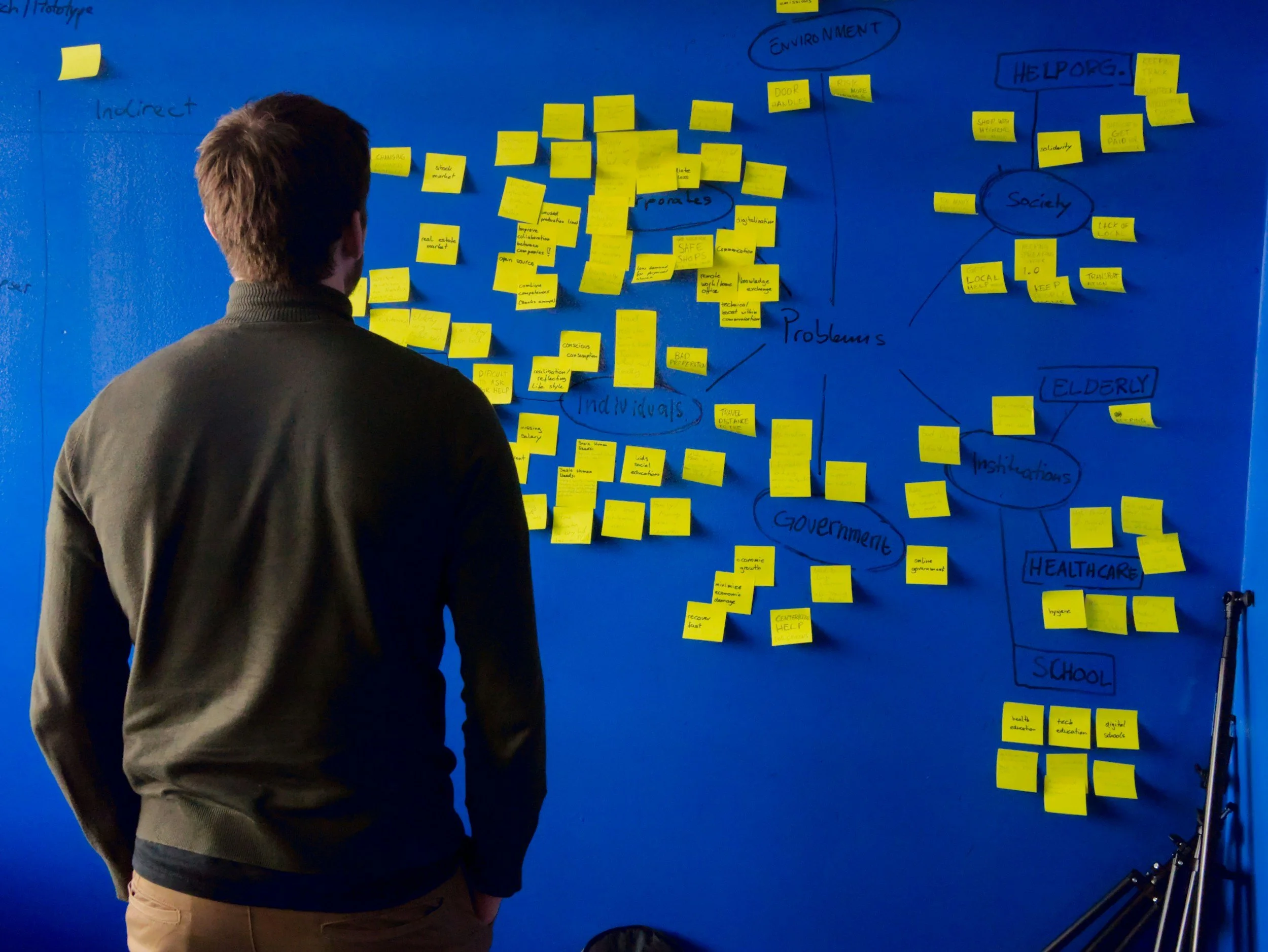
  • Brain Dump to Brilliance—Turn your scattered thinking into organized strategy

  • Delegation vs. Abdication—The critical distinction

  • The Shiva/Shakti Framework—Consciousness meets action

  • When to Use AI and When NOT To—The Brooks principle in practice

  • Live Demonstrations—Watch the method in real time

  • Ready-to-Use Prompts—Templates for YOUR specific business

Plus the full AI Alchemy manual.

Investment: $97—Live + Lifetime Replay $77—Replay Only

Last time at this price. Next workshop goes to $197.

AI is a brilliant complicated machine. You are an irreplaceable complex human.

Use the machine for what it's good at. Save yourself for what only you can do.

Happy Valentine's Day. Go be with someone you love tonight.

P.S.—Arthur Brooks also said something else that stuck with me: "Anything that substitutes for real human relationships makes you less happy. Anything that complements them makes you happier." That's the whole philosophy of conscious AI use in two sentences. Sunday, I'll show you how to put it into practice.

FAQs

What is the difference between complicated and complex problems?
Complicated problems involve logistics, research, scheduling, and data analysis. They can be solved with enough information. Complex problems involve relationships, meaning, purpose, creativity, and spiritual life. They require human wisdom and lived experience.

How should entrepreneurs use AI ethically?
Entrepreneurs should delegate complicated tasks like research, data analysis, and organization to AI while keeping human-centered work—relationships, creative expression, teaching presence—for themselves.

Can AI replace human connection?
No. AI can simulate communication, but it cannot replace real human relationships, intuition, or emotional presence.

What is conscious AI use?
Conscious AI use means partnering with AI to handle technical and analytical work while preserving human agency, creativity, and connection.

How can AI save time without reducing authenticity?
By handling logistics and research, AI frees up time so entrepreneurs can invest more energy in relationships, service, and meaningful work.

You Don't Have To Be A Good Writer: How AI Helps You Write Content

How Can AI Help To Be A Good Writer

Unless this is your first time ever reading my blog, you know what I’m all about: the world NEEDS your message. How can AI help you be a good writer?

When I mentor others about how to share what they do with the world, I always hear the same things:

  • “But, I’m not a good writer!”

  • “What do saaaaaay?!”

  • “Does anybody want to hear what I have to say, anyway?!”

Yoga Business Mentor

using ai to help you organize

In fact, these complaints are so common that a core focus of my 1:1 mentorship program is guiding students through a few crucial steps: first, clarifying their own identity; second, deeply understanding their ideal clients; and finally, crafting a message that resonates deeply with those clients' needs.

Then we work on products and services. 

AI Can Make Writing Easy

But guess what? AI can help make this easy. 

For starters, AI can help by generating perfect ideas that marry your rad skillset and unique voice to the very specific needs of your client. When you tell AI who you are and what your client needs are, it can generate seemingly limitless topics for newsletters, blog posts, and social media. 

It can even suggest product ideas.

AI Helps You Be Organized

Plus, AI is superb at helping you stay mega organized with direction and outlines. 

Now, I often write to “discover,” which is a slow and arduous process of throwing a bunch of stuff onto a page and rearranging, editing, and adding to it ad nauseam until what I REALLY want to say slowly, painstakingly, comes into view. It takes forever and involves a lot of swearing. During this process, often my wife, kid, and dog will hear me cursing from the other side of the house, “WRITING IS HAAAARD!”

But it doesn’t have to be, especially if you’re organized. 

I’ve written 3 books (with 3 more in the works) and each of my published books only took me only less than 5 weeks to write … that is AFTER I had a solid outline. Once I had my outline tight these books practically wrote themselves. 

I’ve learned to throw my brainstorming sessions into AI to organize it all beautifully. They are all my own ideas but organized in seconds, giving me more time to write, or apologize to my wife, kid, and dog for yelling obscenities through the house.

AI Helps Your Writing Be Clear and Professional

Another thing AI helps you do is edit your writing so it reads clear and professional.

For anyone who thinks that they are not a good writer—you know, those who don’t know or couldn’t care less about the difference between an Oxford comma and an Oxford shoe— consider this: you don’t need to be a good writer. 

You only need to be yourself … and have a good editor. AI is that brilliant editor that will keep your voice so you can say what you want to say in a way that others can read it. 

Sharing Your Message

Sharing your message with the world is a must. It’s not optional. It’s what you were put here to do.

If you’re a little hung up (or even curious) about sharing your message with the world, please join my AI Alchemy workshop happening THIS Saturday, Aug. 17th from 10 am to 1 pm MT via Zoom, where we will explore how the incredible tool of AI can help you ethically and responsibly share your message with the world while also keeping your authentic voice. 

People are waiting to pick up what you’re puttin’ down.

Will you join me?

PS

If the timing doesn’t work for you or you live in Antarctica or in a cave somewhere, don’t worry. It’s hosted and recorded via Zoom so you can watch live and/or the replay. 

Just come. 

K. See you there.